
Train Across America
52 hours, 2,400 miles, 3 days, 2 engines, 1 roomette.

In the last days of 2021, I traveled through 9 U.S States by rail from Grand Rapids, MI to San Francisco CA on Amtrak’s Pere Marquette and California Zephyr.
The California Zephyr’s rich history includes robber barons, warring rail operators, engineering victories on the backs of Chinese workers, and the end of private intercity passenger rail. It is the longest daily rail route in America — and some might argue the most scenic.
This blog is for everyone who heard I was taking this train, and wanted to know more. Below you will find a detailed account, pictures*, history, and tips for success.
The takeaways.
Disregarding mask rules will result in an abrupt end to your trip, regardless of planned destination (awesome).
Coach seats are about the same price, if not cheaper, than flying.
Travels can check 2 free bags.
Trains are bi-level. There are stairs. (There are Accessibility services.)
Brings remedies if you experience motion sickness
* Substack’s editor does not post video from Tweets. If you click the Tweet, you’ll see the video. Apologies.
Grand Rapids to Chicago
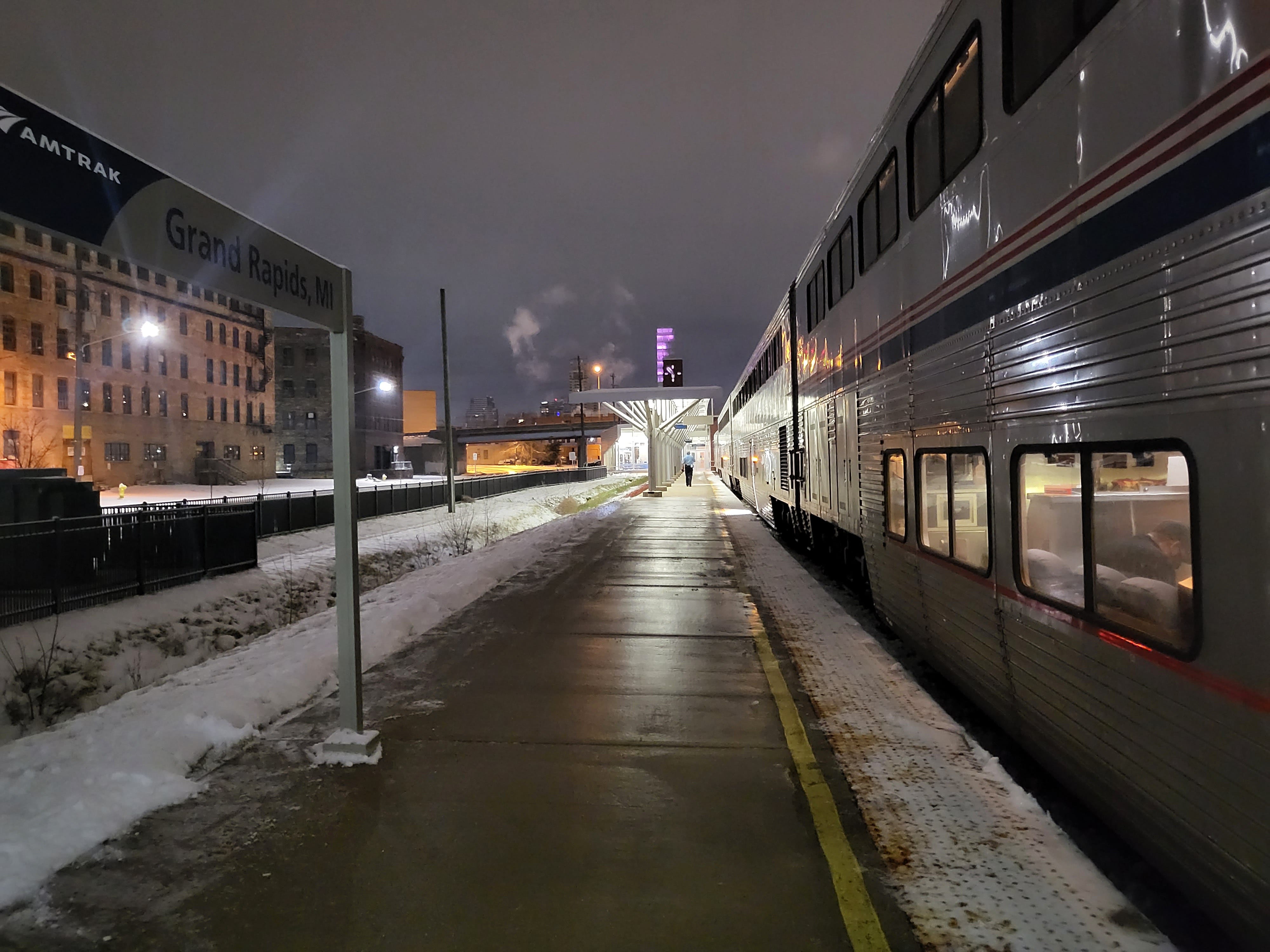
The Pere Marquette travels between Chicago and Grand Rapids, a distance of around 170 miles. It leaves Grand Rapids 6AM daily from Vernon J. Ehlers station, located under 131 at Wealthy Street. Across the road are several large antiques stores housed in the old Sligh Furniture Co. building.
A coach ticket costs $30-50. Skip Business Class*. Make a beeline to the front of whatever car you enter: these seats have more legroom — and footrests, for long-legged giants.
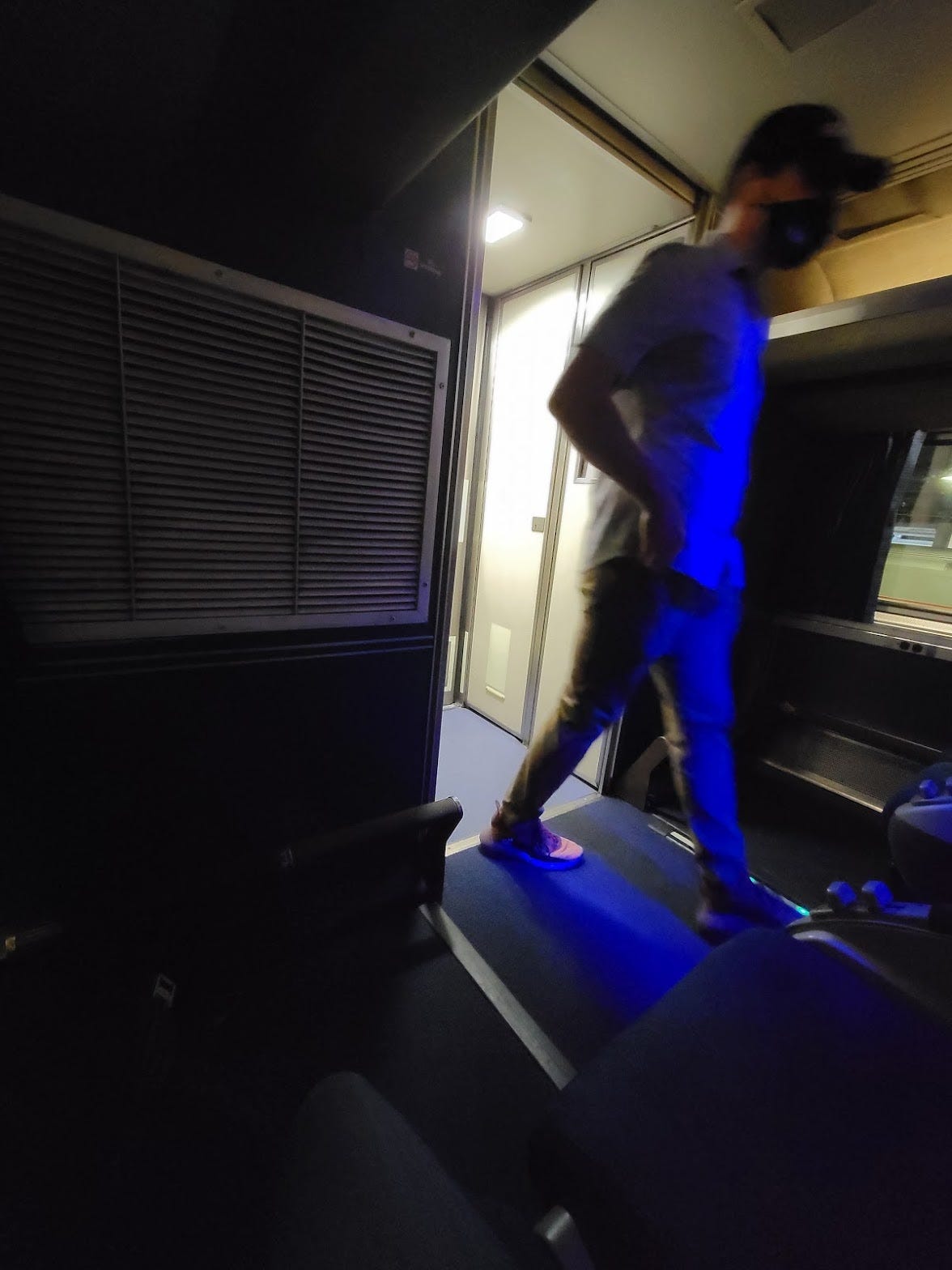
There is free parking at the station. As you walk along the platform, it takes <0s for a conductor to check your ticket and send you along.
Tips for success
On return trip, do not panic when train backs into station. It does this so it can pull out the next morning
GR locals and visitors alike should check out the antique stores.
Train leaves promptly! Don't expect them to wait.
*Business Class seats are at the back of the train, and come with paper signs and a blue curtain to scare Coach peons. At the rear of the train, you are treated to the conductor blowing a little whistle with the door open as the train leaves the station. I enjoyed this, but your mileage may vary.
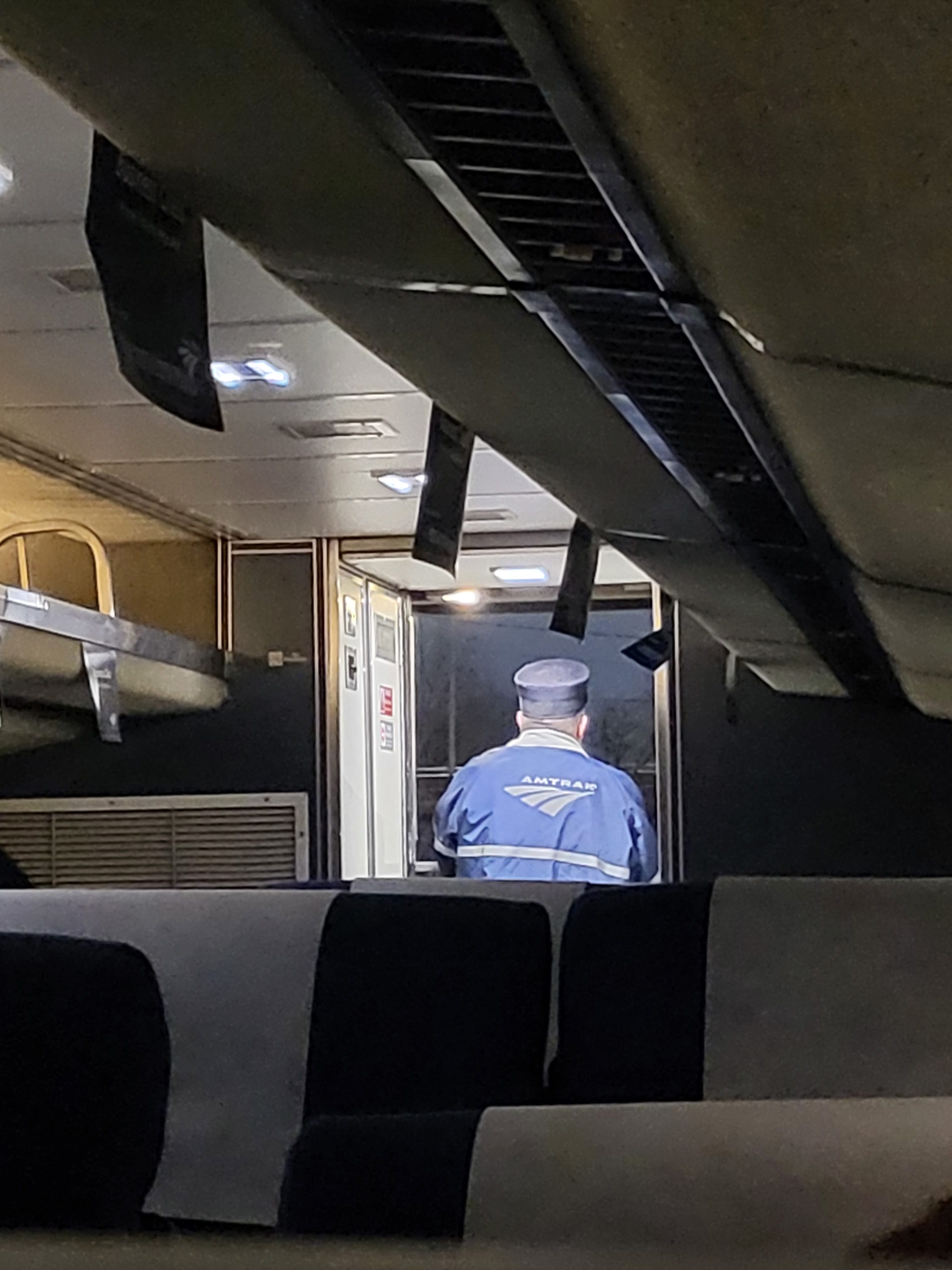
If you haven't been on a Superliner, they are bi-level train cars. You trot up some steps to the coach seats. You press a button to open doors between cars. The cars sway slightly as the train moves. If you are sensitive to motion sickness, bring your usual remedies.
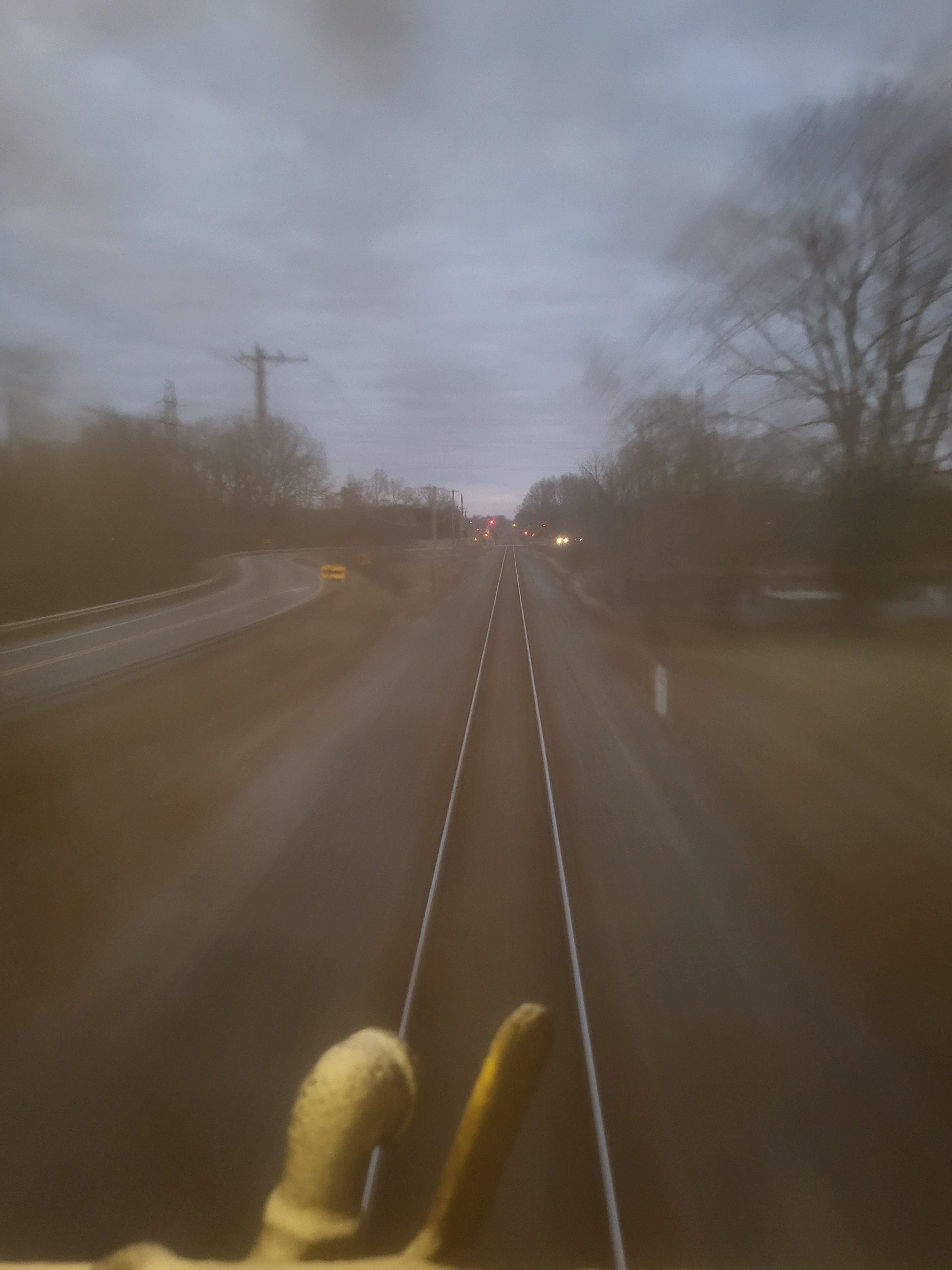
The Pere Marquette departs downtown Grand Rapids, following the Grand River southwest along 196 before jogging along Chicago Drive (121) all the way to Holland.
During this journey, you are treated to the “backside” of Grand Rapids. Towns are built to be pretty from the road. By train, you see industry, scrap yards, and service roads that back up to the tracks. At 6AM on a wintry Michigan Thursday, most signs of life are snowplows, buses, and tentative commuters.
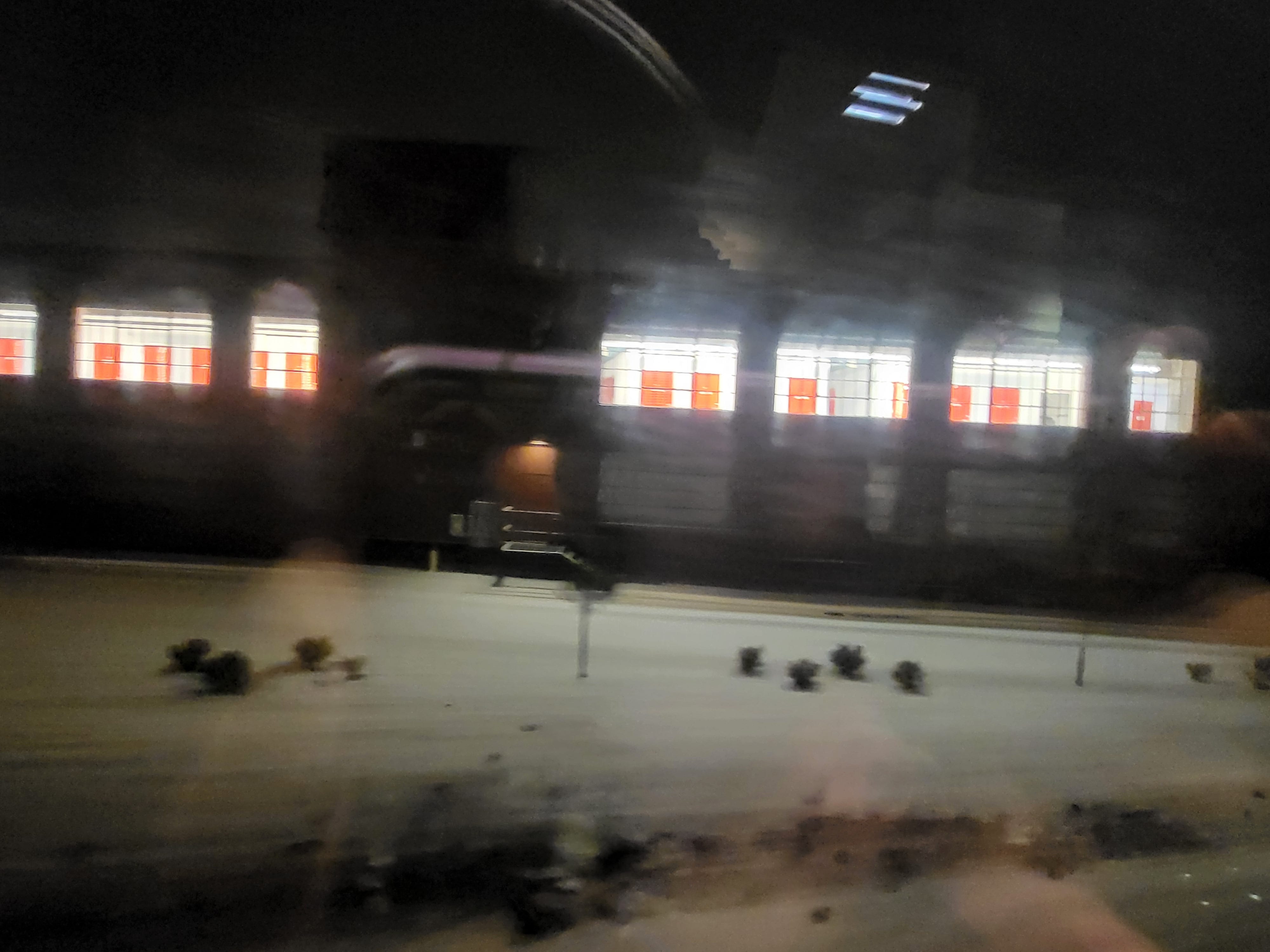
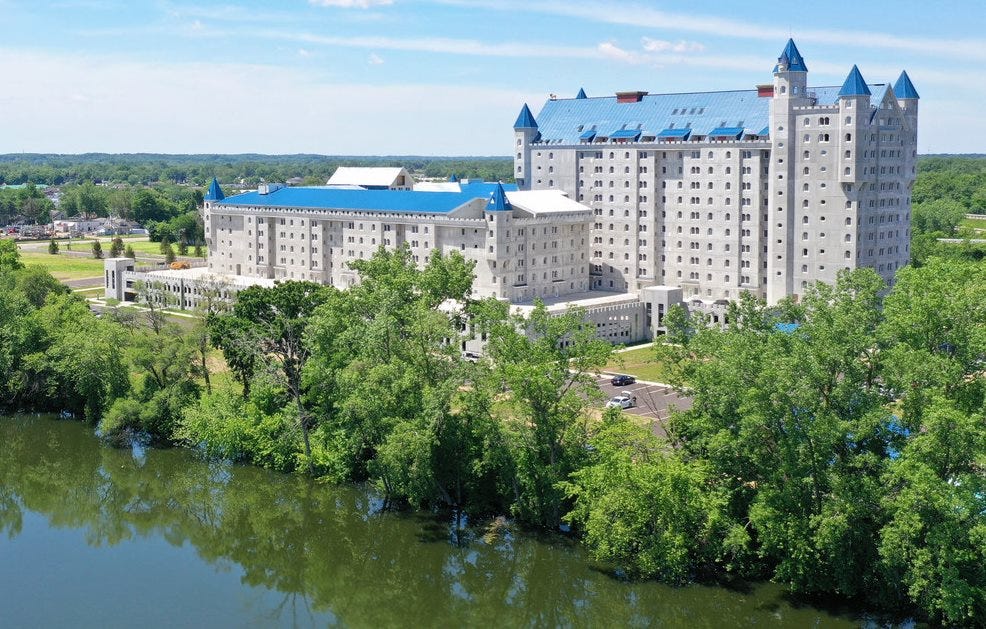
You pass manmade lakes, precast industry, and the railyard along 196. In daylight you might glimpse the atrocious Grandville Castle Apartments, which I have written about scathingly. (In fairness, good blogging from an actual resident is starting to win me over.)
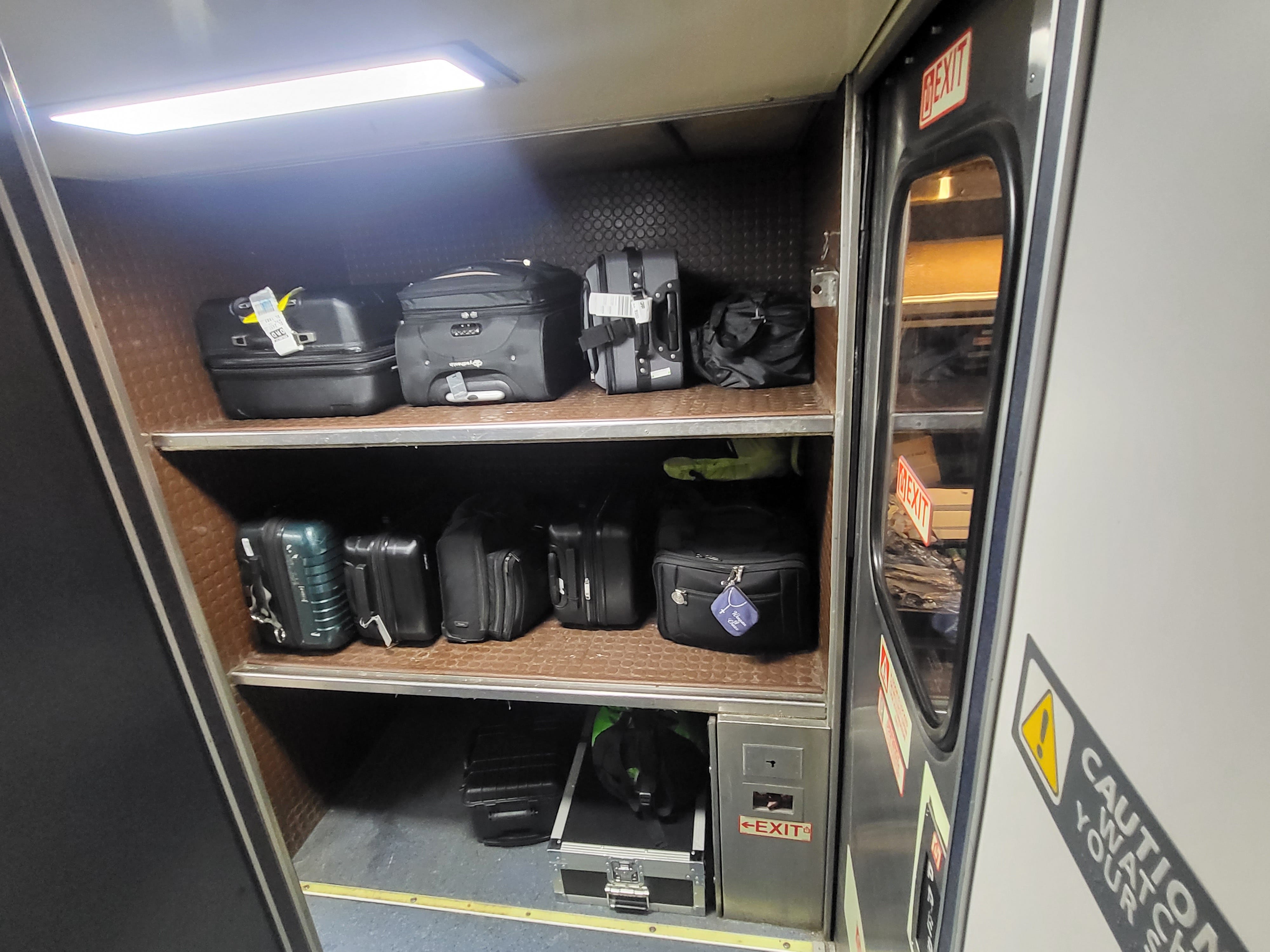
You may bring 2 luggage items for free, and every car has ample storage. If you are transferring trains at Chicago Union Station and your origin station does not check your baggage, DO NOT FORGET YOUR LUGGAGE WHEN YOU LEAVE.
Grand Rapids → Chicago is a route I have done hundreds of times for school, + living in Chicago. Until this trip, I can’t recall storing luggage. I would have peaced out of there without my stuff if I hadn’t made a conscious effort to grab it.
After Holland, the train banks inland more towards Bangor. At this point, you may start to encounter freight traffic. You’ll feel and hear it before you see it — it’s a vacuum effect as the trains whip past each other at speed.
The Pere Marquette offers a cafe car. Avoid at all costs, except for beverages and candy.
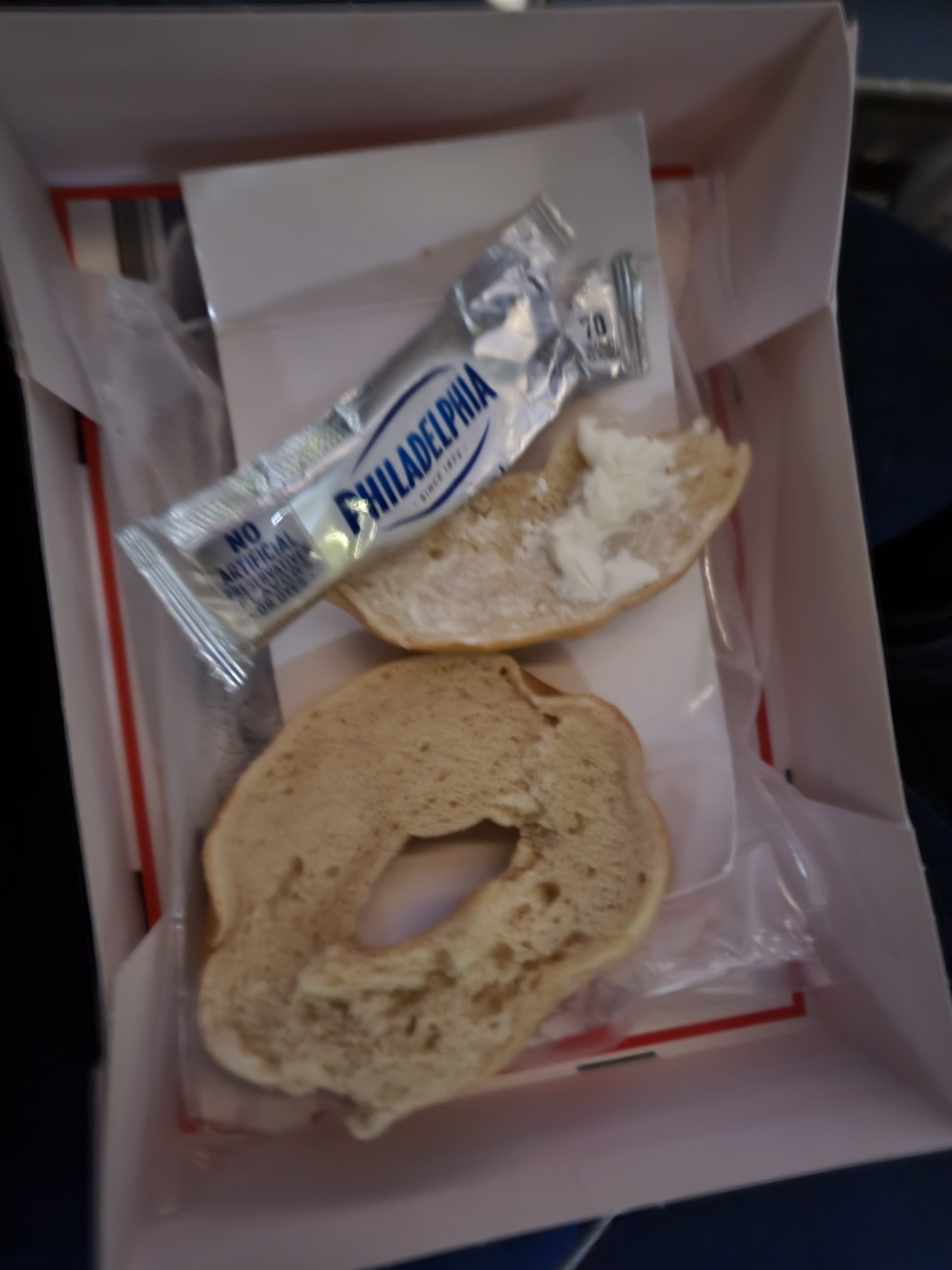
I frequently travel this route. Every time I try something from the cafe car it has been a real self-own. Bring your own snacks.
After Bangor, you head through Benton Harbor/St. Joe. I didn’t get good pics of this area, which is a shame as the harbor is beautiful.
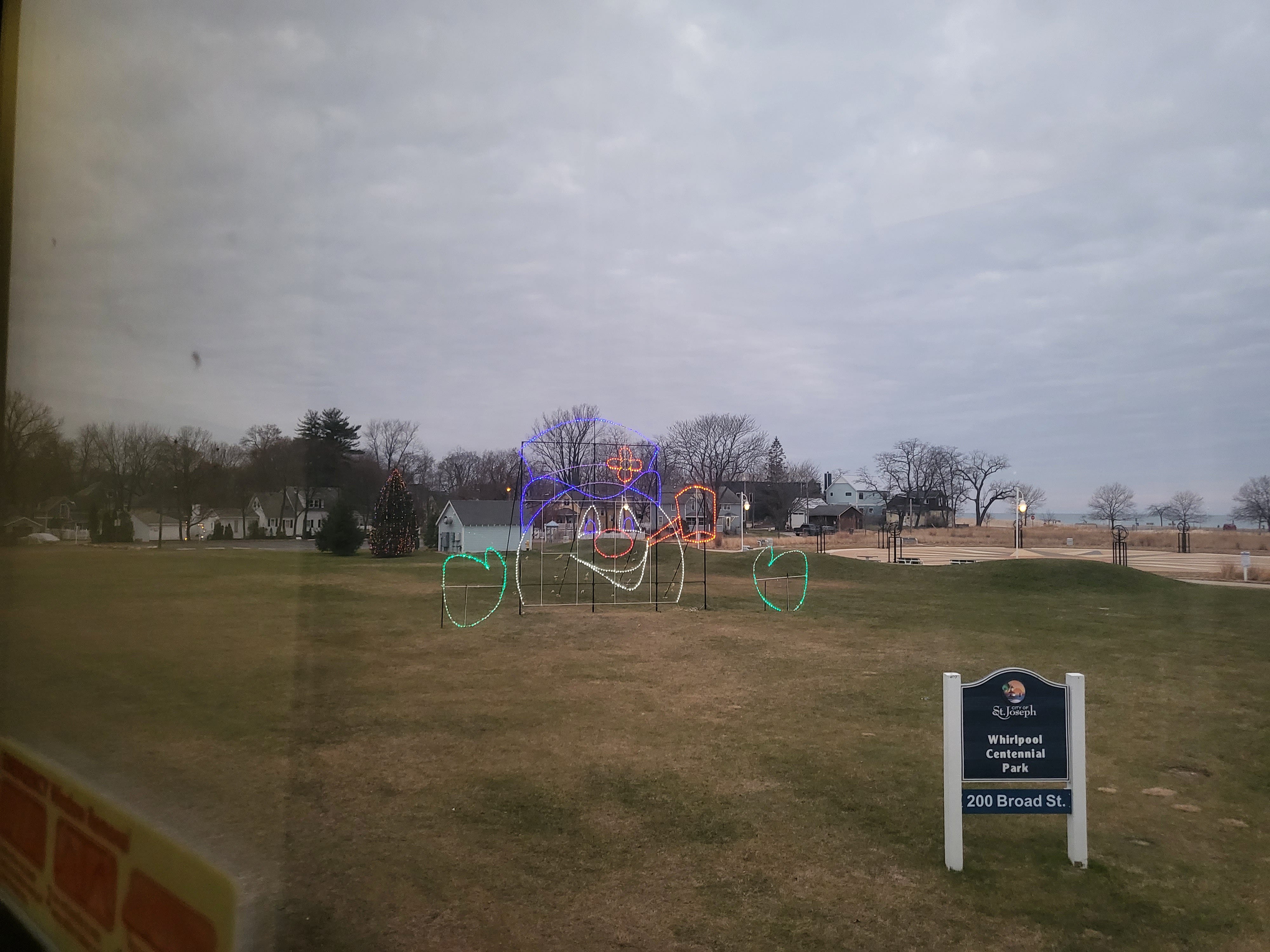
Soon, you will enter Northern Indiana. There is a lot of commuter rail through this area. Although you won’t see it from the Pere Marquette, if you find yourself on the South Shore Line (NICTD), you’ll see the adorable Beverly Shores station along highway 12. I know this isn’t an Amtrak station, but I mean. Just look at it.
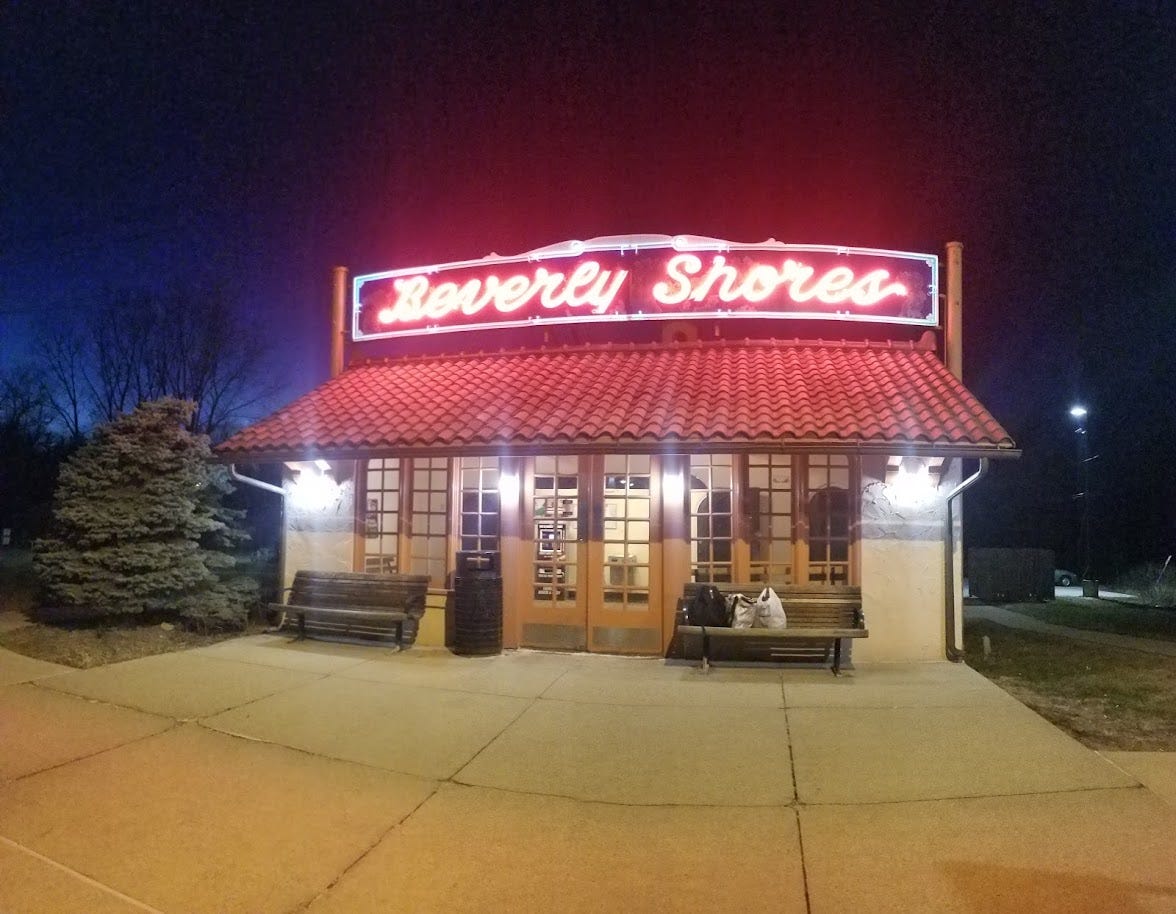
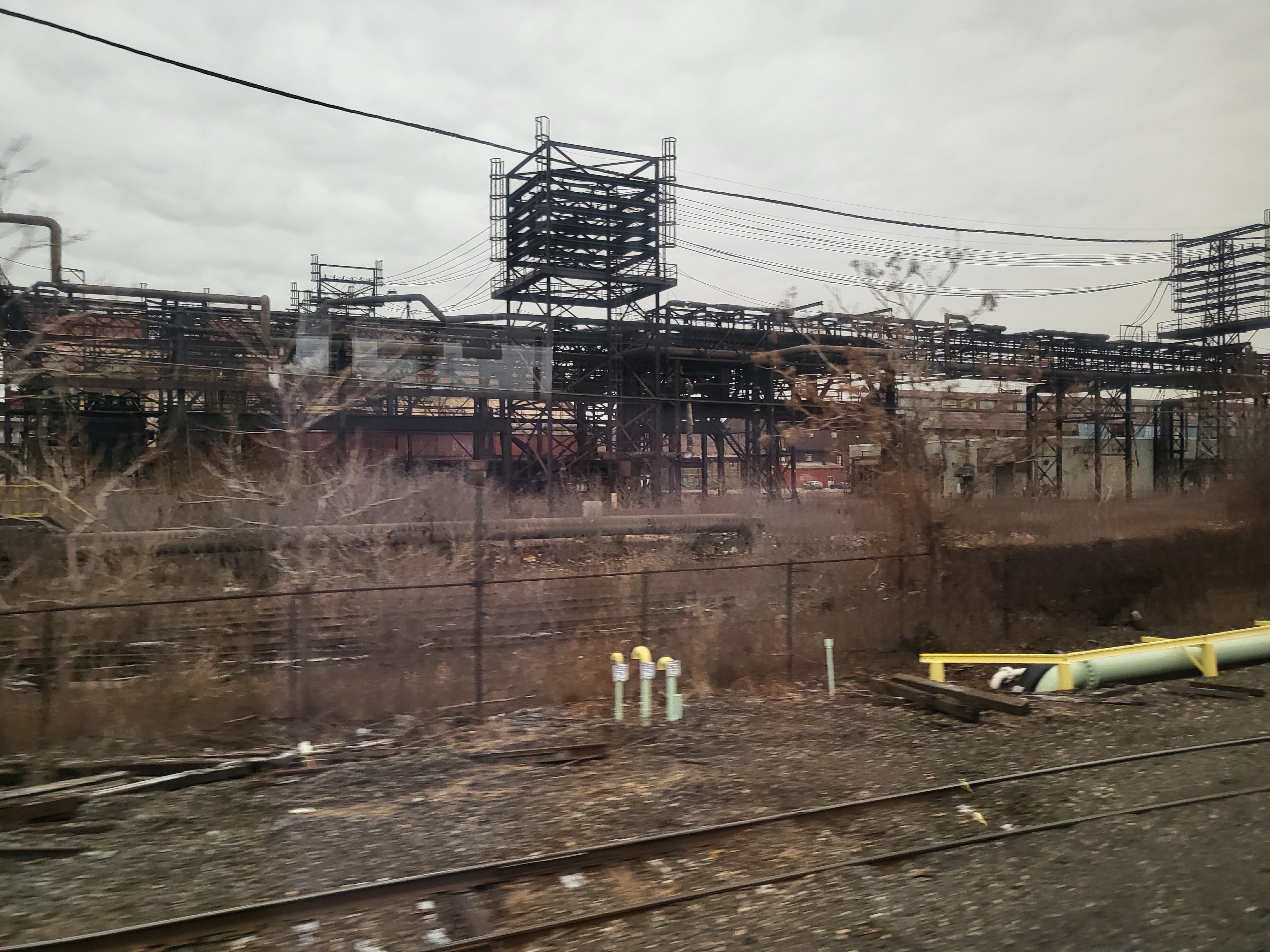
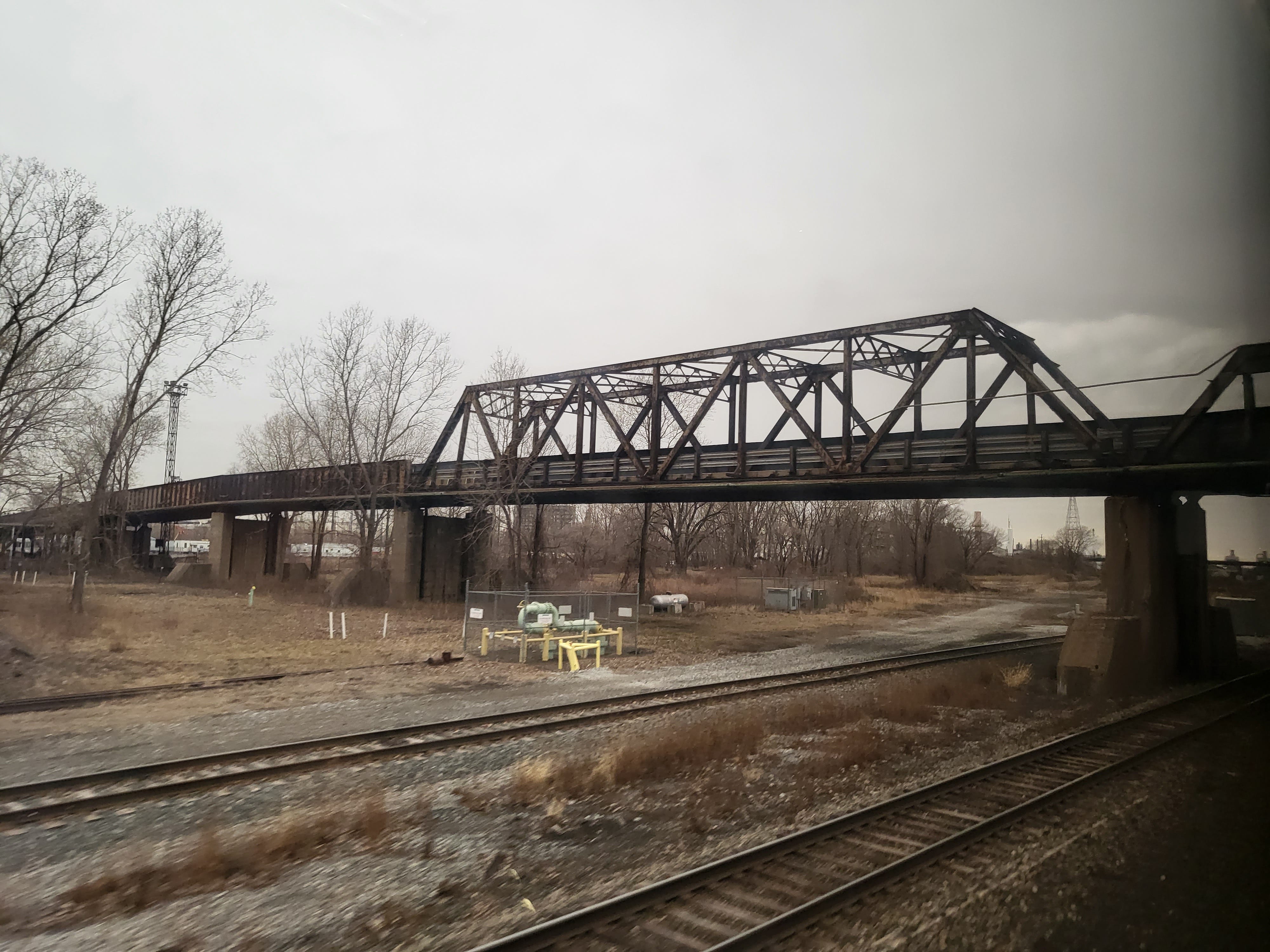
The sun will be up by this point, and you’ll be rattling through the Rust Belt of Indiana. I love seeing the bridges, factories, casinos, and railyards. Others may not find it so appealing.
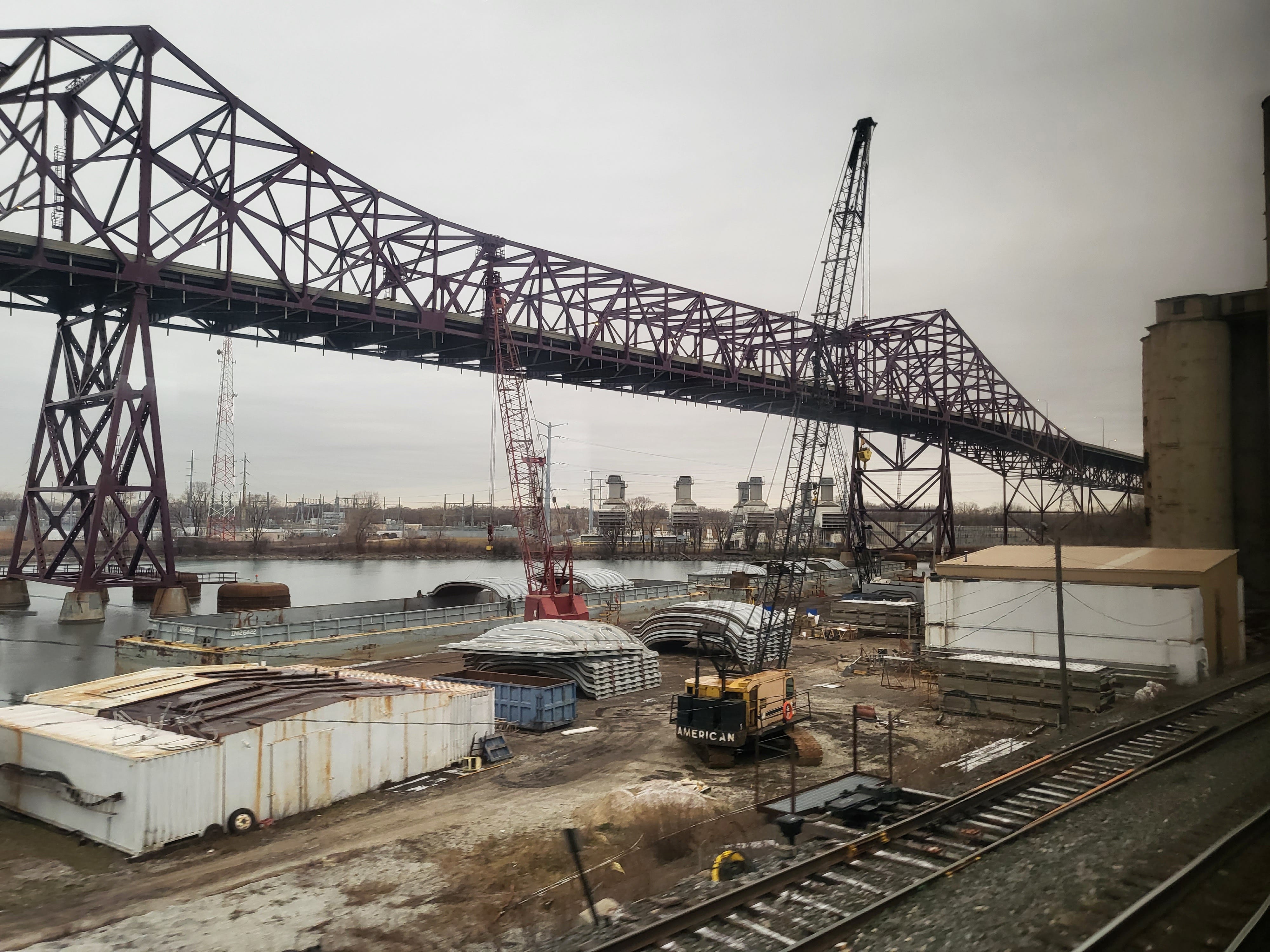
As you approach Chicago, there are cool drawbridges and industrial views.
At Chicago Union Station
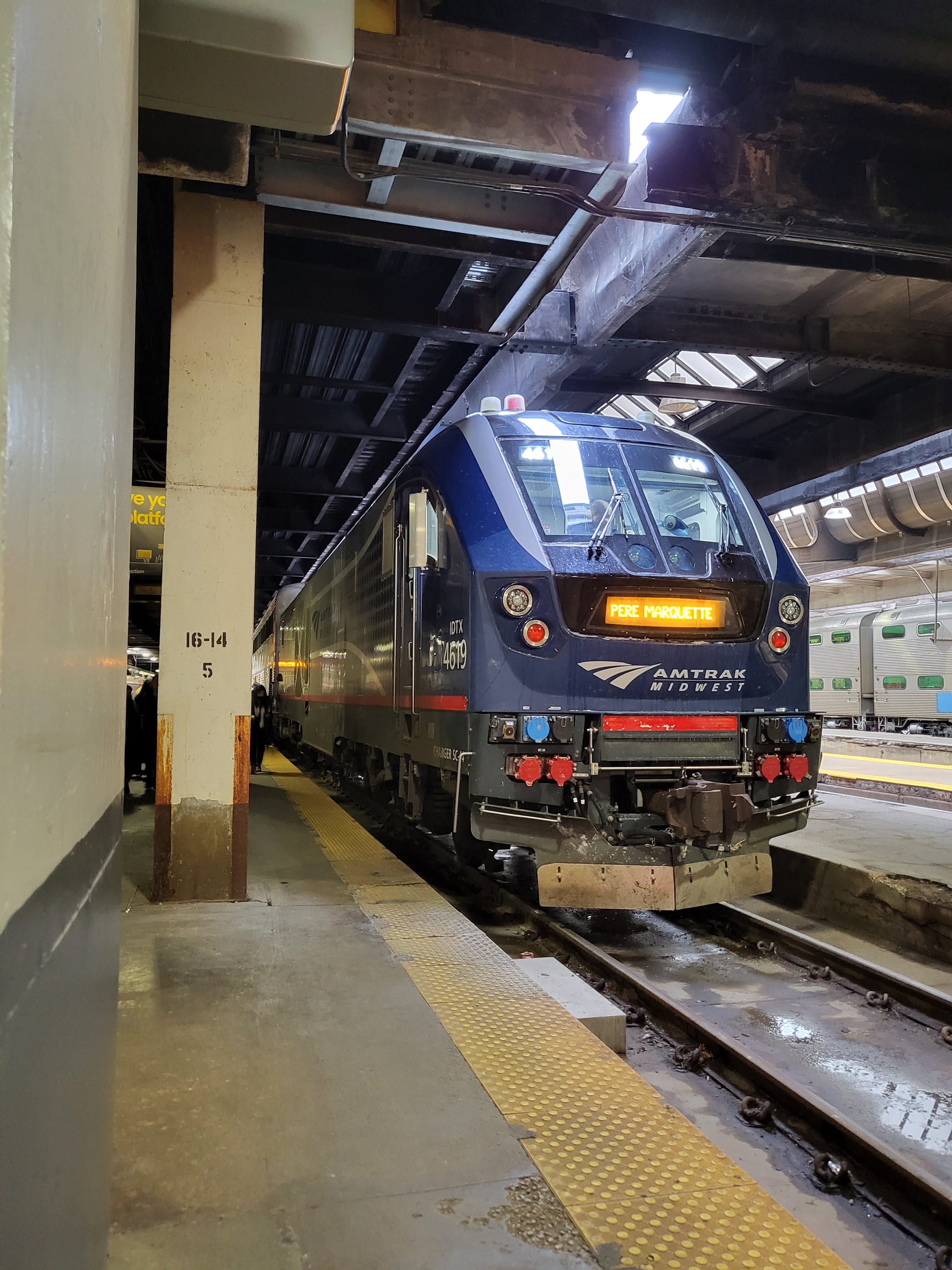
Congrats! You made it to Chicago. (Don’t forget your luggage).
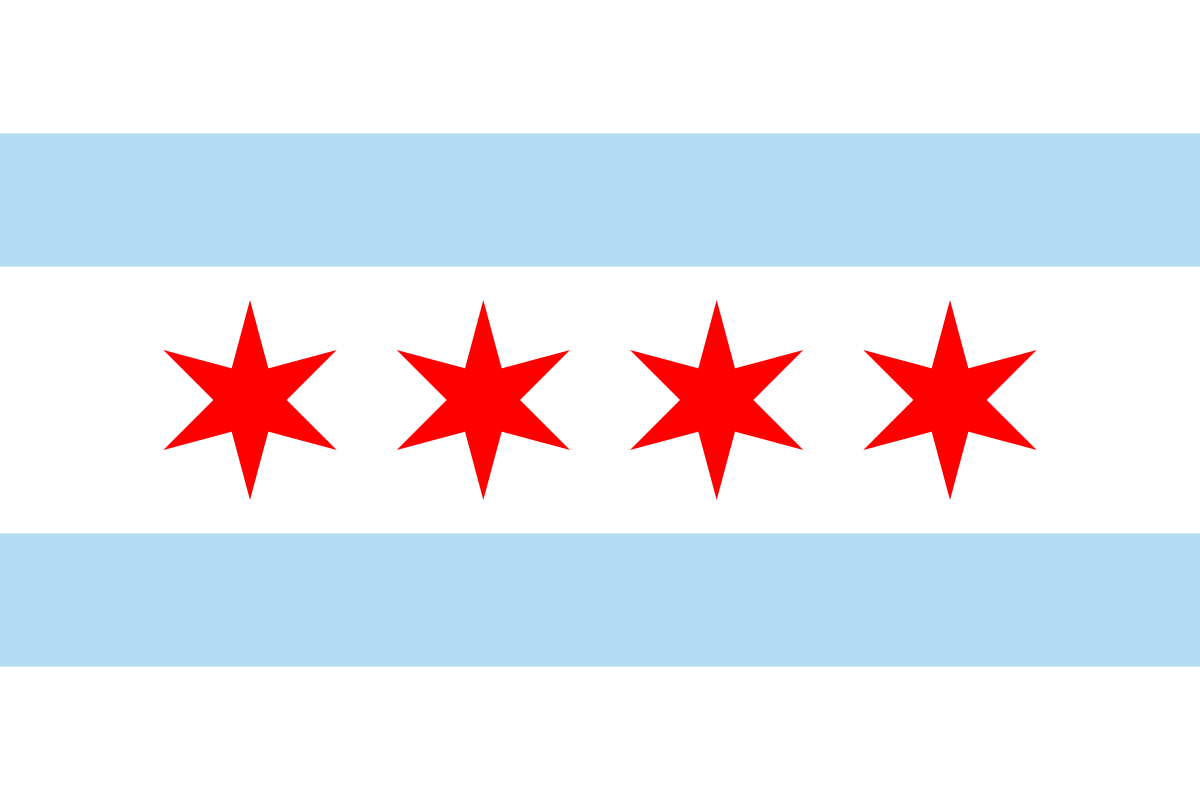
I once flew from Grand Rapids to Chicago behind a group of young men. When we arrived, they bent their heads together, whispering worriedly that “another nation’s flag” was flying over O’Hare International Airport. They were referring to the Chicago city flag. Spoiler: Grand Rapids has a city flag, too.
So, with the state of our country, out of an abundance of caution it is my duty to tell you that you that when in Chicago you might see the Chicago city flag.
Union Station is a stellar tourist attraction in a great city. Union Station is a blend of local commuters, regular travelers, and people who ain’t never traveled nowhere, ever. It makes for sensational people-watching. Check out the Great Hall, sit at a bench, and enjoy the architecture.
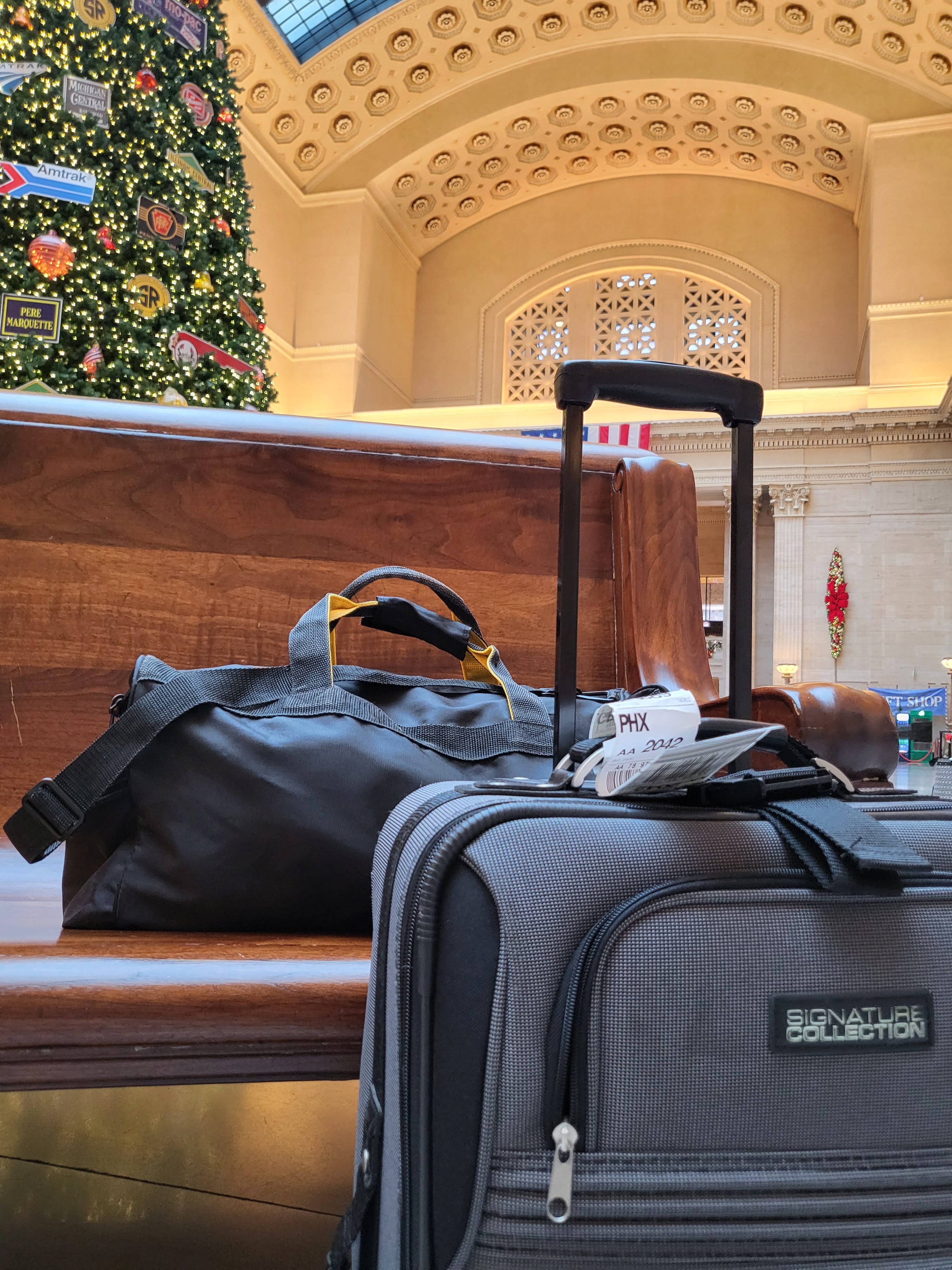
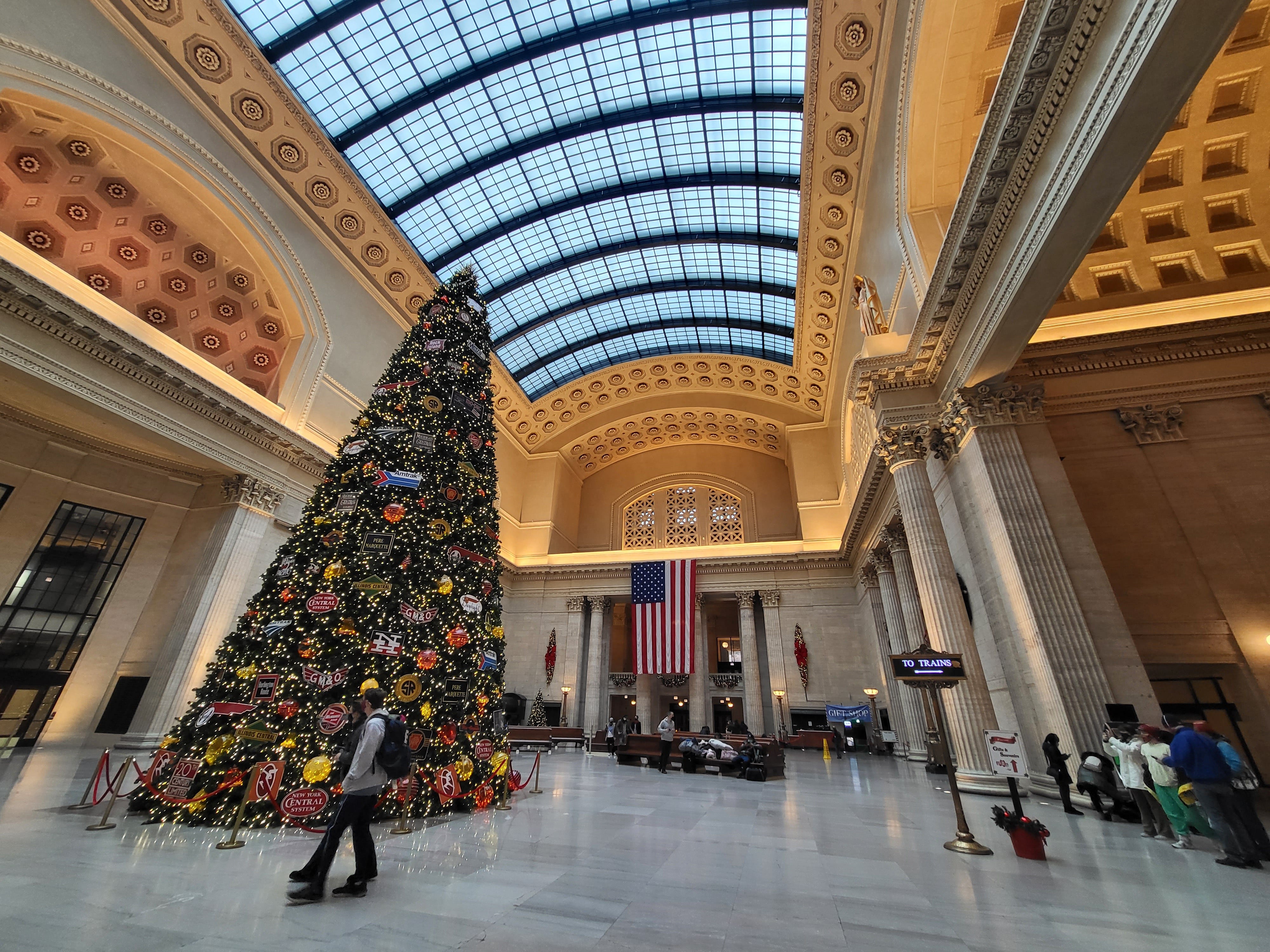
There are 2 concourses in Union Station, North & South. Odd # tracks = North Concourse, Even # tracks = South Concourse. You can suss this out from signage. You won't get lost. Really.
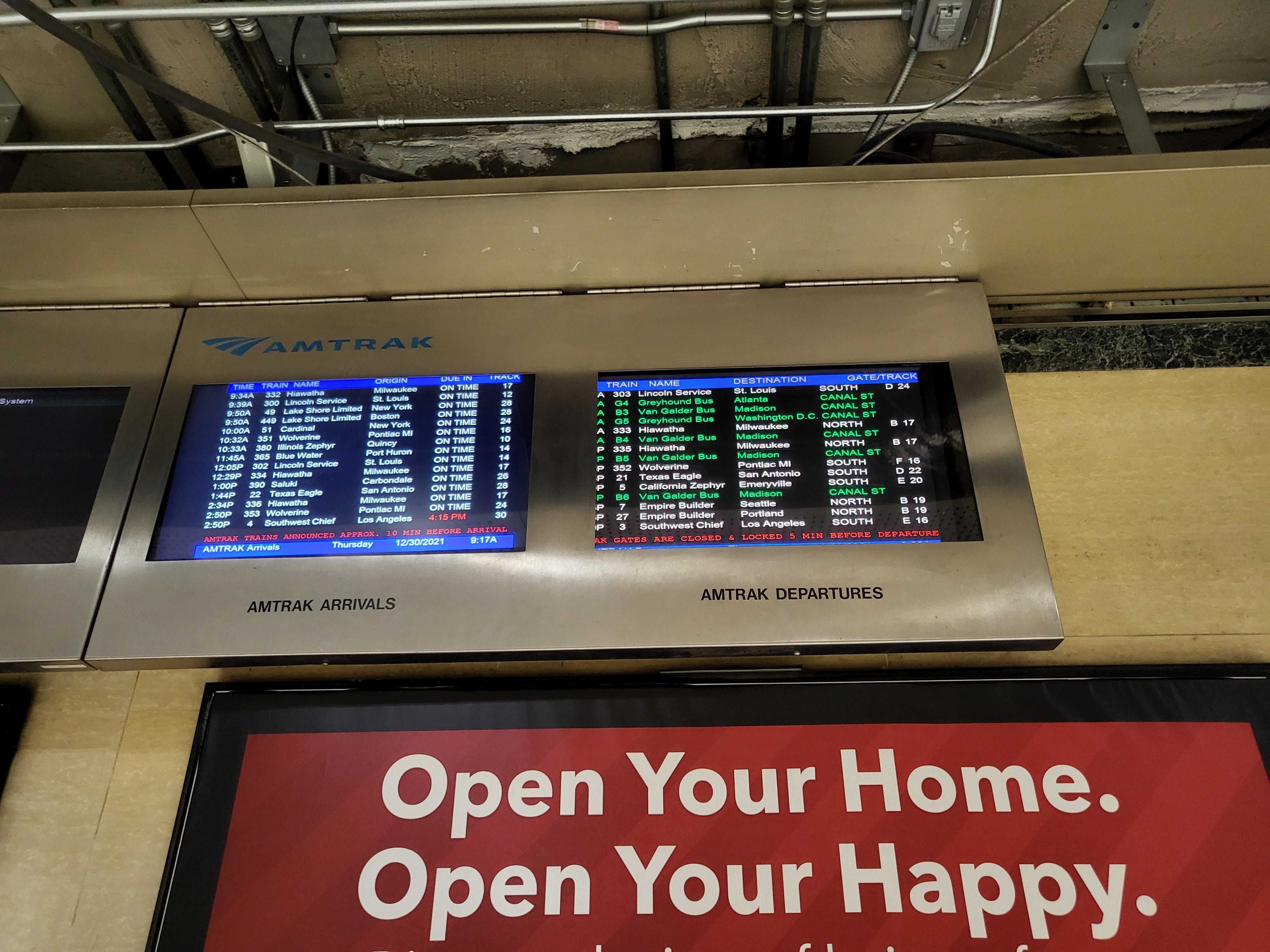
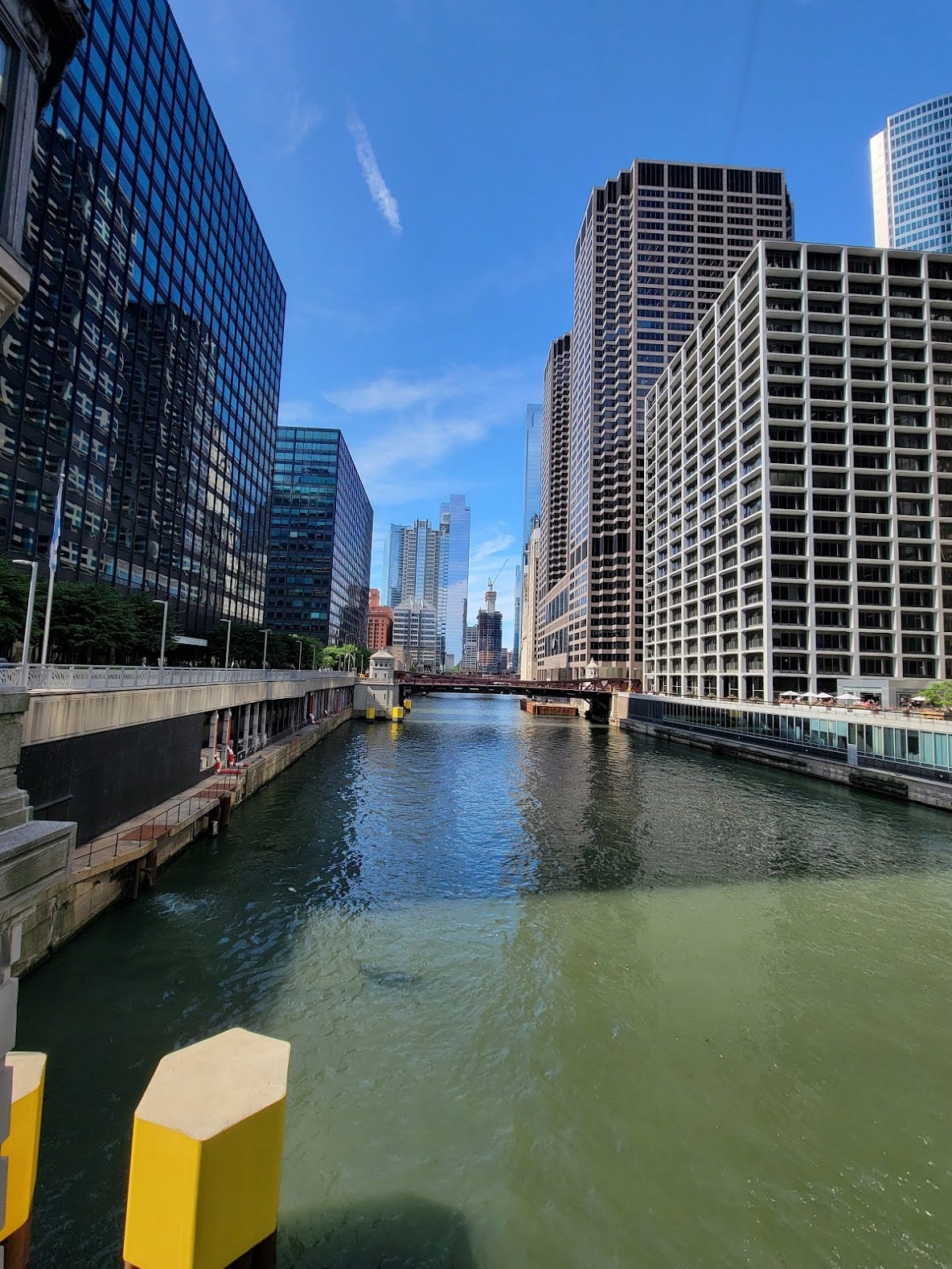
The food court is fine. If you find yourself compelled to leave Union Station, you're close to the Chicago river and West Loop. There are many great food spots nearby. Plus, the river is an attraction itself.
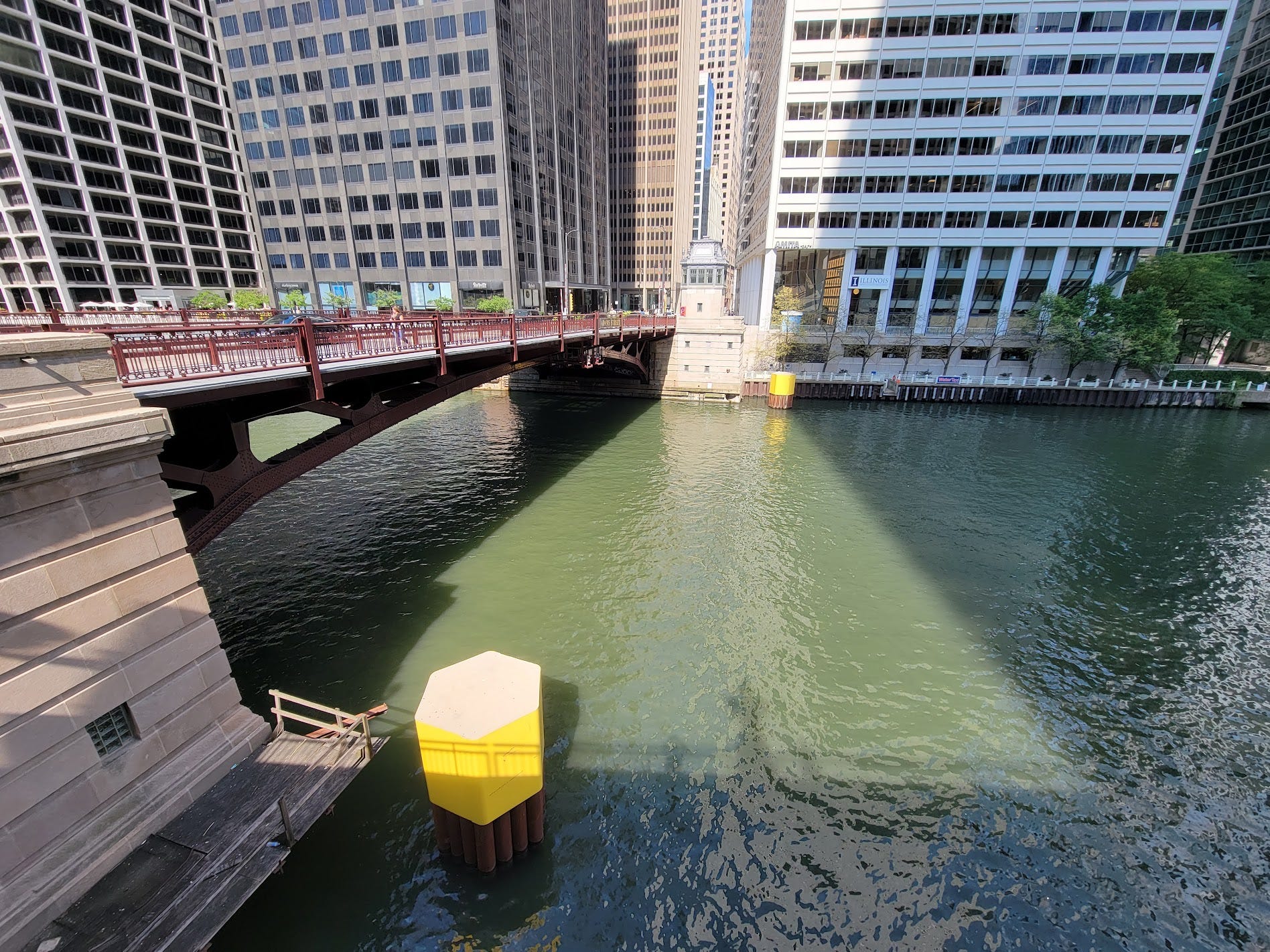
Preparing to Depart Chicago Union Station
Sleeper car passengers may enjoy the Metropolitan Lounge, a multi-story gathering of mismatched couches, sofas, comfy chairs, and tables. There is hot coffee and snacks, and railroad history portraits and art cover the walls. There are showers and comfortable bathrooms. On the upper levels, you are at street level to Canal, but you cannot exit. I mean, you could try, but the fire department might like a word.
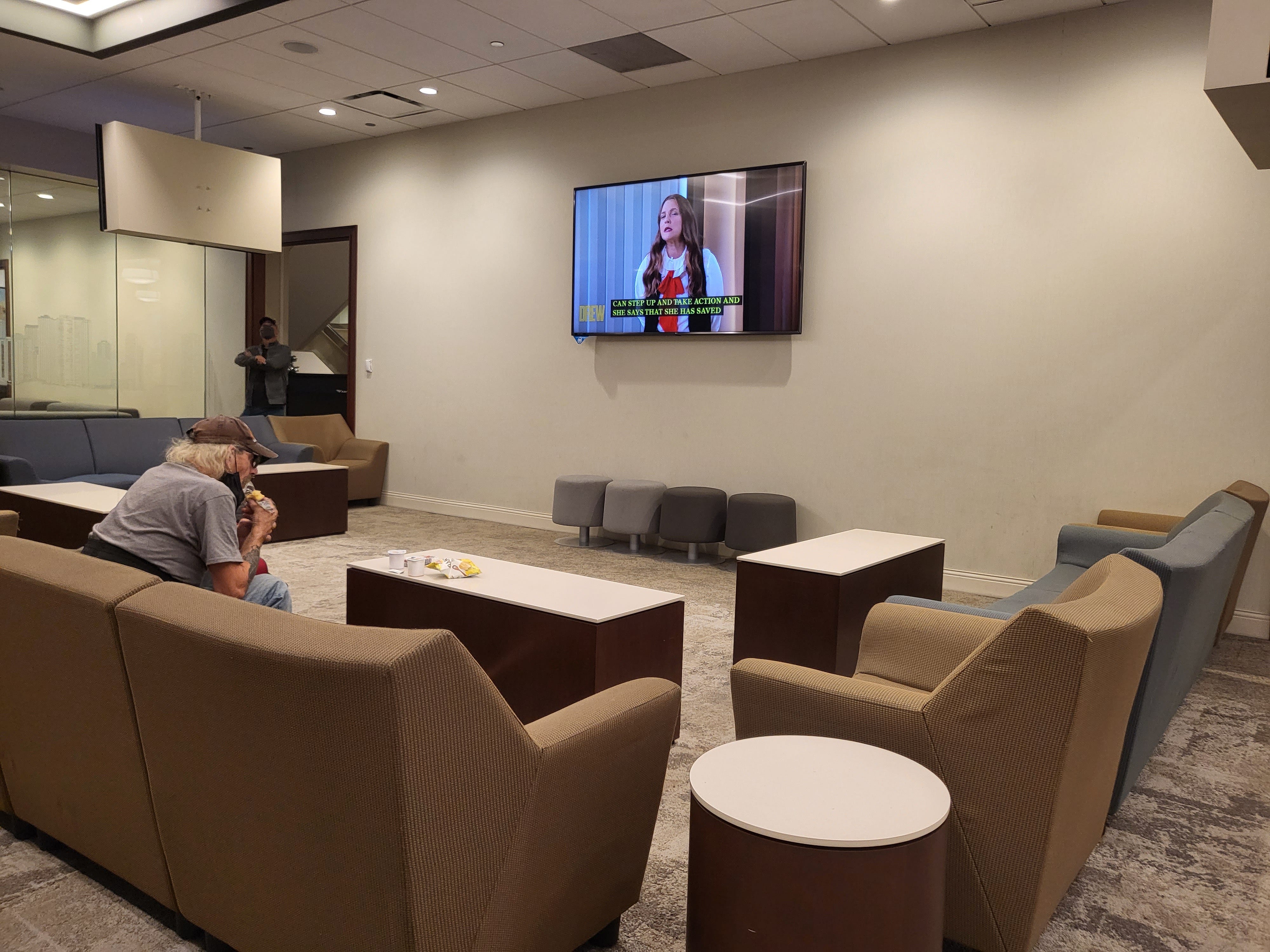
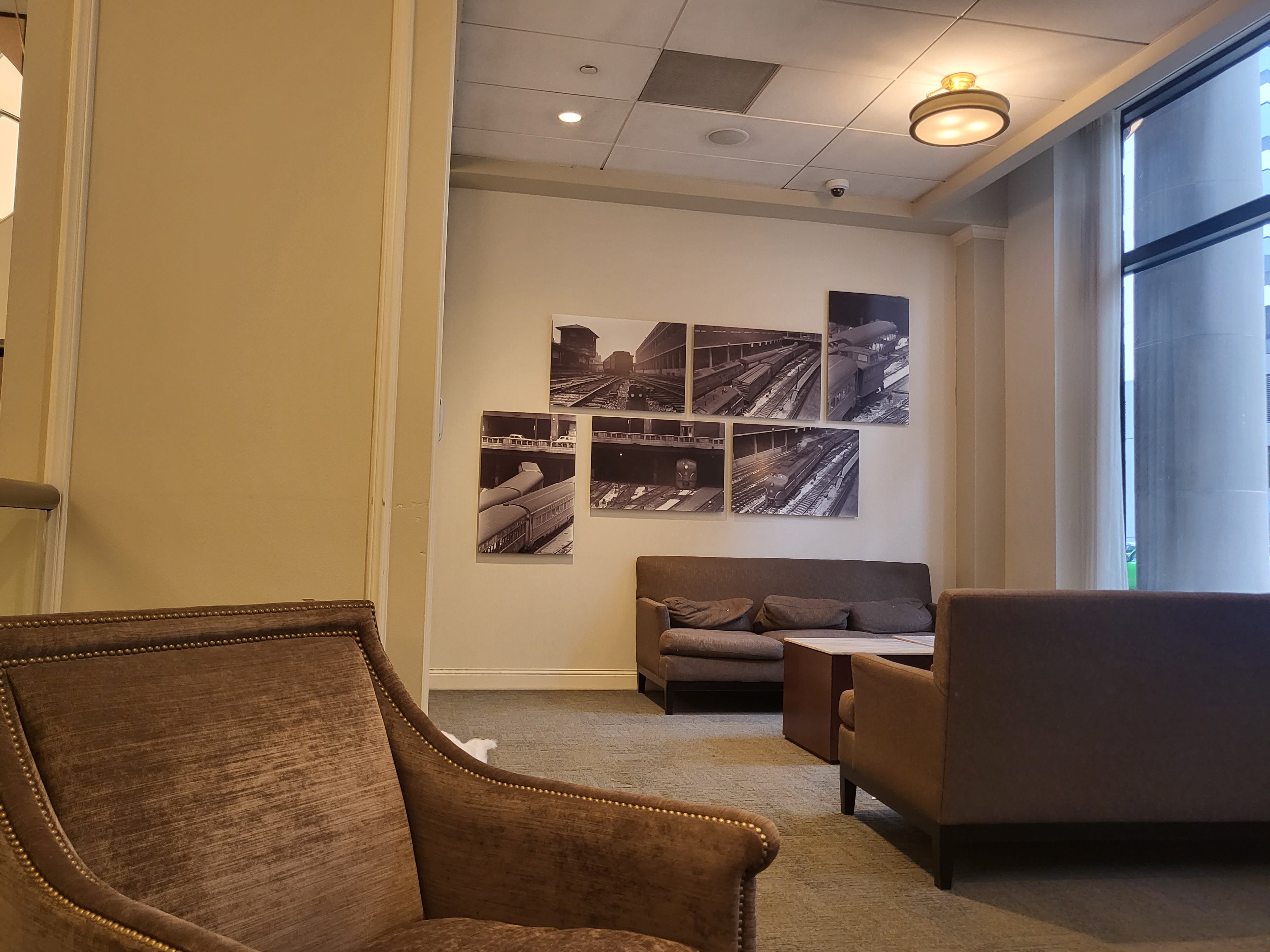
You may check your bags in the lounge. The room is under surveillance, and there is an attendant outside.
I discovered this attendant is one of the individuals who makes station announcements! As the disembodied voice echoes throughout the Great Hall et all, you can know that voice originate from someone sitting in the Metropolitan Lounge! Mileage on this fact may vary.
Anyways, trains are called for Metropolitan Lounge members. When your train is called, you may exit through the double-doors into the Boarding Lounge. The line can stretch out of the lounge and into the Amtrak ticketing area.
Tips for Success:
If you wonder which train a long line of passengers are queuing for, you can use your 2 feet and follow the line to see what track # they are standing in front of without needing to ask anyone. Revolutionary, I know.
If your train is 10 minutes from departing, and there is a line of passengers out the door, it will not leave without you (provided you remain in the line.) Really. I promise. The line will move, and you will get on the train.
Re: Above, once the line start to move, it moves quickly.
If you would like a physical map of the train route you're about to take, grab one from the ticketing area! They don’t supply them on trains anymore. In fact, if you ask a conductor for one while aboard, they may chuckle at you as though to say “oh how quaint.”
Departing Chicago Union Station
The California Zephyr departs Chicago Union Station daily, which is kinda nuts to think about, as it is a 3-day trip across America. As you walk along the platform, someone will check your ticket and tell you which car to enter. The sleeper cars are typically all the way at the end. Hello, Roomette 19.
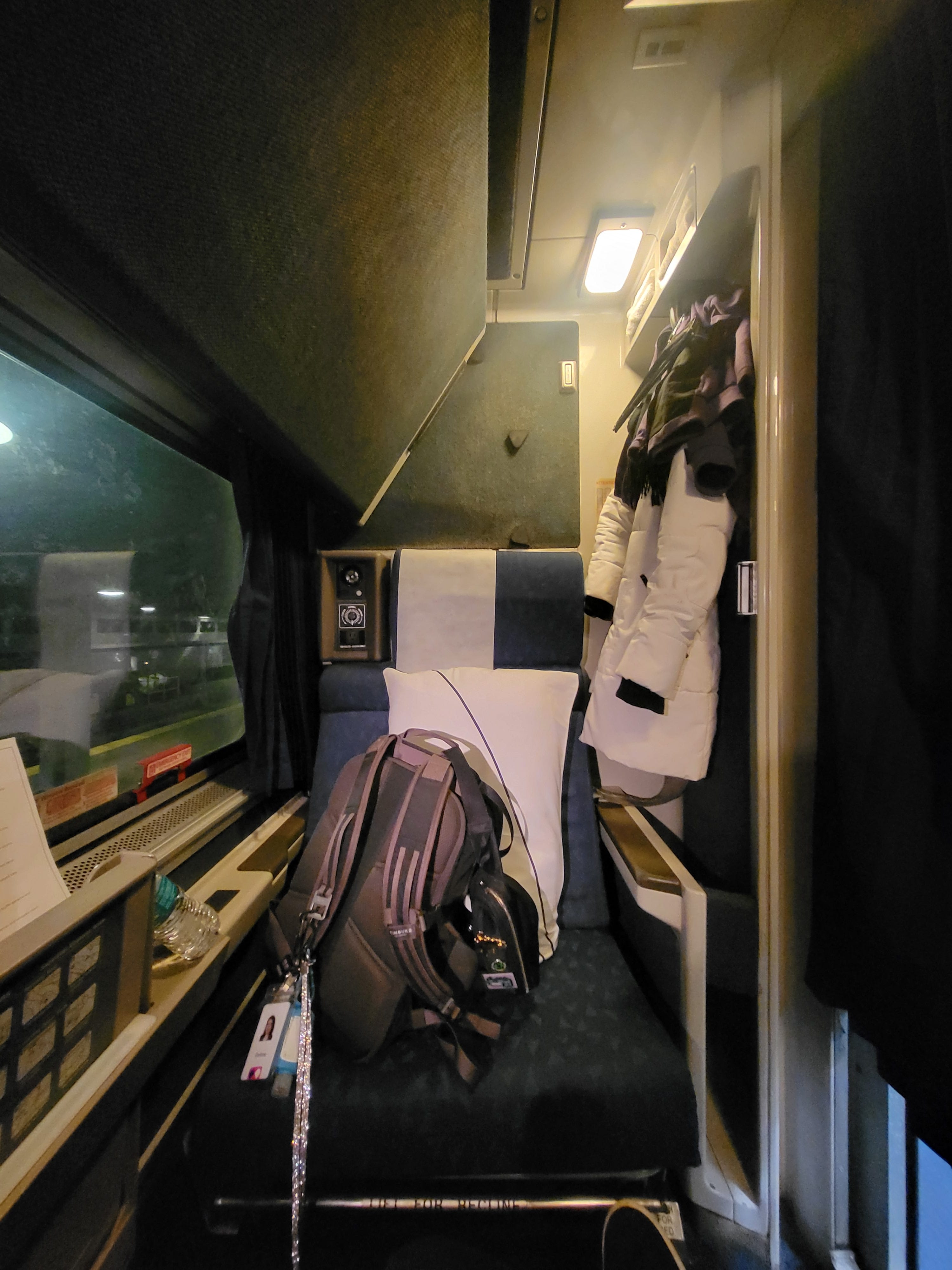

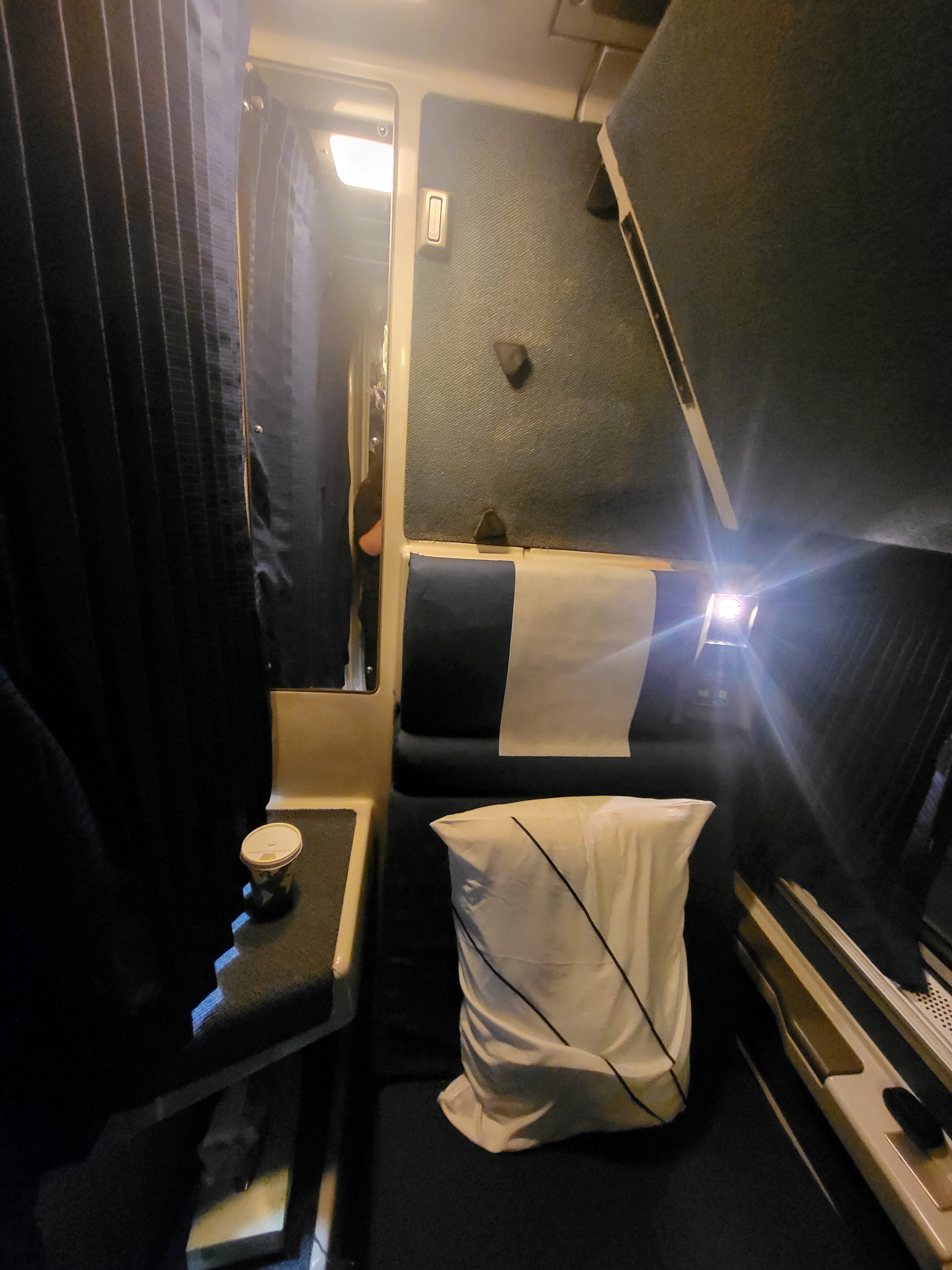
The Superliner roomette is two coach seats facing each other that convert into a bed. A top bunk lowers into a 2nd bed, or storage space. There is climate control, music control (?), an attendant call button, and some hangars and hooks for your items. This space would be tight for 2 people. As 1 darlene, I was quite happy.
You are greeted by a safety brochure, bottles of water, and a dinner menu. Soon, you are additionally greeted by your room attendant, who explains the layout of the train and how they will be serving you.
Room attendants convert your room from daytime/nighttime, make your bed, bring you dinner, and otherwise are there for you like an airline attendant. The key difference is gratuity is not included in your ticket price. I was fortunate to be carrying cash, but passengers should keep this in mind.
The train departs as promptly as it can. It was a gray day leaving Chicago.
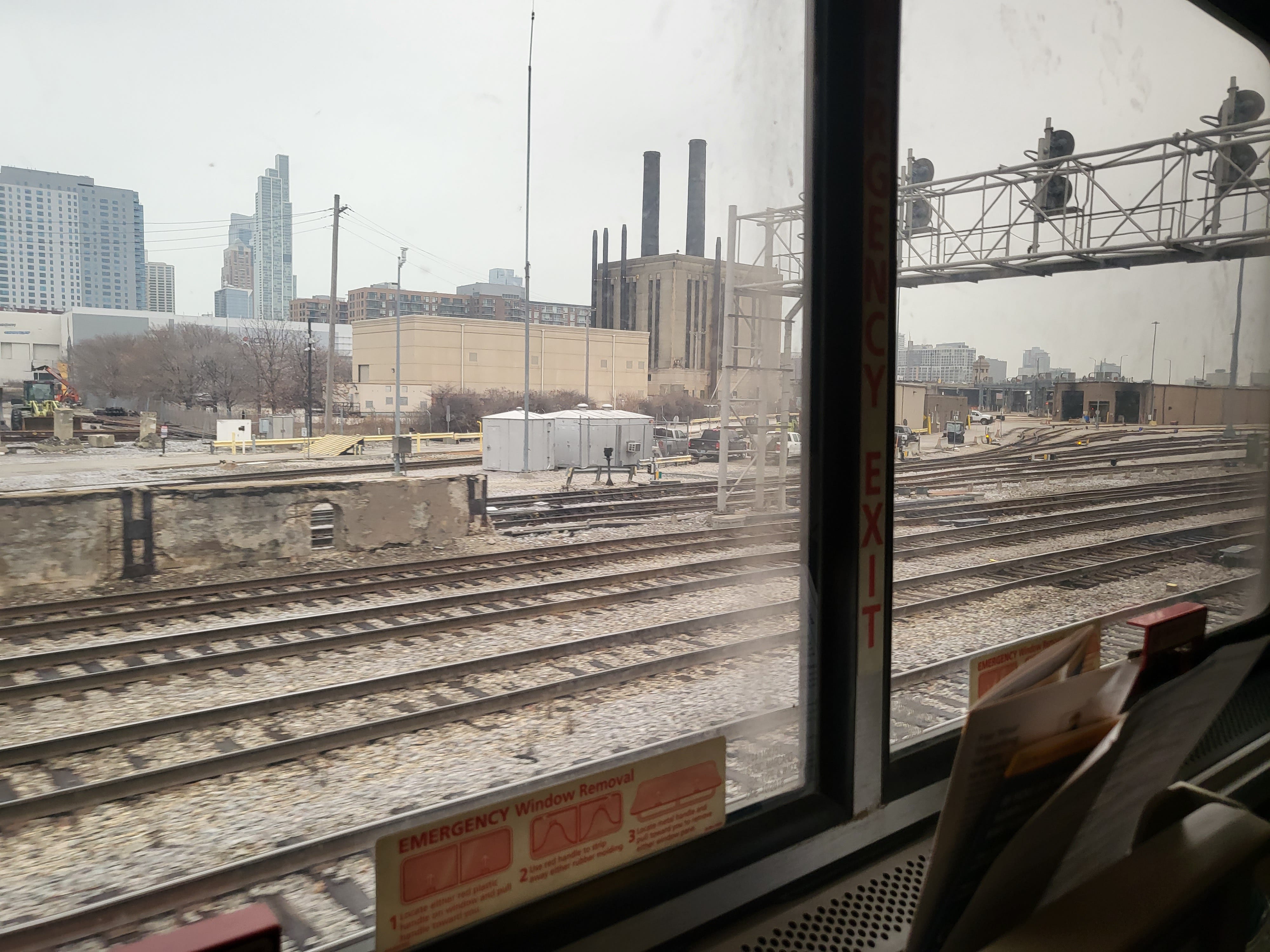
Let's talk instant karma. The train halls are narrow. If the room across from you doesn't have their shade pulled, you can see right in. I witnessed the passenger across from me struggle to open their door. Fool, thought I.
Reader, I could not open my door. The latch was jammed shut. No amount of jiggling, cajoling, or pleading would help. I had to hit the attendant call button, explain that I was stuck, and ask for someone to open the door from the outside. The attendant and I switched places so she could try the door — and she got stuck. And so I started my transcontinental journey being asked to run and get a conductor.
After this ordeal, I was informed I would be moving rooms, as the faulty door was a safety issue. I was given a choice of 2 rooms: one with a white towel on the floor to hide gummy candy ground into the carpet, the other with carpeting peeling off the wall. I went with the towel room. Hello, Roomette 2.
And so now we must address what might be a downside to those deciding on Amtrak travel.
Amtrak took over the majority of passenger rail in the United States sometime in the 70s. Since them, it has made orders for new coach and sleeper cars. Amtrak has fought for and received Congressional funding over the years. But most of the fleet is outdated. While I enjoyed my journey, the service, and experience of Amtrak, it must be said that some of the cars are old. Broken doors, dirty carpets, scuffs and dings are not uncommon. For me, it adds charm, but for others it may be a turn-off — especially those more familiar with rail travel in other countries.
Amtrak is a great service for many. As you read on you will see how much I enjoyed this unique travel experience, and recommend it. The crew do everything they can to keep cars clean, but it comes down to how hard passengers are on the facilities when there.
That said, in contrast to my warning on the cafe car, the dinner service is A+ fare.
A few hours after departing Chicago and heading westward through the Illinois prairies, someone came around to take your order, and asks if you’re going to eat in your room or in your room. For day 1, I elected to stay in:
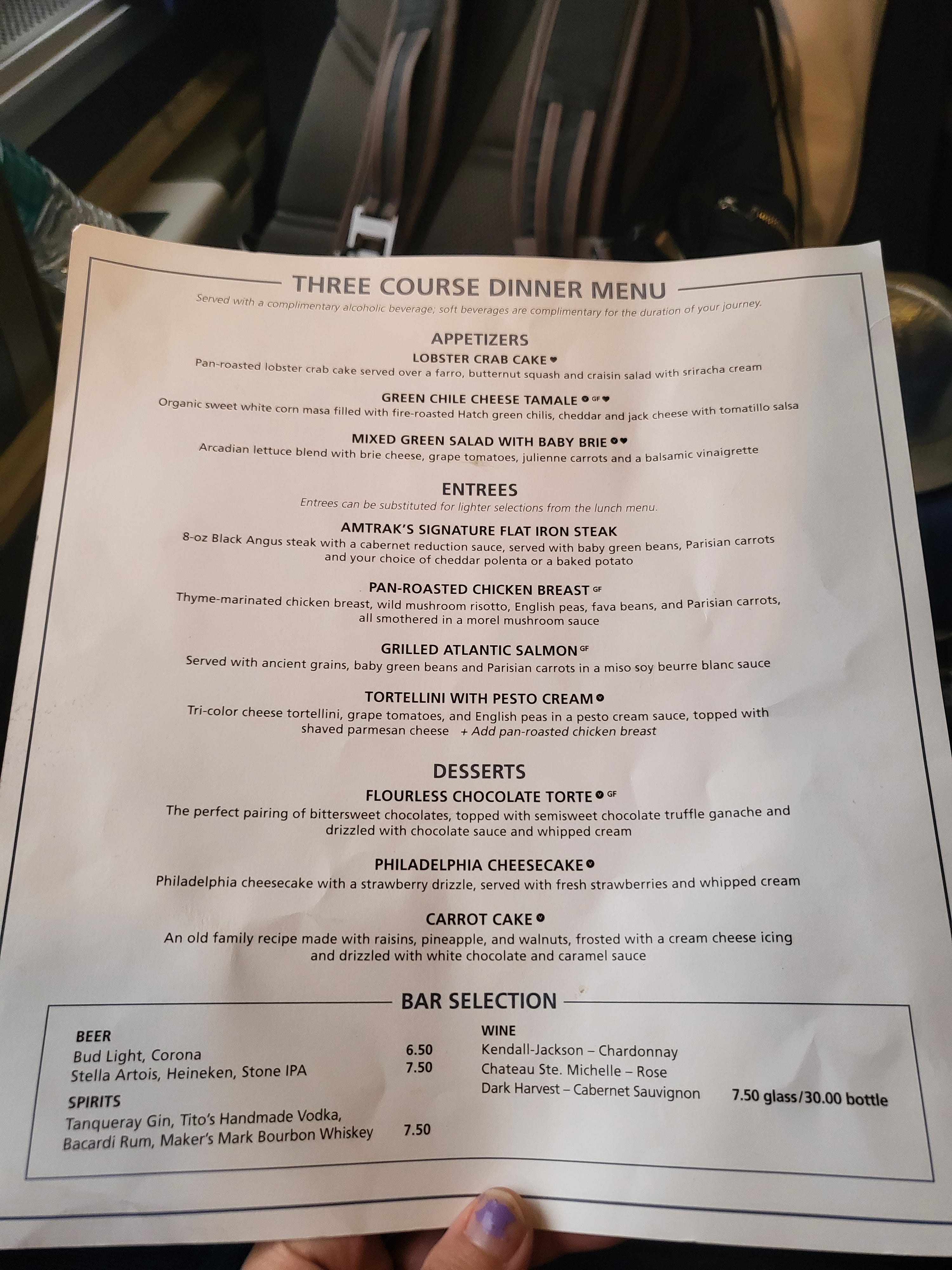
Knowing Food was eventually en route, I settled in for a long Day 1 of my ride across America.
The first day of travel, the train travels westward from Chicago, through central Illinois, eventually crossing the Mississippi river into Iowa.
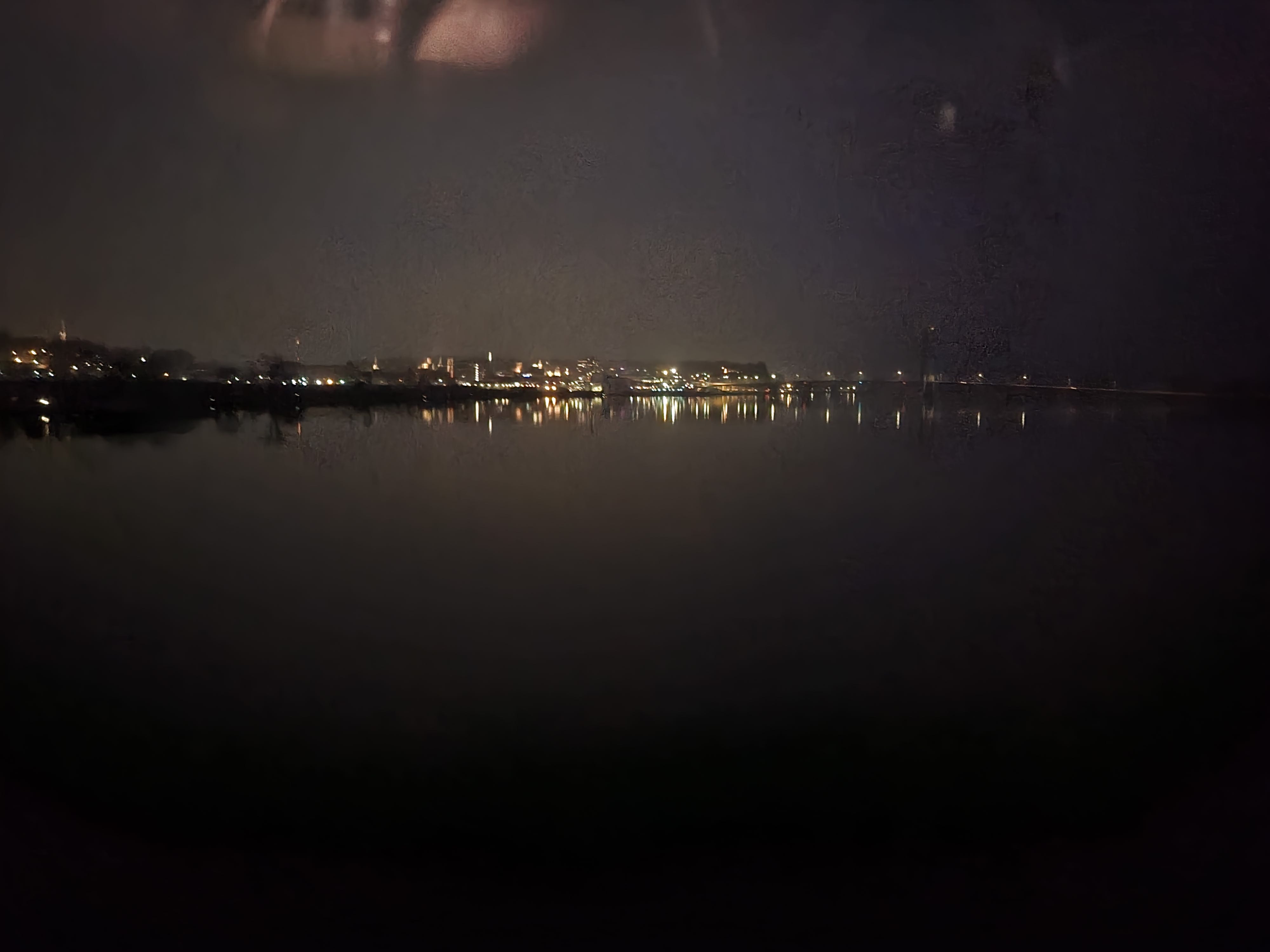
Iowa
Somewhere in Iowa, it was time for supper.
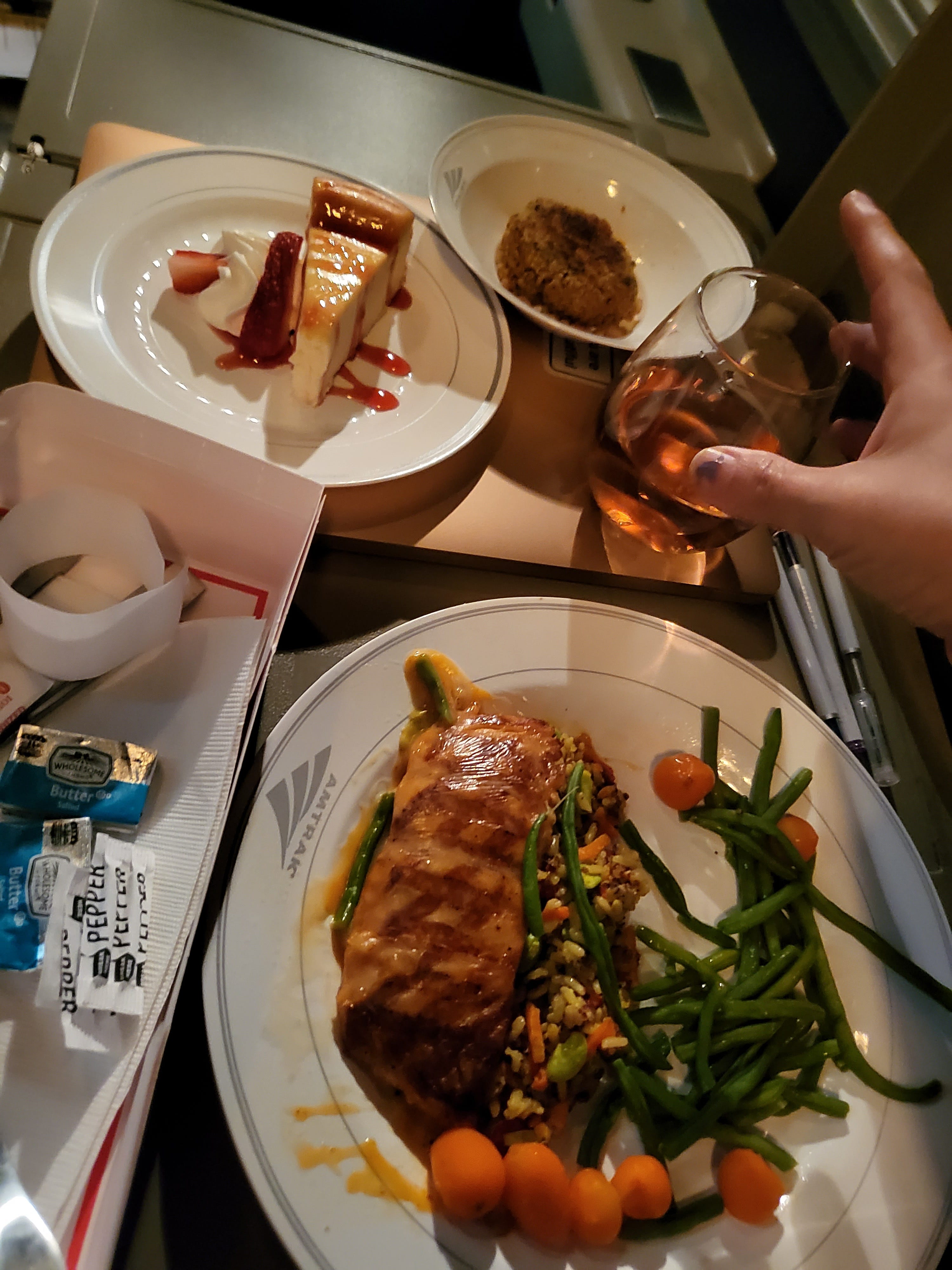
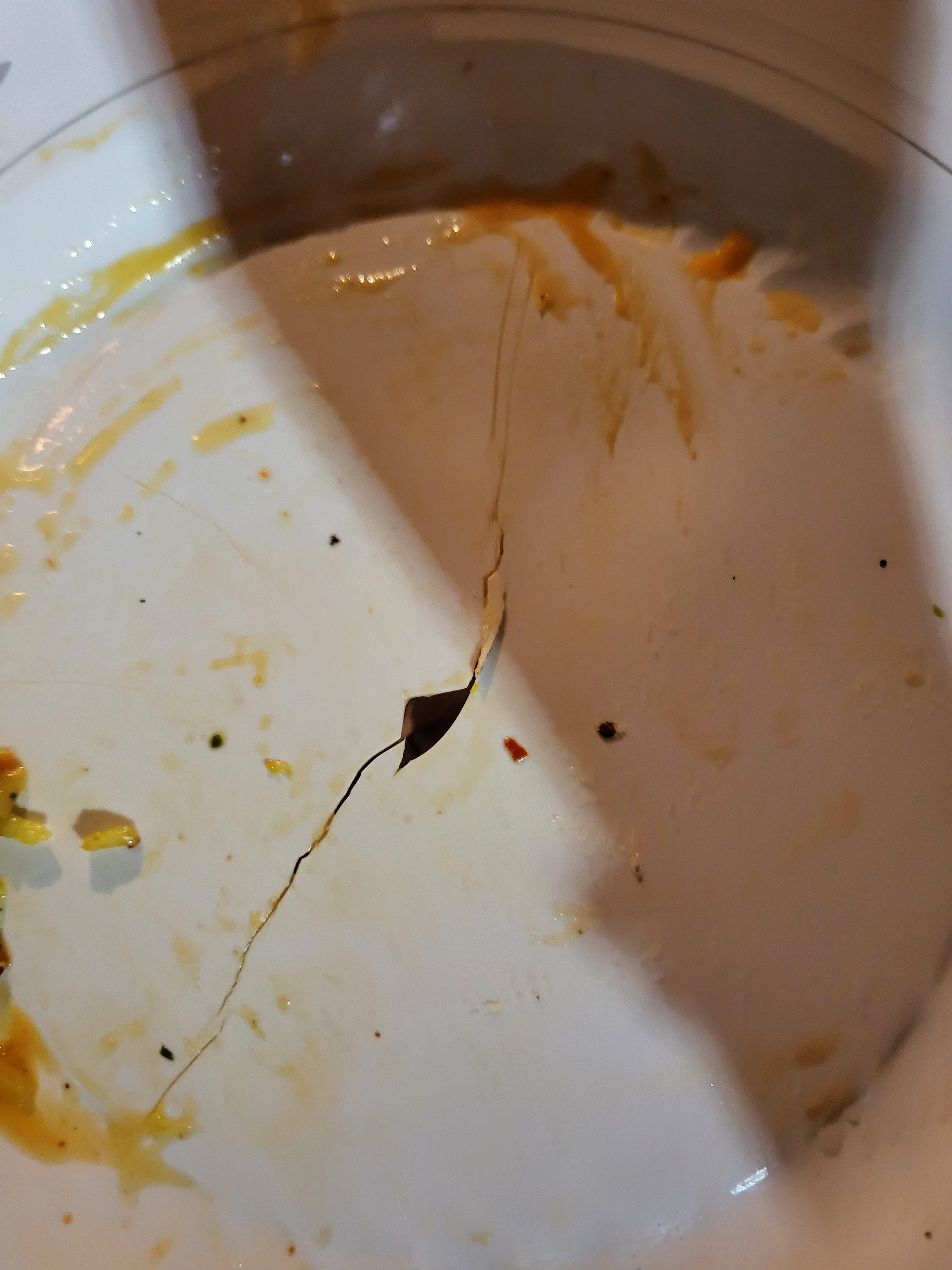
Reader, I was pleased as punch. The dinnerware did not fare well to my enthusiasm, so dig in with caution.
After dinner, around 8PM, I asked the attendant to pull down the bed and make the sheets. I found it comfortable enough to sleep well.
At some point, I stepped off the train in Ottuma — home of Radar O’Reilly, of the show M.A.S.H.
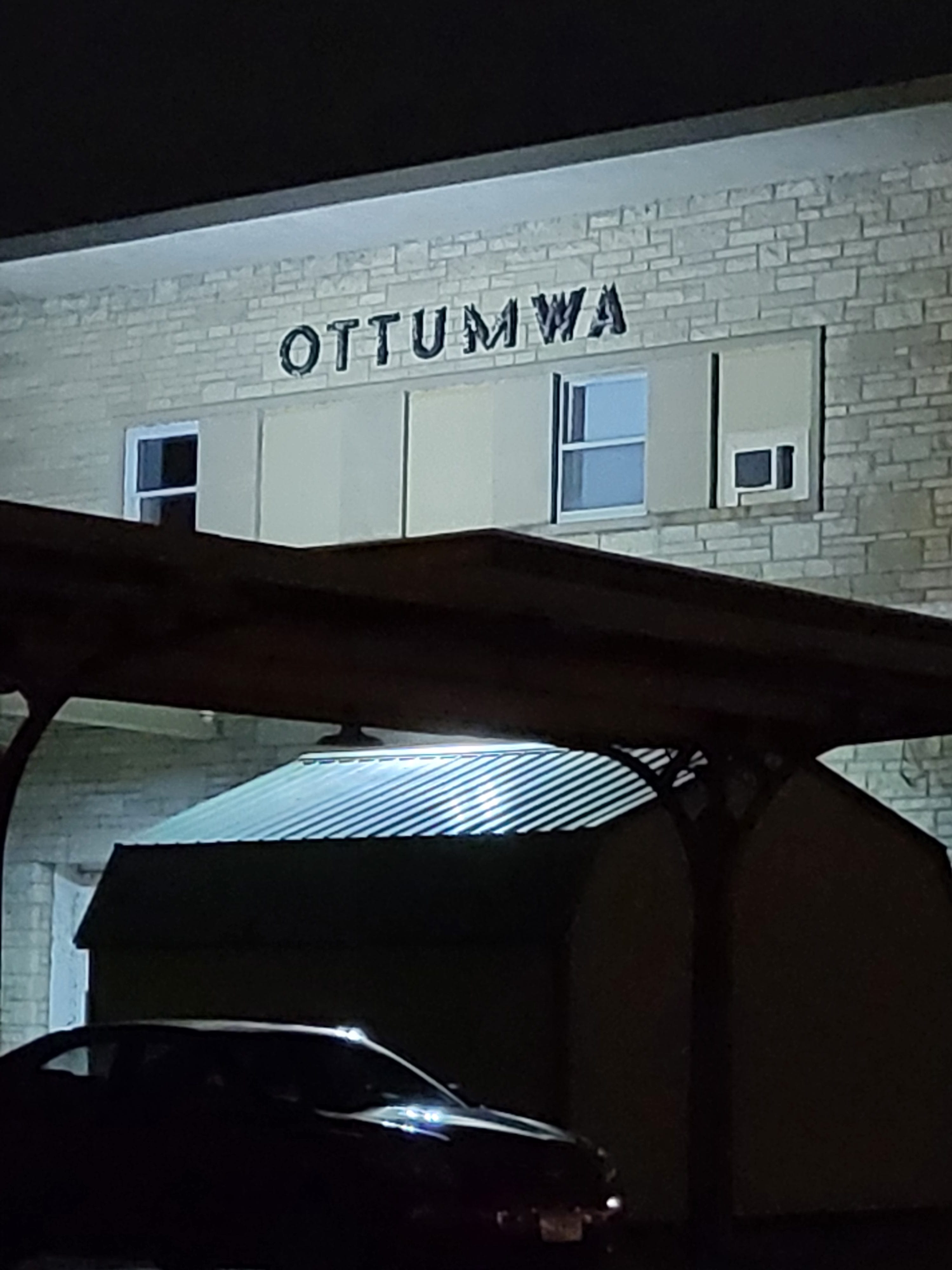
After that, I slept for the rest of Iowa, and most of Nebraska as well.
Somewhere In Nebraska
The major station stop in Nebraska is Omaha, which I must have slept through. As a teen, my memories of the station include yellow lights, a flat black metal roof, and the smell of cigarettes. I had been heading to Denver with my parents to see family and friends.
Although I slept through Omaha, I woke up at 3AM somewhere in Nebraska.
In the dead of night, under a deep black starry sky, the train reaches top speeds of around 80 mph in flat, open stretches. Under the covers, I pilled my pillows against the cool window glass, and lay looking up at clear constellations while Nebraska fields flickered by.
While enjoying the stars, I was swayed gently by the train, and that clickity rattle of wheels on track and rail joints. I listened to the horn as we passed rail crossings — two long blasts, one short, one long.
The train runs along some interstate, where I could see big rig truckers, LEDs and headlights cutting through the night. The metal silos of grain storage would pass by. I would see lonely homesteads with a lone garage light. I watched these curiosities unfurl as the train hurtled westward through darkness — but mostly, I was drawn to the stars.
I don’t have any pictures or videos, or anything else cute to say. If you find what I described relaxing, then I think you should take the California Zephyr somewhere.
Eventually I went back to sleep.
Colorado
The California Zephyr departs Chicago at such time that you should arrive in Denver early the next morning.
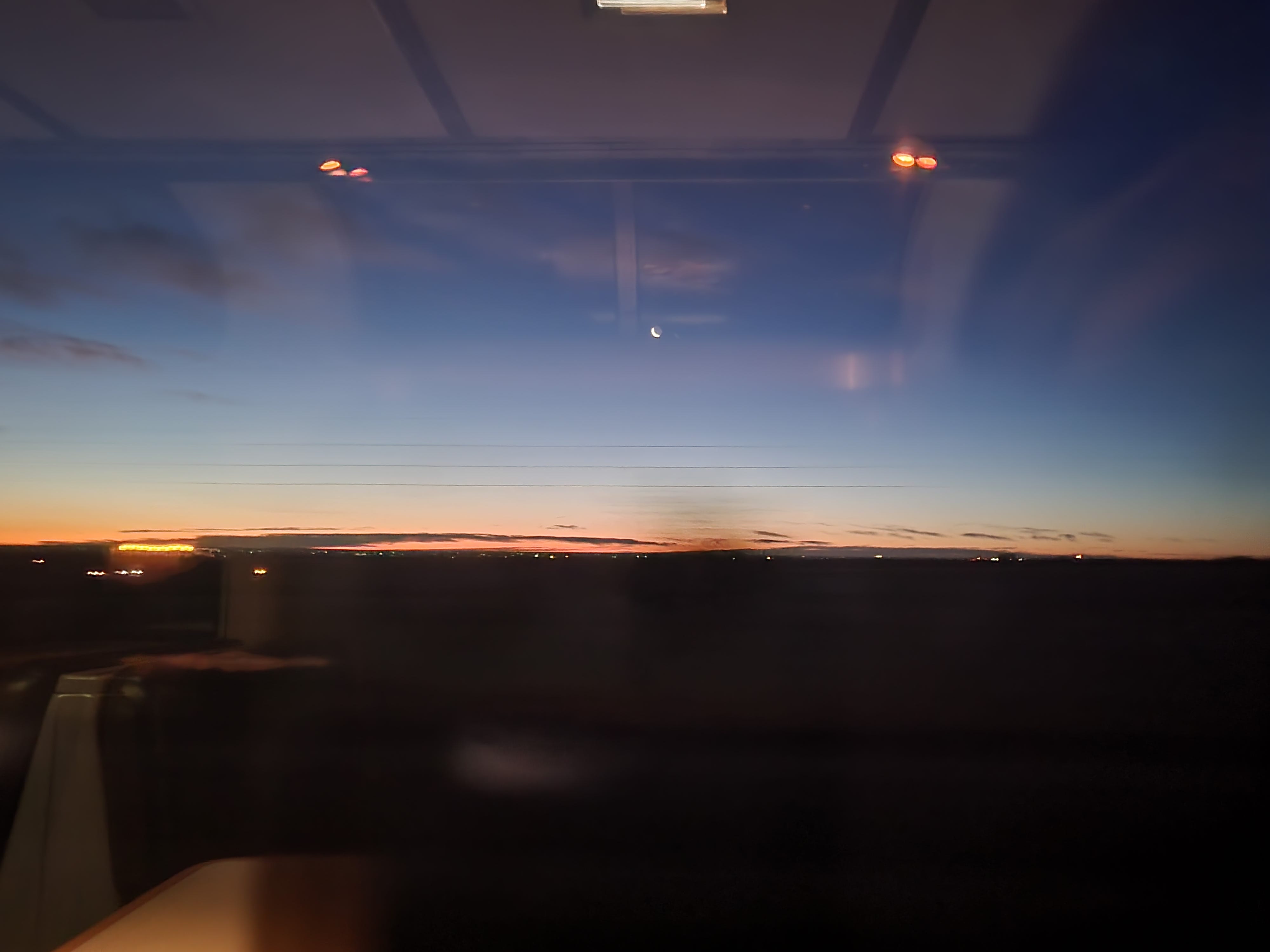
When I got up, the sky was this deep beautiful blue, and the moon a bright crescent. I made some approximation of getting “cleaned up”, and the attendant came by to get my room ready for the day. I ventured to the dining car for breakfast.
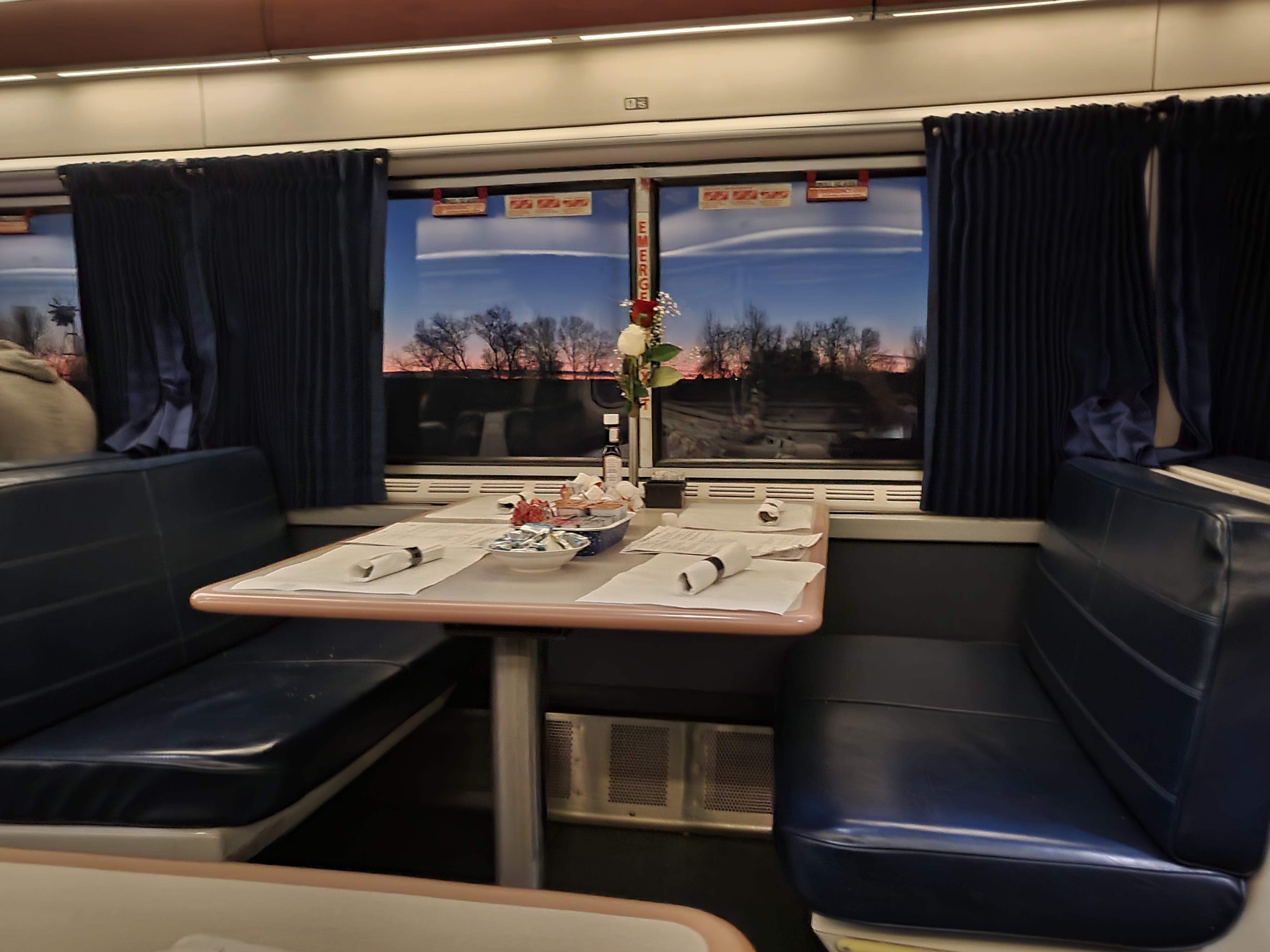
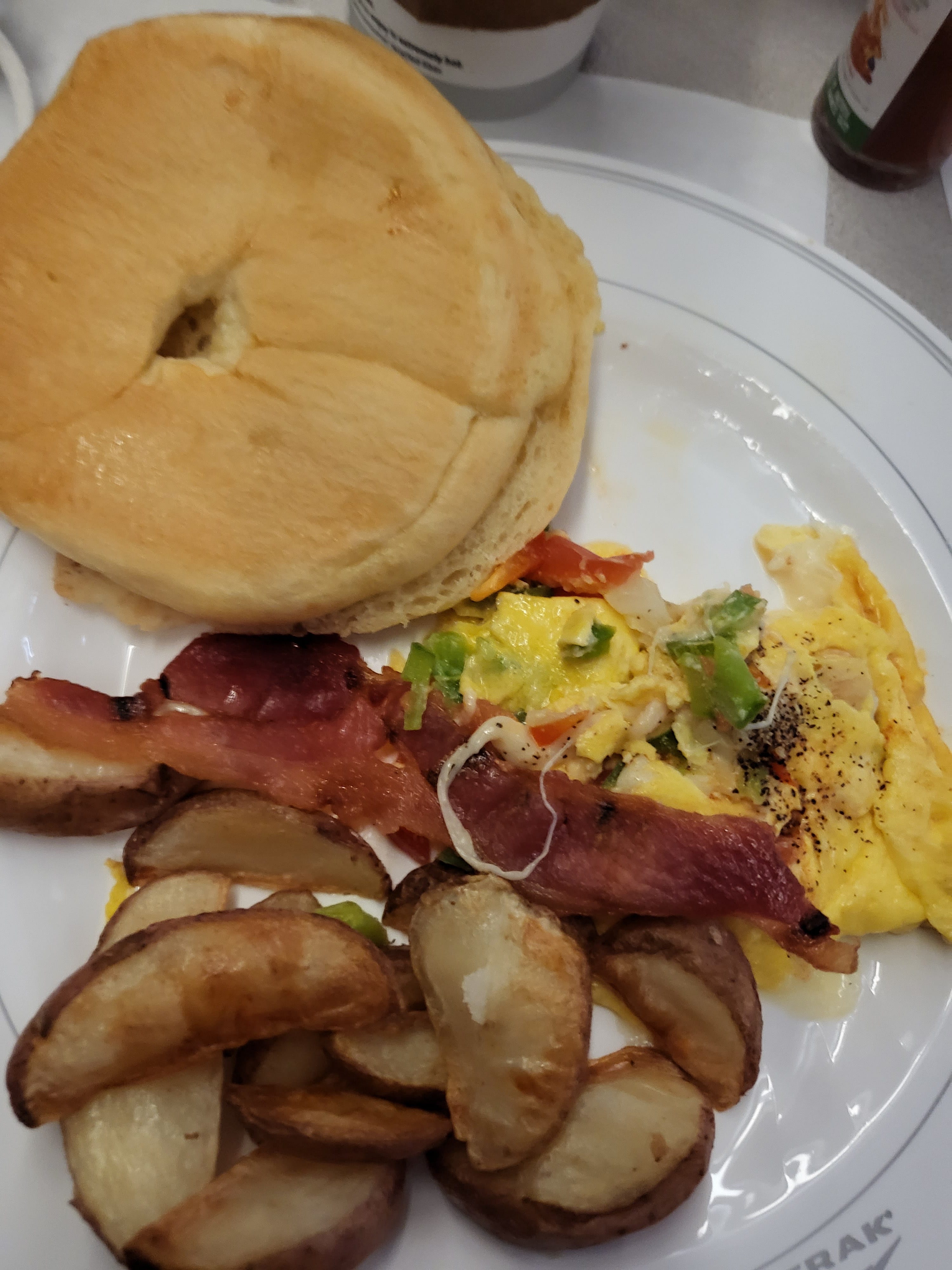
If you are a party of less than 4, you will be seated with someone you don't know. After greeting your co-eater, and asking them where they're from/where they're going, there is effectively no obligation for further interaction (unless you are into that sort of thing).
Meals are included in your sleeper car experience, but gratuity is not. I was lucky to have picked up some cash prior to my trip, but I feel for those who do not.
At Denver Union Station
Denver is nearly the mid-way point of this transcontinental journey. There's interesting history in this station stop as well. Read Amtrak’s excellent blog for more detail, but the gist is that past versions of the California Zephyr were operated by different rail companies over the years, particularly between certain stations.
Before the 80s, if you rode the California Zephyr from Chicago to California, you took a different route past Denver to Salt Lake City that went through Wyoming. This was because Denver and Rio Grande Western (D&RGW) ran their own passenger rail on the choice scenic route through the mountains.
In the years since then, Amtrak has fully taken over as the passenger rail operator in America. As a result, since the 80s, the Denver → Salt Lake City route is for the California Zephyr now takes the route that used to be privately owned.
The train stops here in Denver for 30 minutes. You are free to get off the train and check out the station — with the knowledge that once the train is leaving, it’s gone!
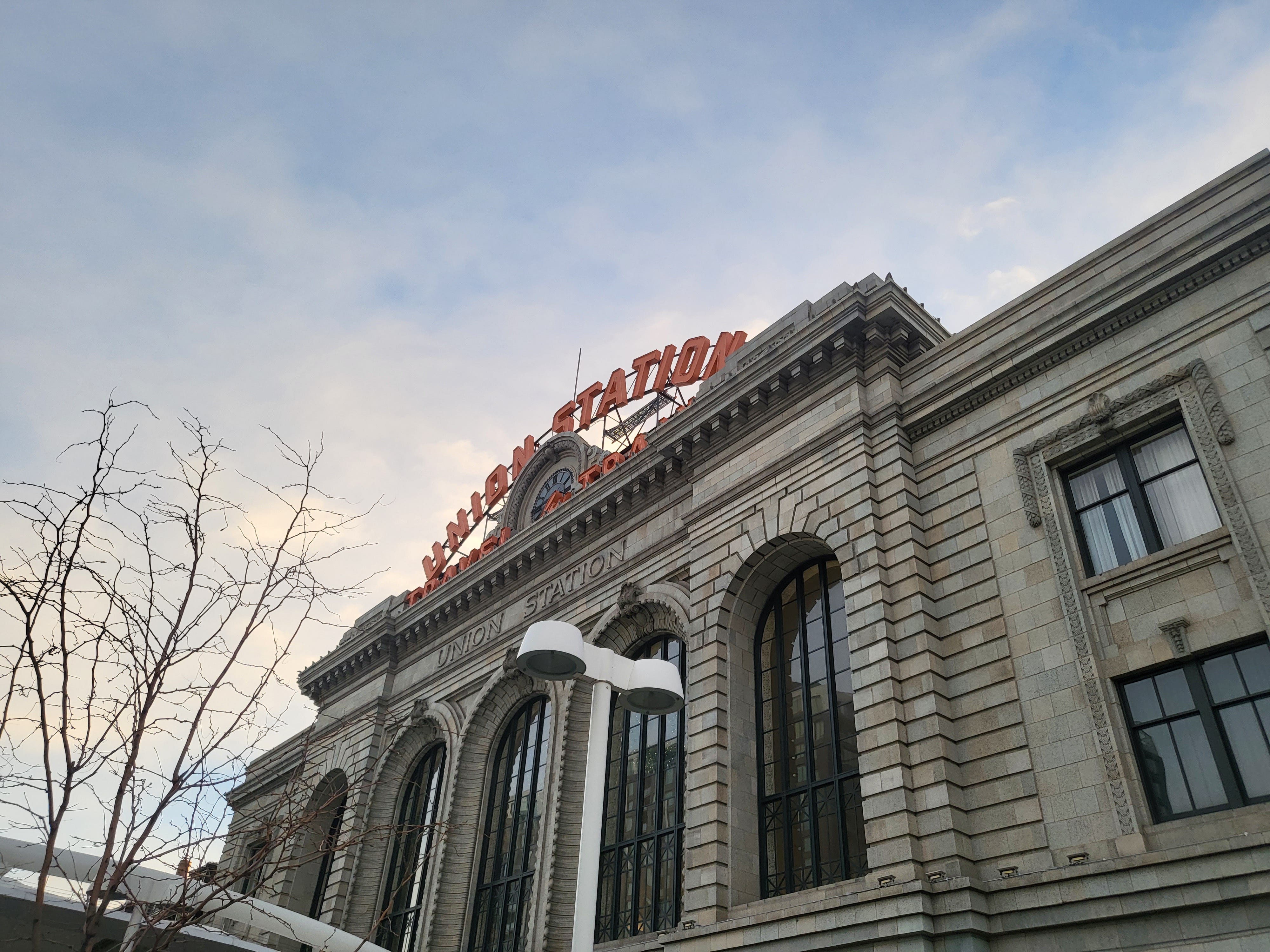
Cafe staff and station security were present as I buzzed around, jabbering to myself recording videos, and taking pictures. It made me wonder what it's like to work at a station like this where, once every few days, the Amtrak train pulls up, and weirdos like me spill in, bounce around, then GTFO.
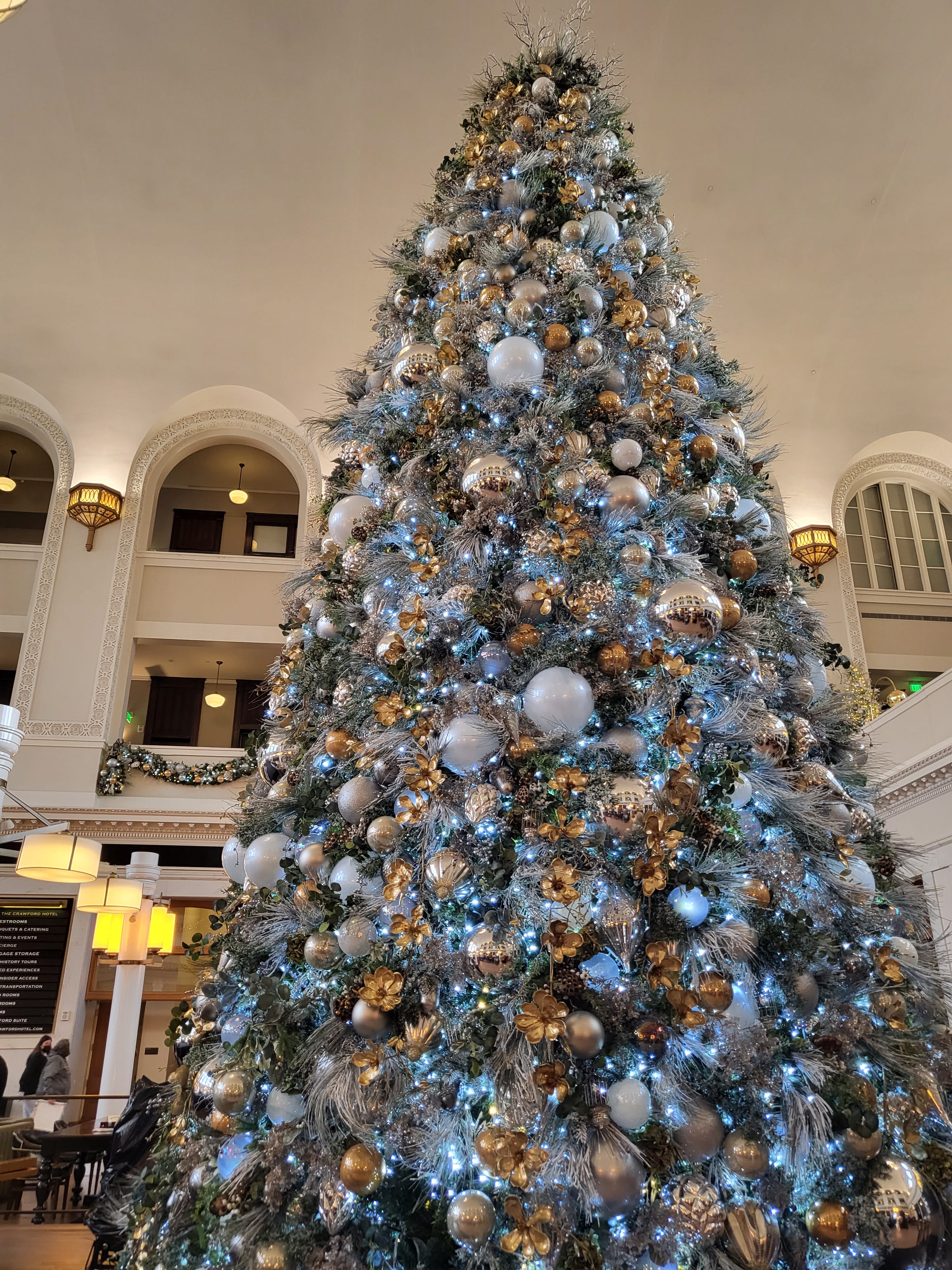
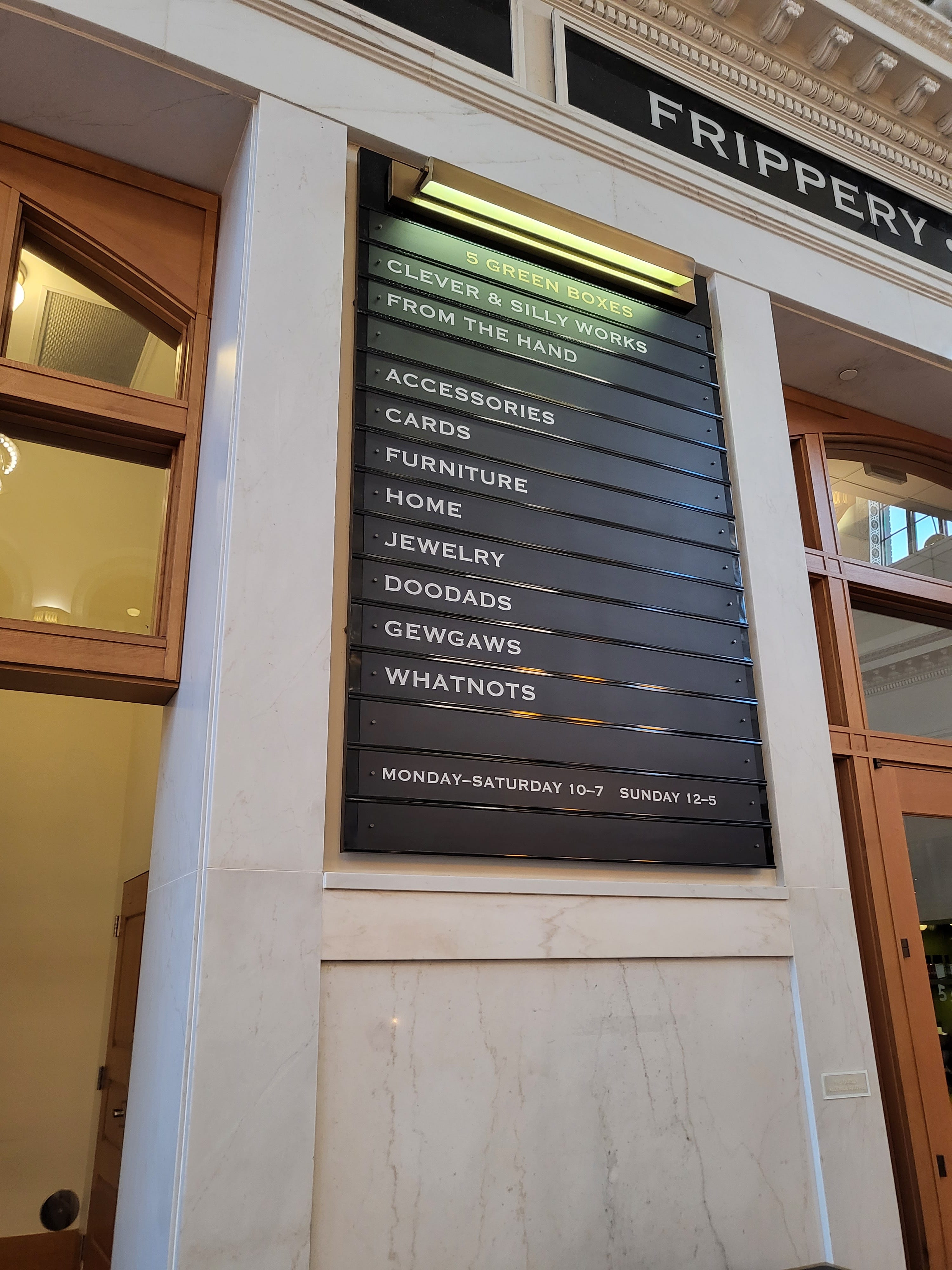
Fueled, amused, and ready, I headed back into the train.
Front Range, Rockies, & Glenwood Canyon
Folks, if you want to do sight-seeing, secure a place in the Lounge Car (also called sightseeing car) immediately after departing Denver. Day 2 is where you hit the mountains and where being on a 3,000-ton behemoth powering resolutely up, through and, around mountains is to your advantage.
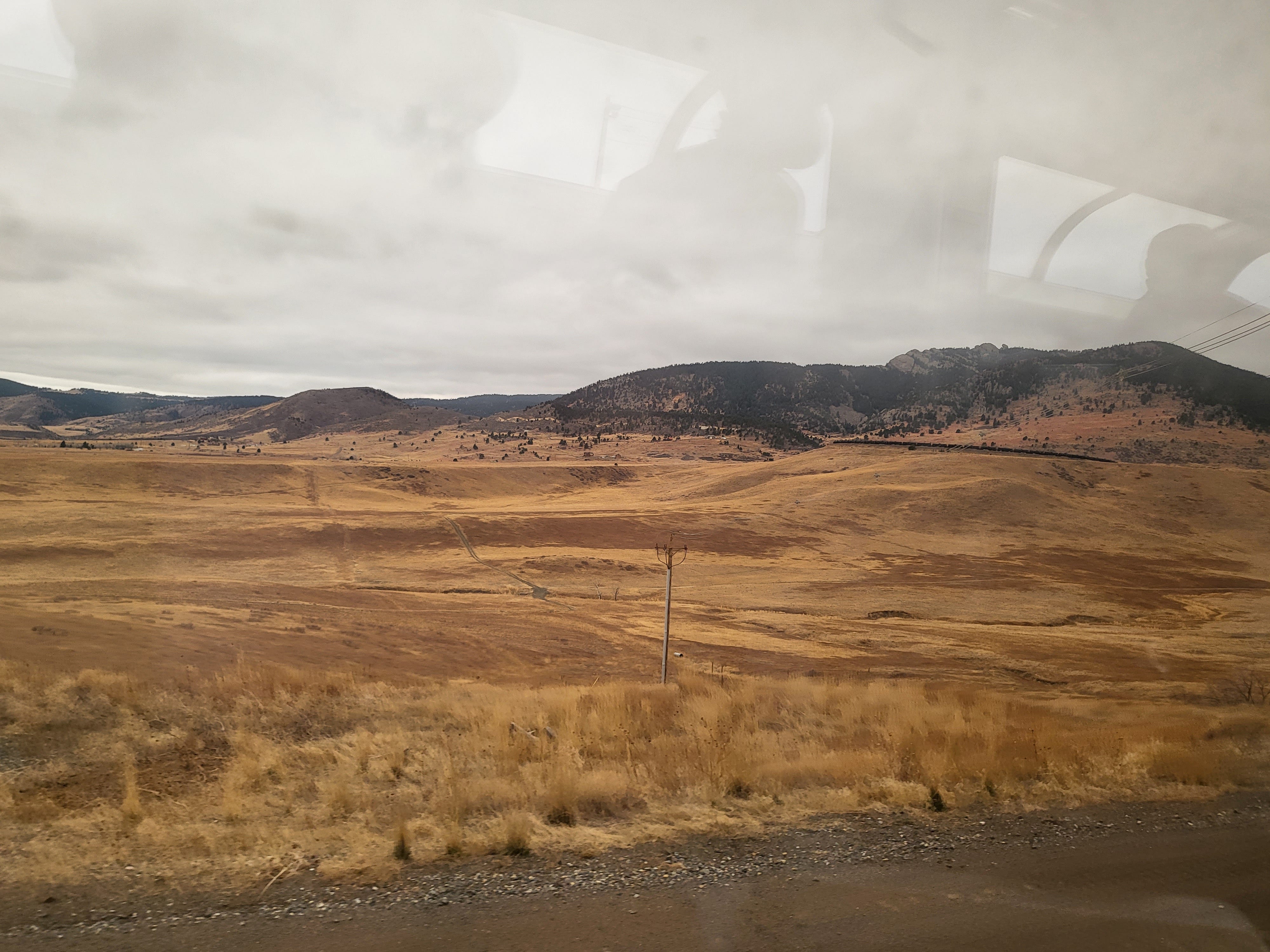
The train departs Denver, and begins to climb the Front Range of the Rocky Mountains. Zoom into the right third of the above photo.
Cool Fact Alert: You’ll see an incline ringed with what might be dark trees. Those are in fact black train cars of a freight train up ahead! The ascent is a 2% grade up the Front Range into the mountains. We soon approach the Big Ten Curve, a 270-degree section of rail ringed with railcars filled with cement to block winds that reach can reach an excess of 100 miles an hour!
The conductor's voice came over the speaker, informing passengers about these winds. As a result, all trains ascending the 2% grade up the face of the mountain keep their speeds low, low, low.
As the train ascends, pretty quickly we start to dip in and out of tunnels. At this point I still have service, and so I start reading about the old Denver and Salt Lake Railway company that used to own part of the track that we’re on currently.
And then somewhere before the first post-Denver stop of Fraser, it began to snow in Colorado. It would not stop snowing on this trip until Utah.
As a kid, I have taken this train to Denver far as Grand Junction, but never in whiteout conditions.
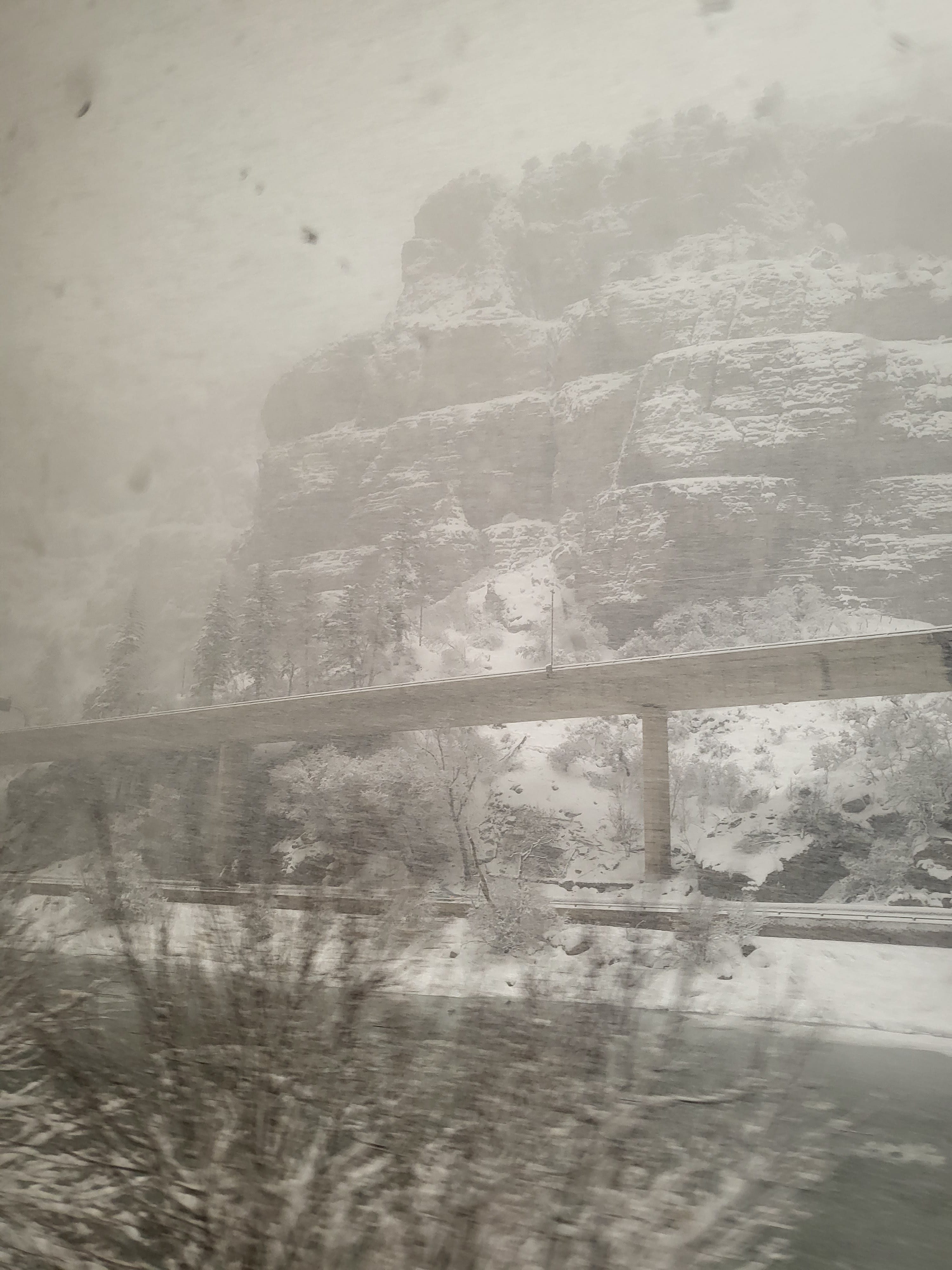
Through the Rockies, the train follows the Colorado river, the interstate, hugging mountains and offering breathtaking views. Some parts of the route seem so narrow that only a train could get through, and cliff faces rise up sharply to the right and to the left. Seriously — get to the lounge car, and hang out there. PS, there’s power outlets at each seat.
There are 3 major canyons that this train route goes through: Gore, Byers, and Glenwood Canyon.
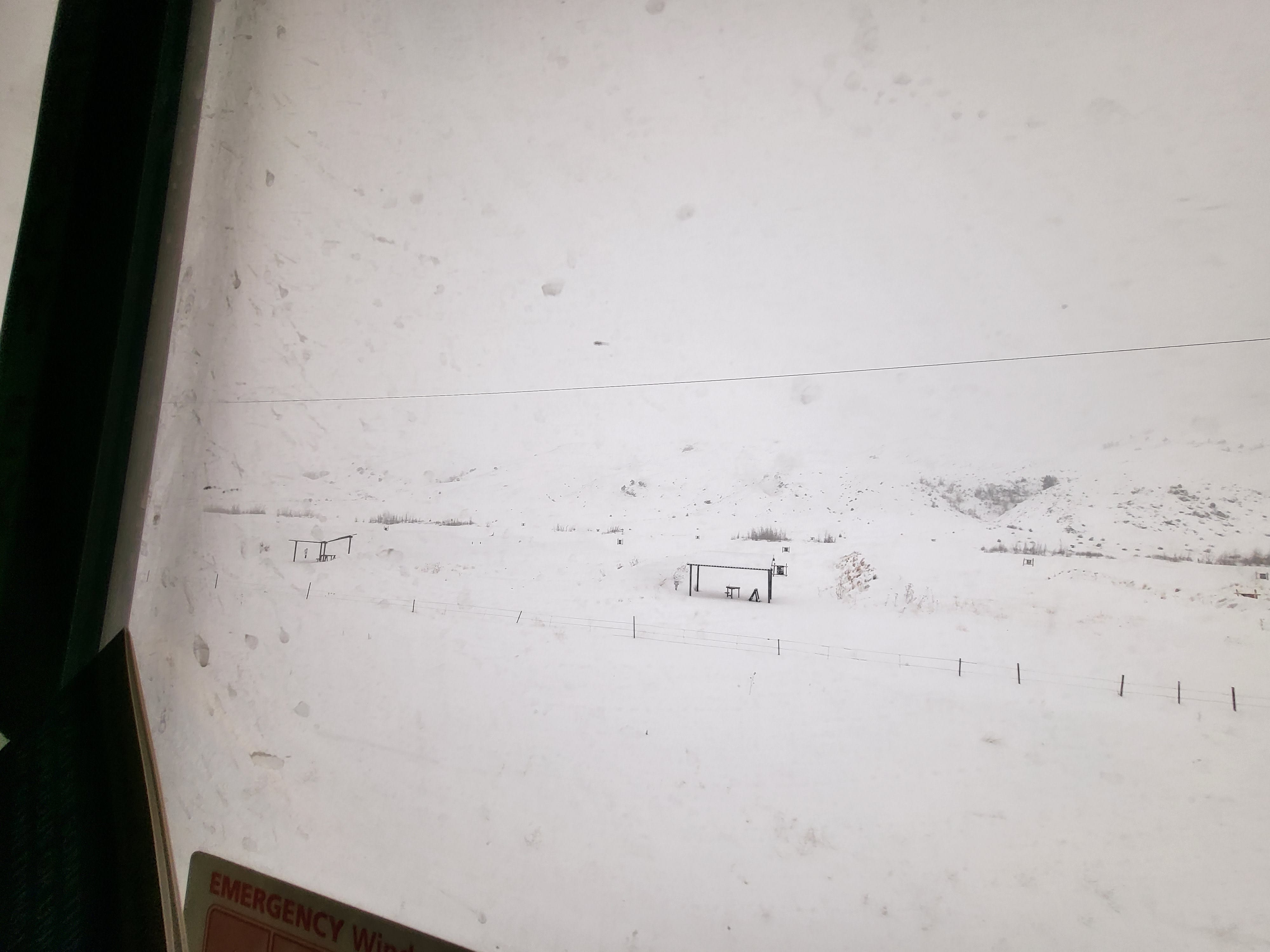
I absorbed snow, cliffs, rocks, mountains, pine trees, and swirling snowflakes. I passed other passengers reading, sketching the landscape, playing cards, or even strumming a guitar.
The train makes stops at ski destinations throughout the mountains.
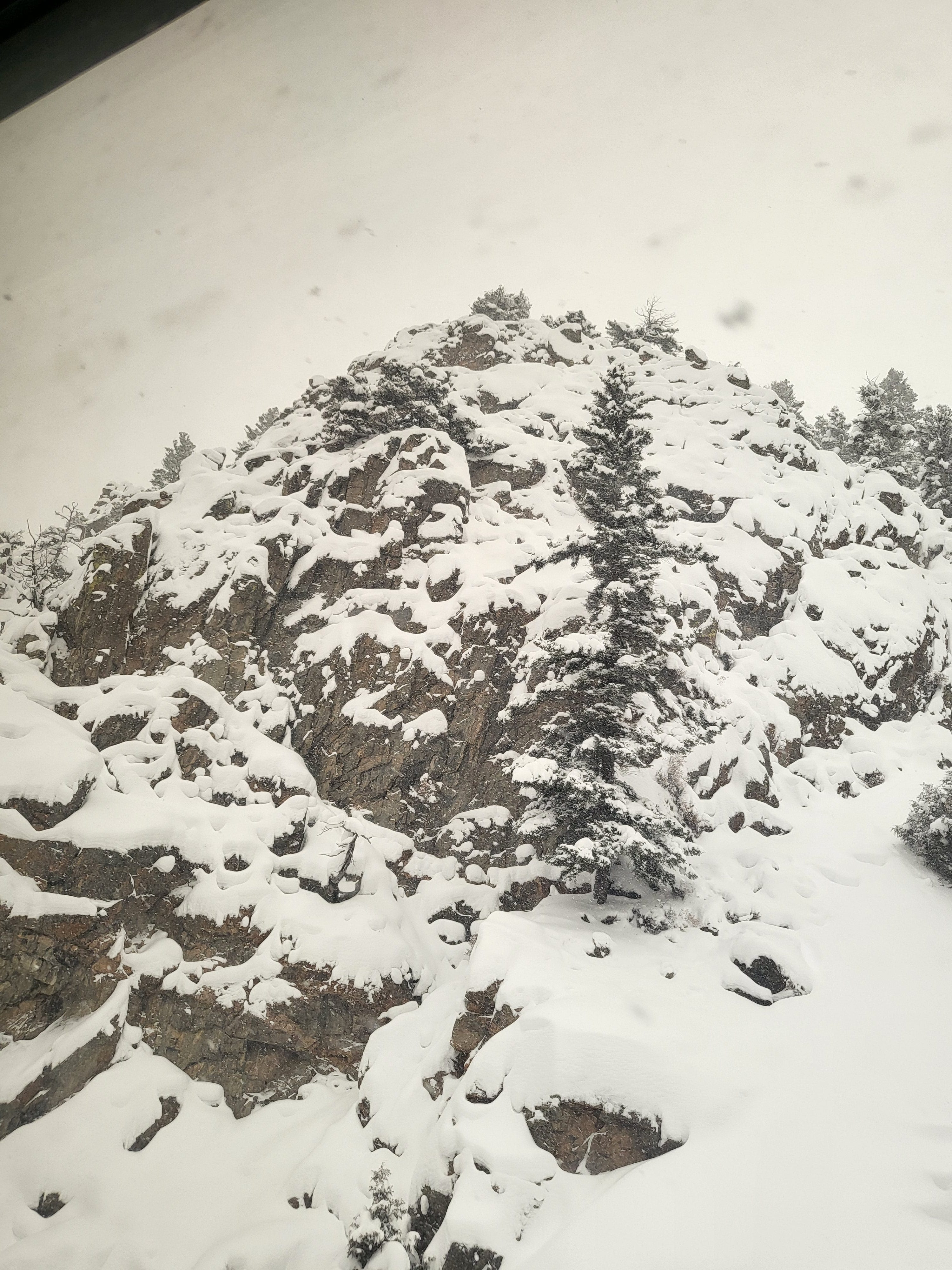
Back in my room, peering out the window, I could make out the two engines leading the train as we went around curves. It was oddly satisfying watching the train spray snow as it plows it off the tracks. The conductor informed us that it didn't seem there had been another train ahead of us for some time. For a moment I worried about "too much snow" on the train. Later, I learned that train-stopping snow is measured in feet, not inches. We were safe.
What can stop a train in the mountains is more likely freight. Amtrak pays to have priority on shared freight/passenger rail across America. However, it seems it’s not uncommon for freight trains to delay passenger rail.
I want you to stop everything and read this passive-aggressive blog by Amtrak. It is clear Amtrak does not like being delayed any more than you do, and no wonder. When passenger rail is late, customers complain, and Amtrak loses money.
At some point, the train goes through the Moffat Tunnel, a marvel of civil engineering. It is a 6.2 mile tunnel through the Continental Divide. Conductors announce the tunnel and ask that passenger not pass through cars during the time the train is in the tunnel. This is in part due to the trapped fumes in the tunnel — no one wants coal residue from the 1900s in their closed air system.
From the train, and through the snow, I saw cows, buffalo, and other livestock. I saw small homesteads, shacks, trailers, mansions and log cabins. I even saw a bald eagle in a tree!
At Glenwood Springs, I made snowmen. I miss snow and haven't seen any since moving to San Francisco from Chicago in 2018.
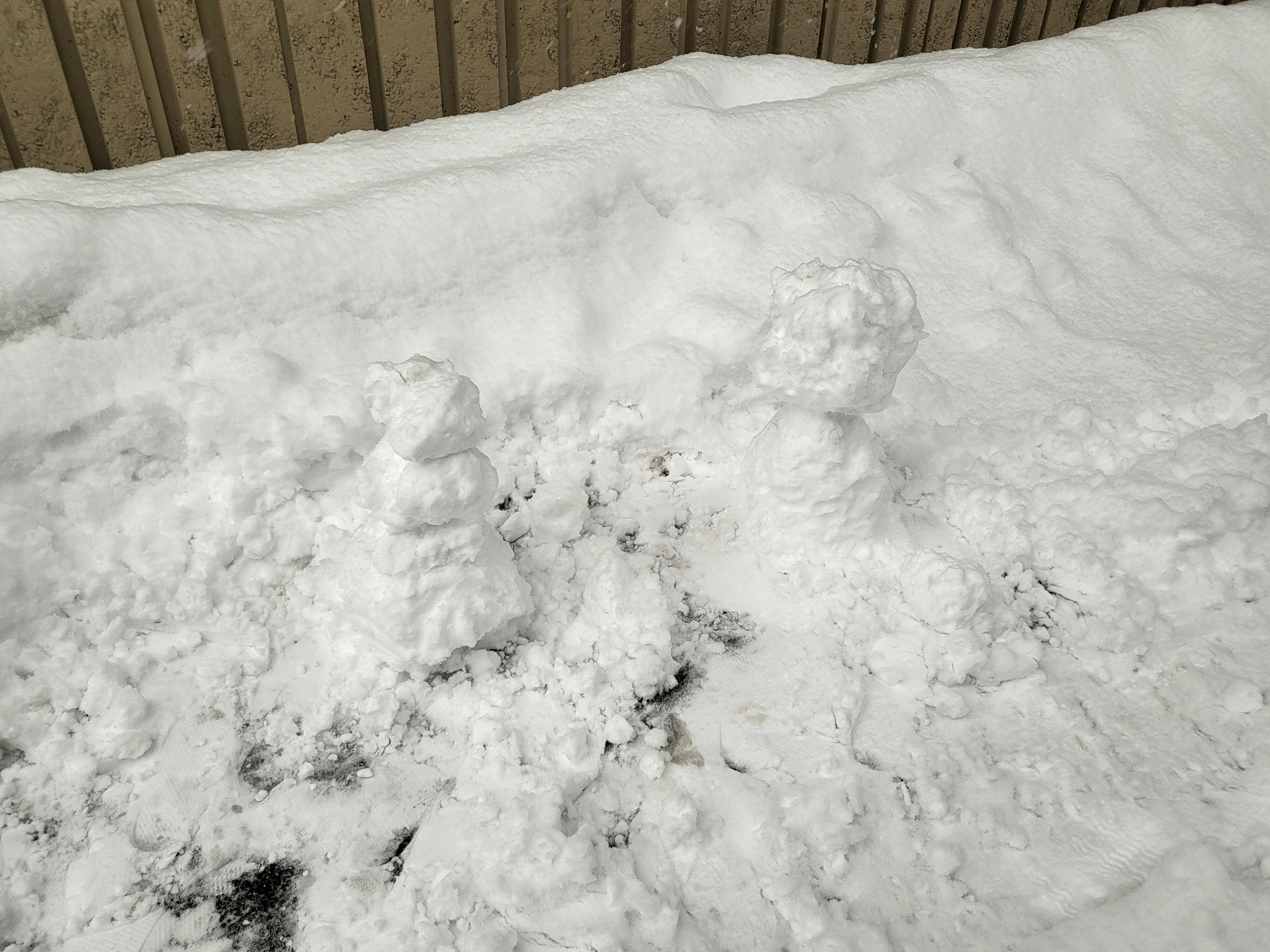
I fixed the right one's head after this picture.
At Grand Junction, I filmed a little video marking the pass into uncharted territory. My prior ride on the Pere Marquette ended here as a child, off to visit family friends. There is a little convenience store within the Grand Junction Amtrak station that held untold treasures, such as: fruit.
Having reached this milestone in my journey, I clambered back aboard the train.
Utah
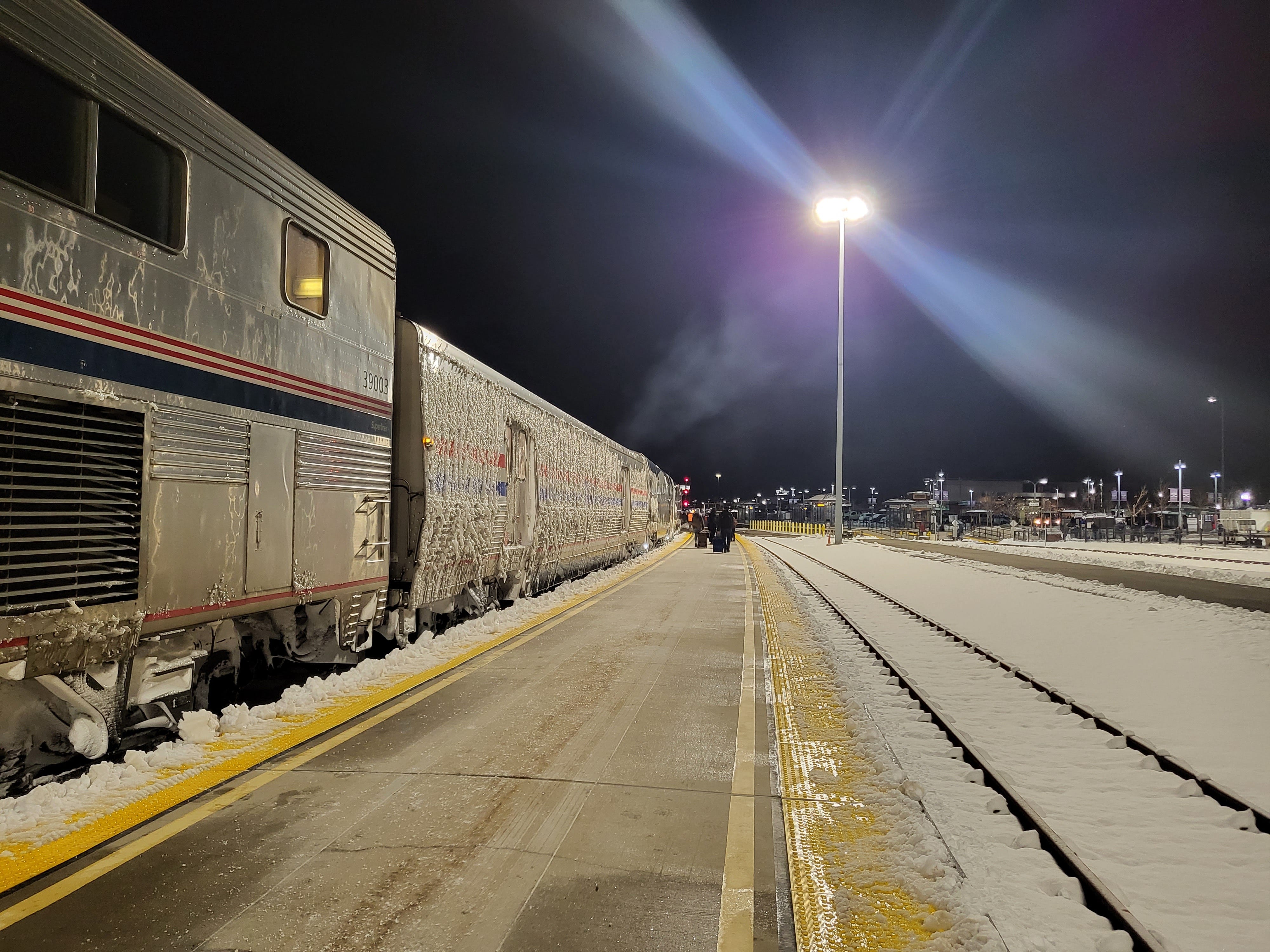
I rang in the New Year on the station platform of Utah, Salt Lake City. It was as cold as it looks. This was my first time to Salt Lake City (I don’t count the airport). I looked around at everything I could see, and I was surprised to find that Salt Lake City is quite hilly. Just like San Francisco, you can see raised hills where buildings are.
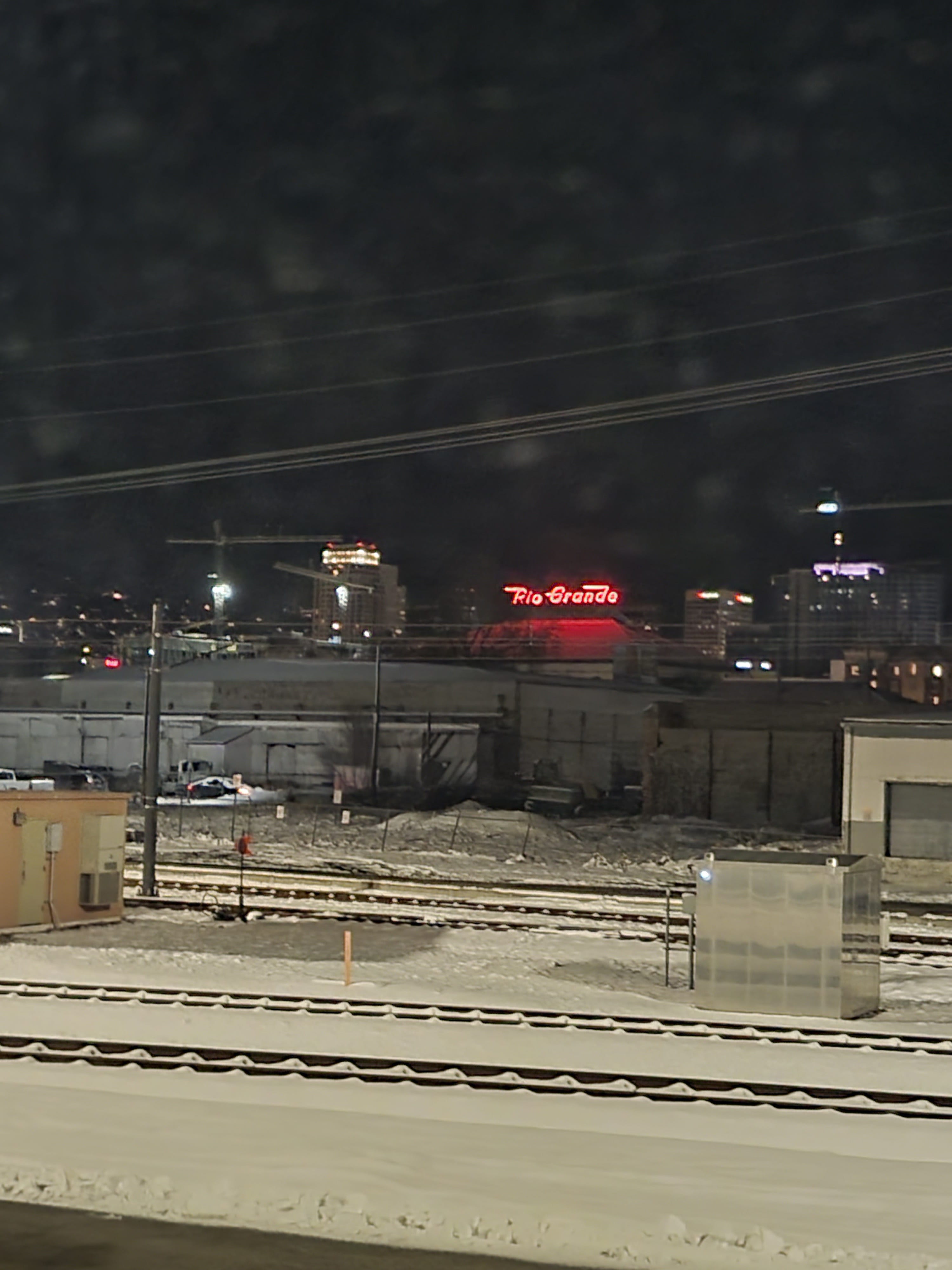
Something that surprised me about the New Year in Salt Lake City, I did not see any fireworks coming in or out of the city. I saw one (1) firework go off over this Rio Grande station building, but no more. I was a little disappointed at the lack of fanfare.
Nevada
I woke up on the 3rd day in Nevada in a new year, and a new state I had never been to — apart from Las Vegas. My impression of Nevada conditions are set by boiling Vegas, where you are either outside and suffering, or in air-conditioning and suffering (for other reasons.)
Waking up to this sight blew me away. Please check the vid. Tumbleweeds, desert scruff. A hazy muted blue, pink, and yellow sunrise set the tone against white mountains covered in snow.
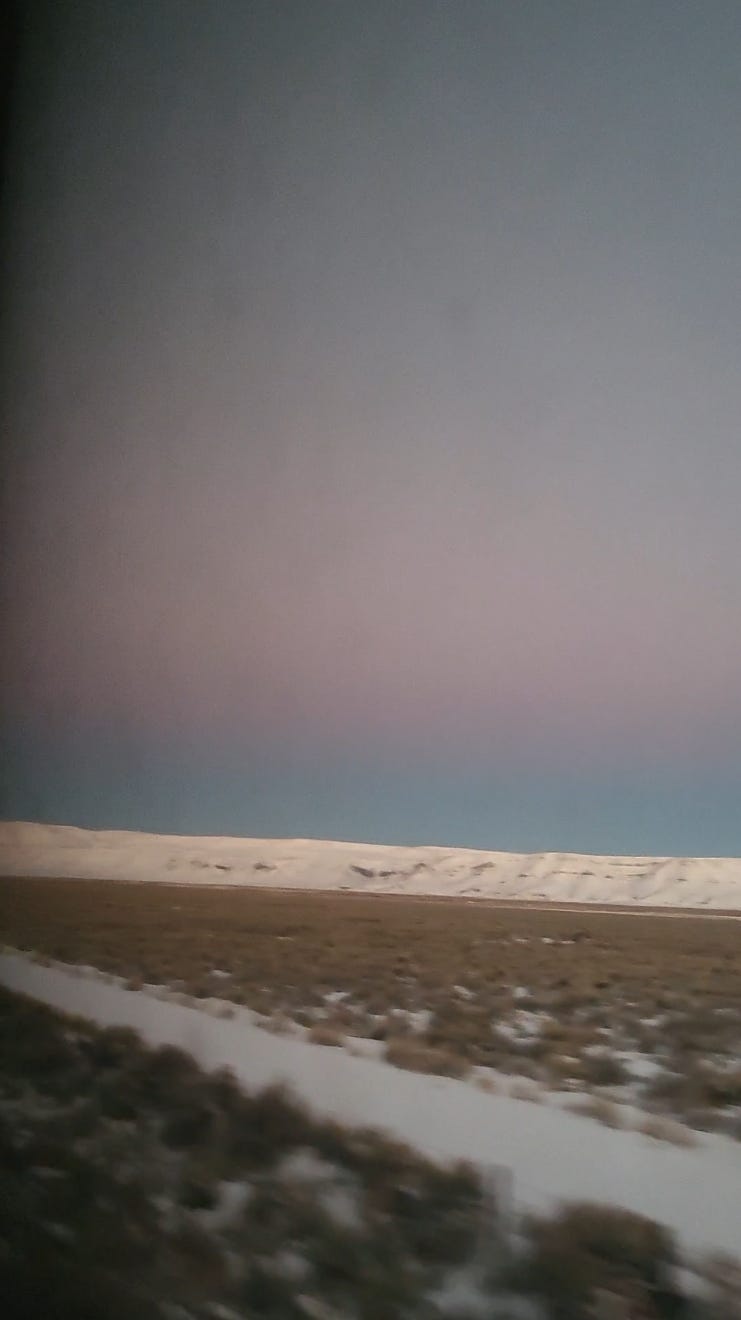
Once the sun came up, the scruff went away in favor of wide open snow plains.
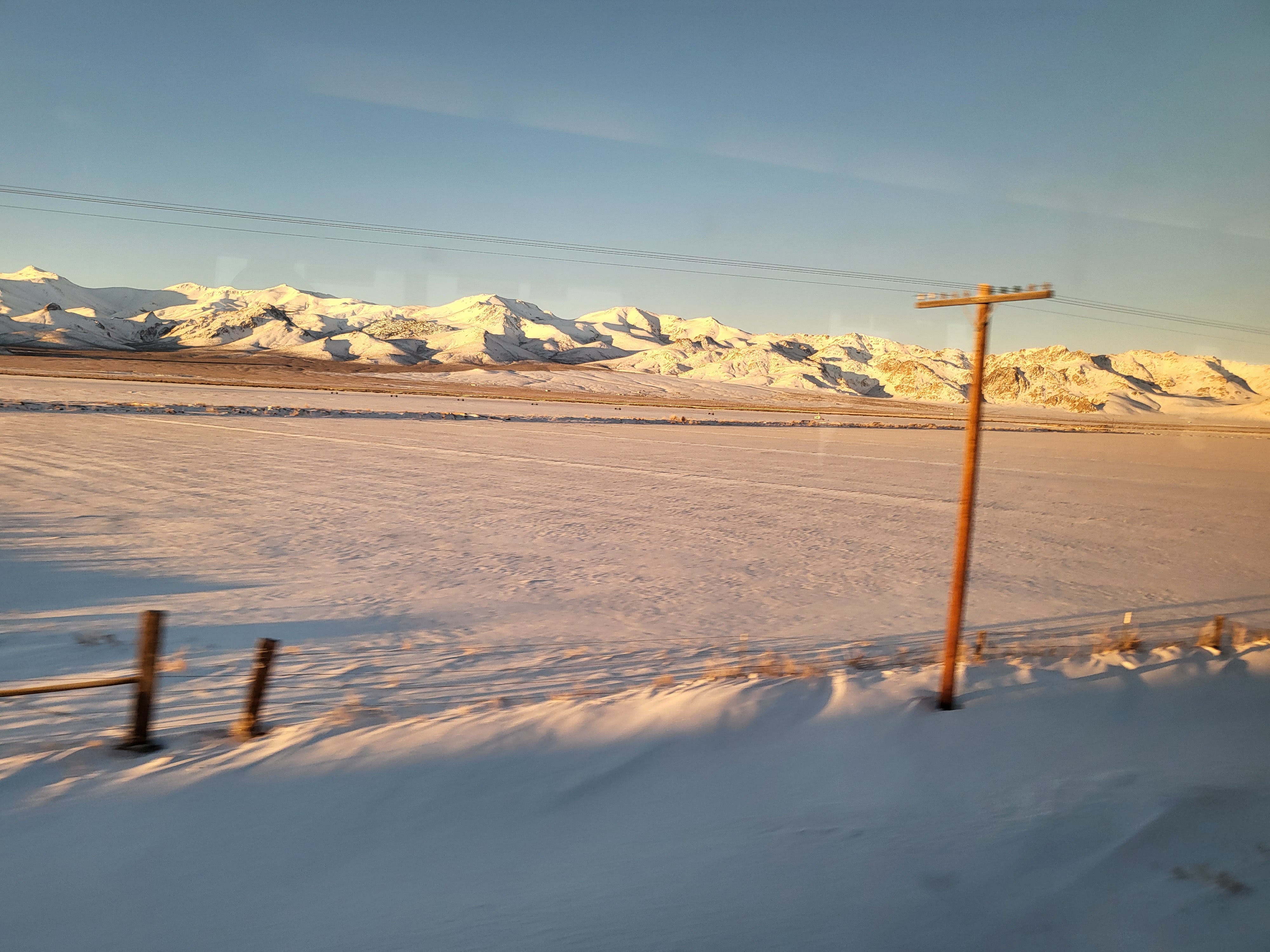
It was beautiful on all sides. I ventured back to the Lounge Car.
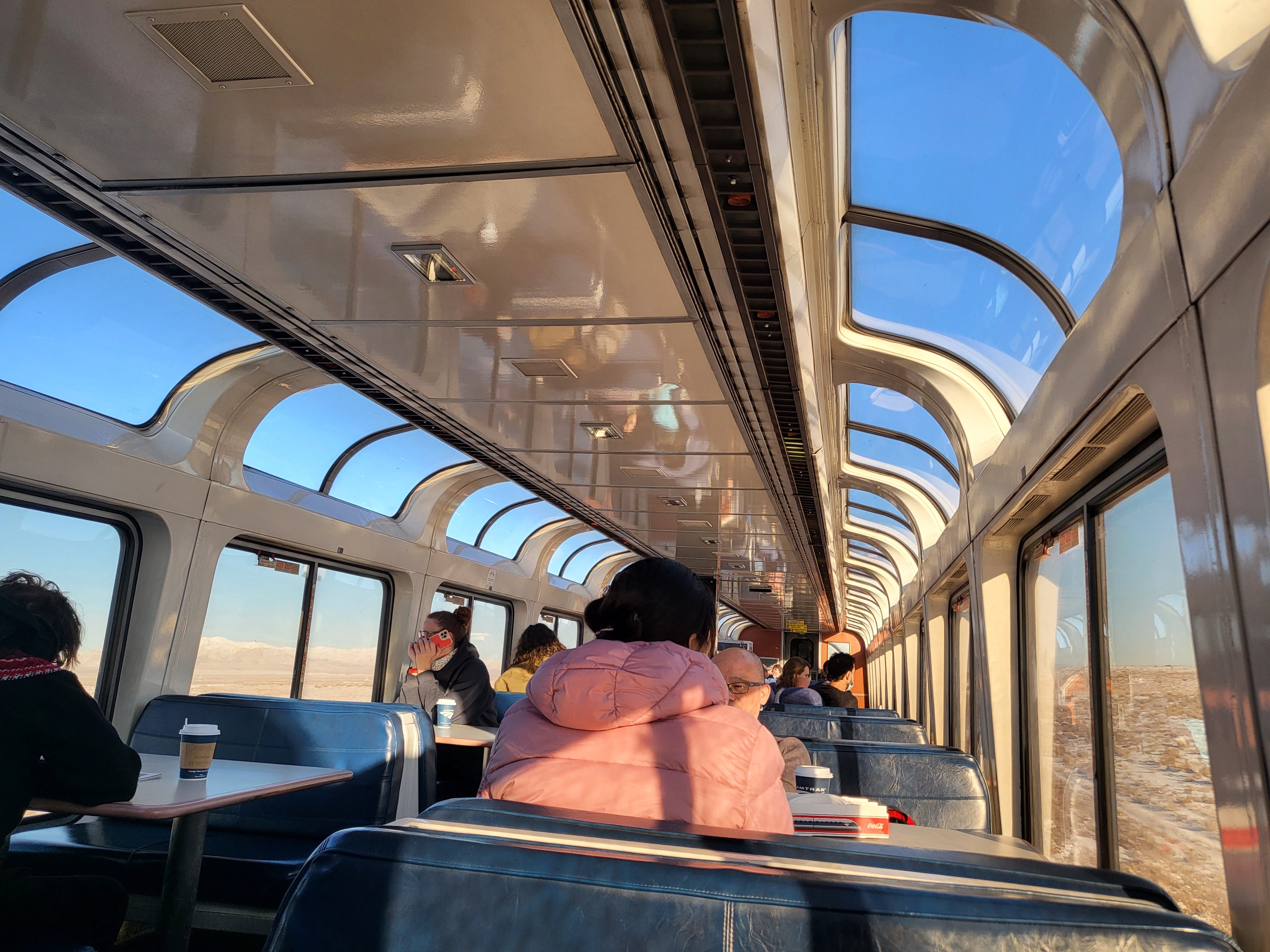
I didn’t get a good picture of the lounge car when I was there through Colorado, partially because it was pretty full, and I don’t like taking pictures of people. Here you can see how great the windows make it for seeing the scenery.
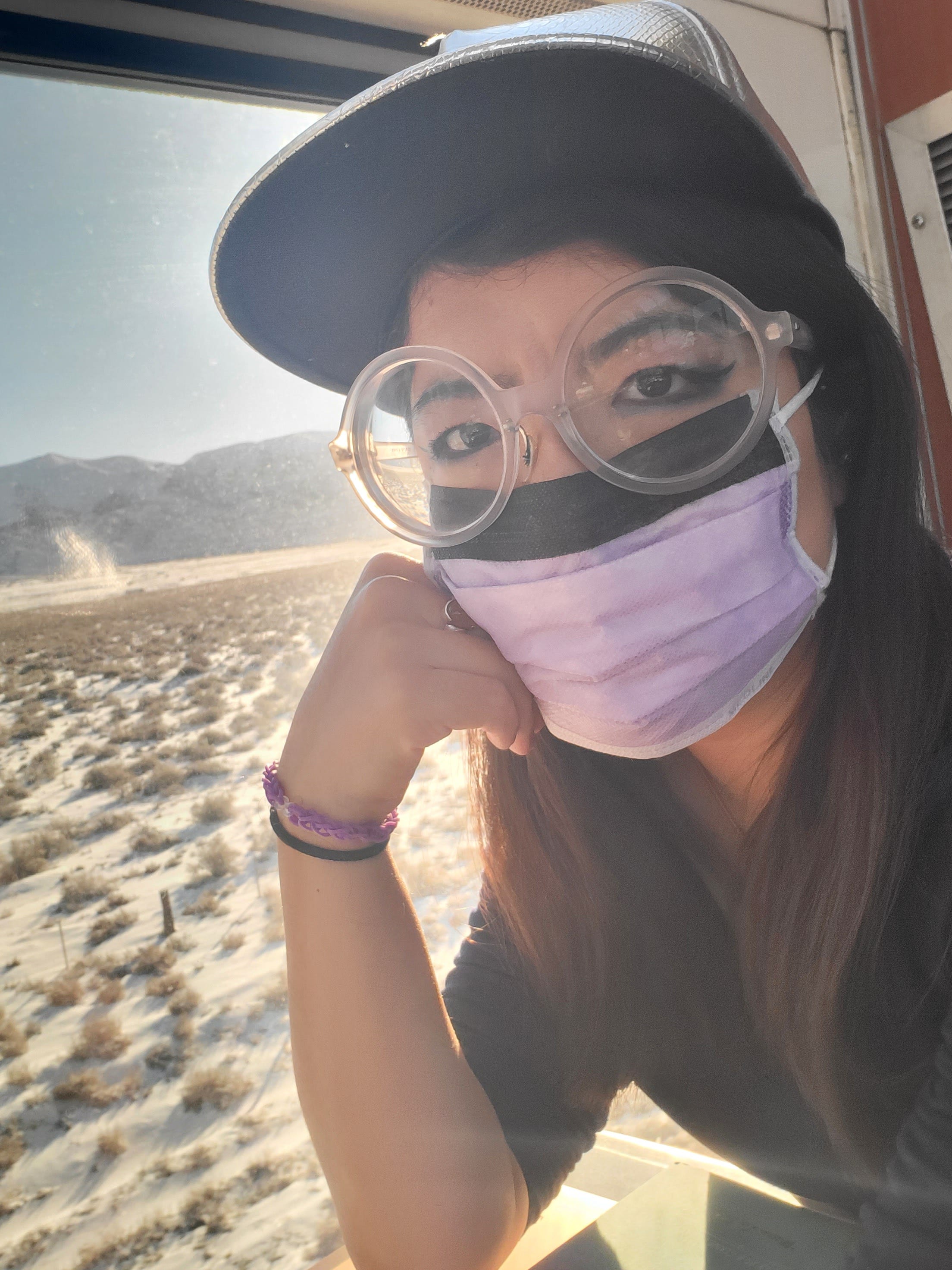
Like a proper tourist, I would look around and think to myself: Huh! So it snows in Nevada!
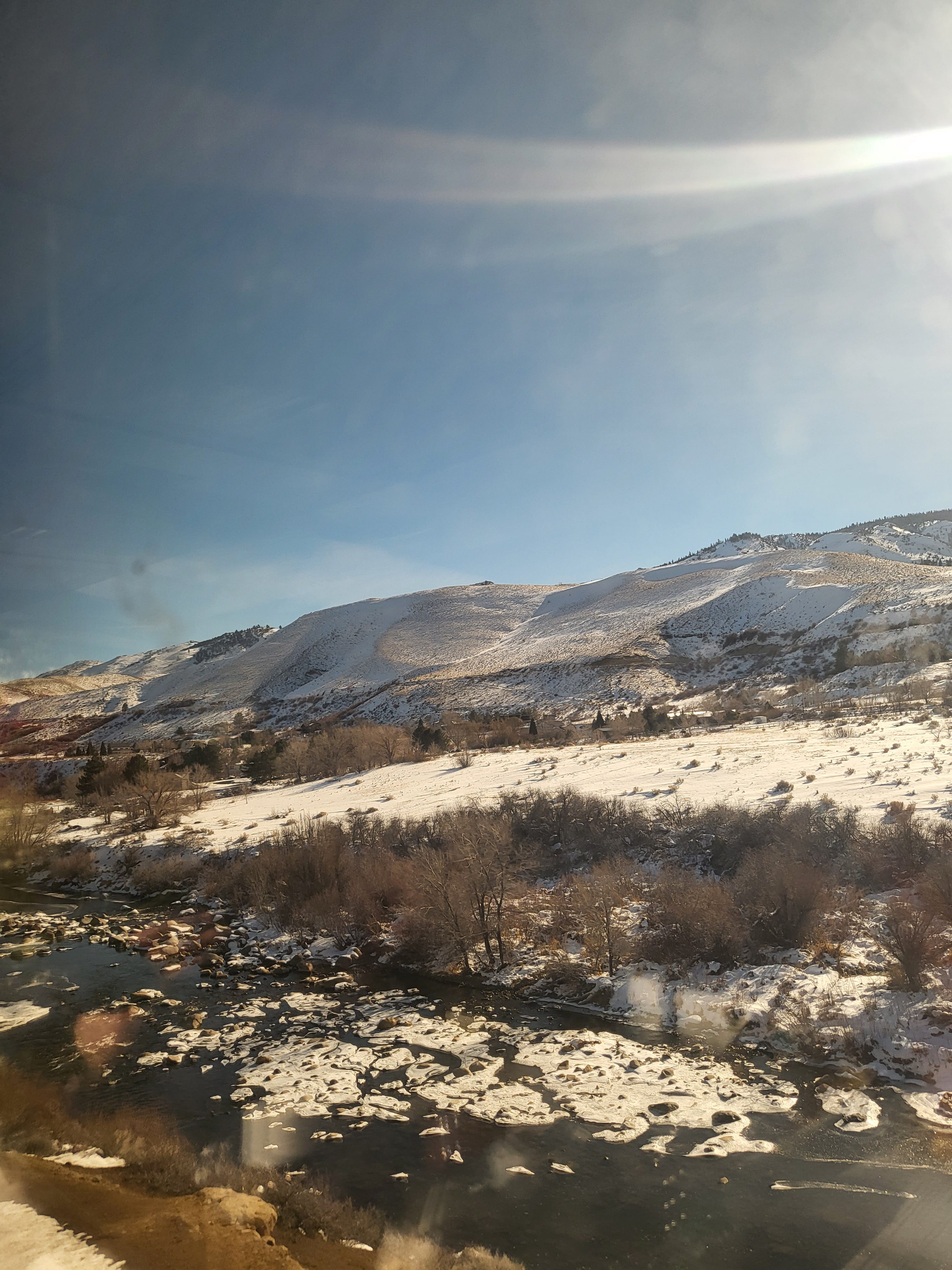
Not only does it snow in Nevada, but Nevada is very pretty.
At breakfast, I sat with three other passengers who shared stories about their delays and prior frustrations with Amtrak. Amtrak passengers come from all over America. One passenger had gotten on in Omaha, another closer to California, with me getting on further east in Michigan. There really is one thing that can bring us all together — and that is complaining.
It seemed we were delayed getting into California. I don’t know how common this is for this route,, but I think it’s very impressive to give someone a destination 2,500 miles away and say that you’re going to be there at anything close to a specific time. I guess airlines do it all the time, but then again, airlines aren’t running along the ground.
It was in Nevada that I spied my first slide sensors. Slide sensors can be wire fencing on cliff faces that trigger when snow or rock slides through them. This notifies engineers by signal that there may be a disturbance on the track. Simplifying a bunch, when a train engineer sees a red, yellow, or green signal it lets them now how to proceed or approach for the next roughly 2 miles.
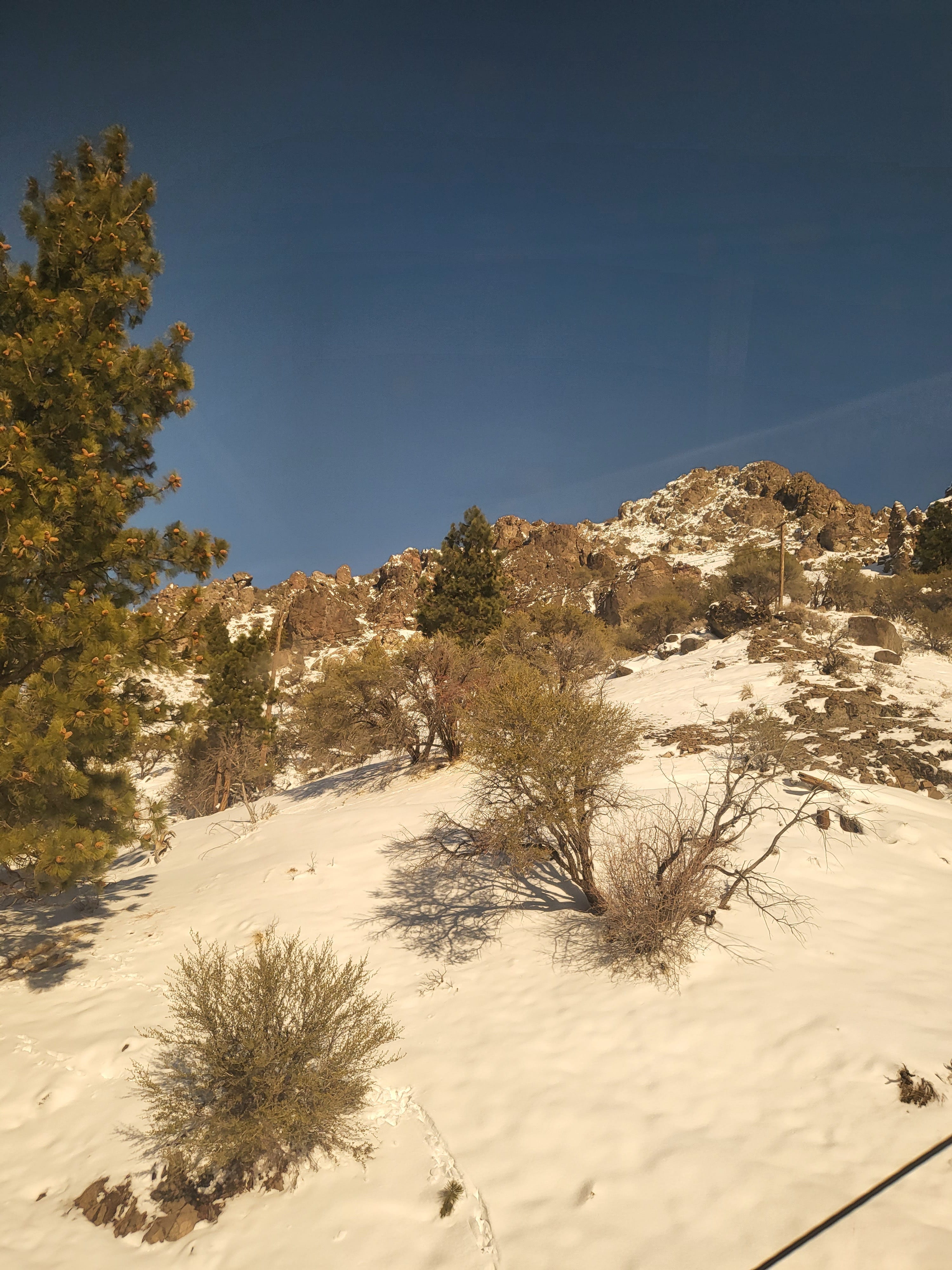
Through Colorado, I saw wildlife including deer, and the bald eagle, but nothing compared to the signs of life through this part of Nevada!
As we went further along, I saw many disturbances in the fresh snow — animal prints of all sizes and shapes bounding up and down the fresh snow, as well as snowballs rolling down hill, or slides of snow falling loose from trees and close to the tracks.
I saw part of the interstate shut down due to more slides, thankful I was on a train that was delayed but still moving.
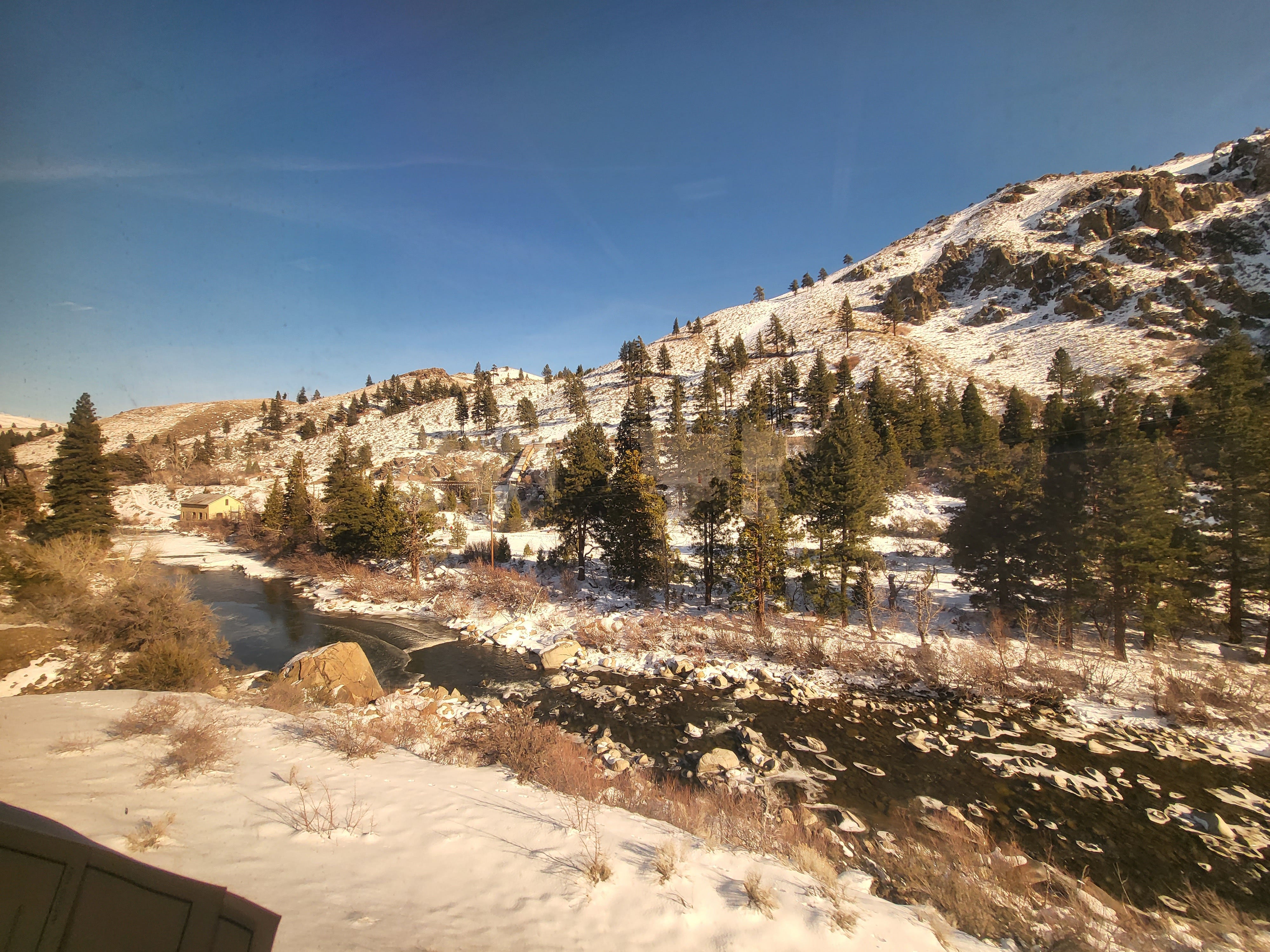
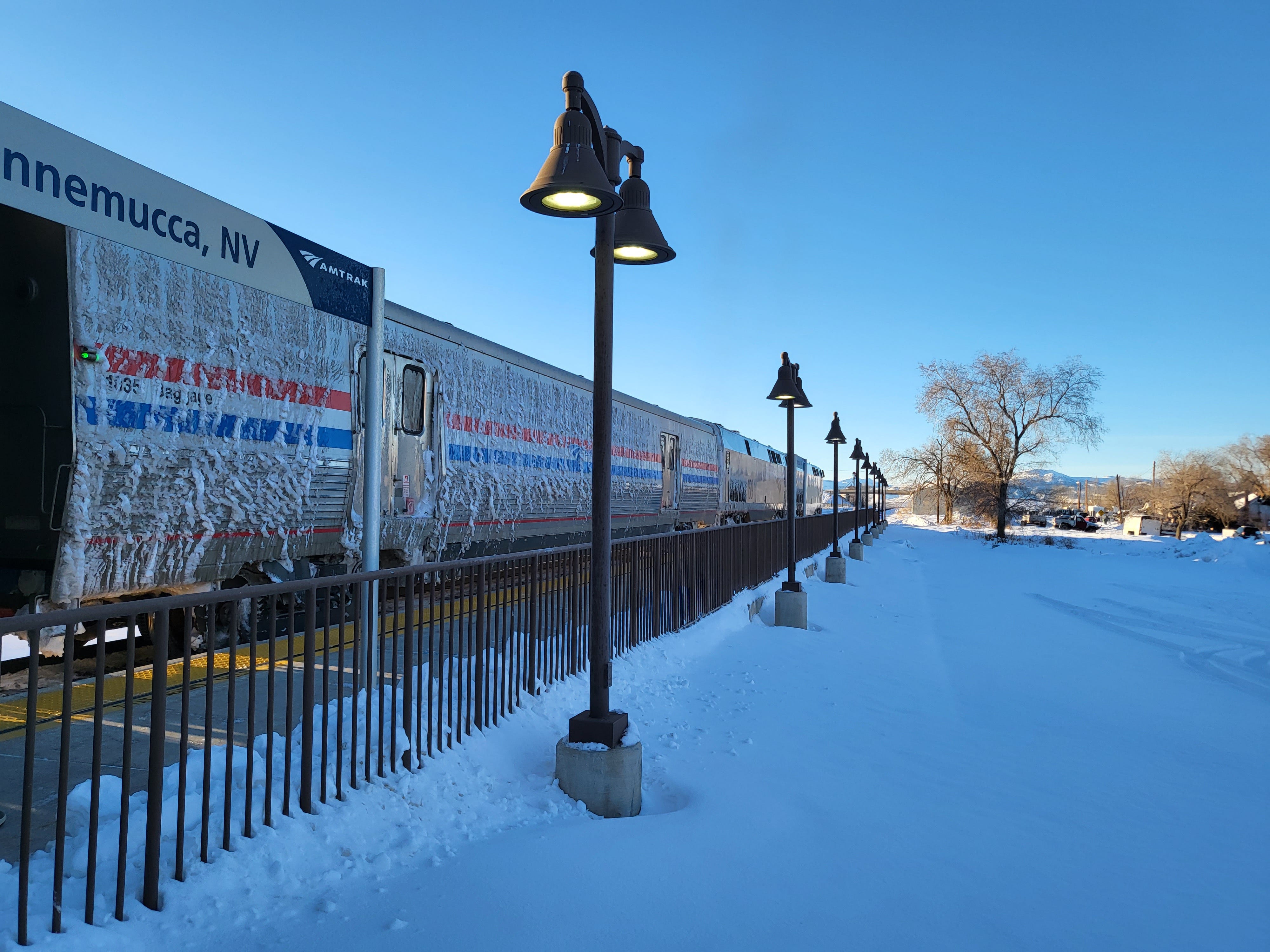
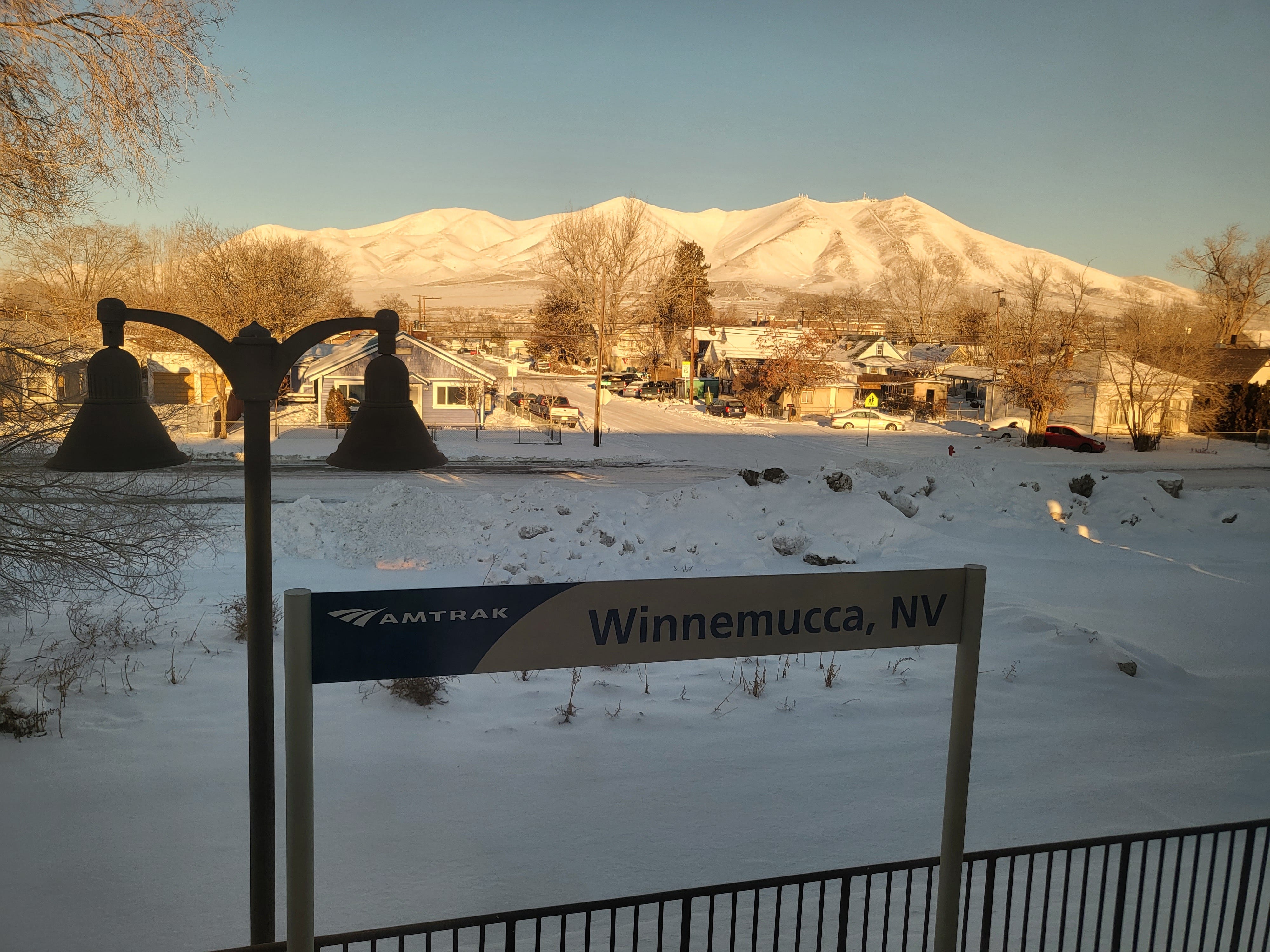
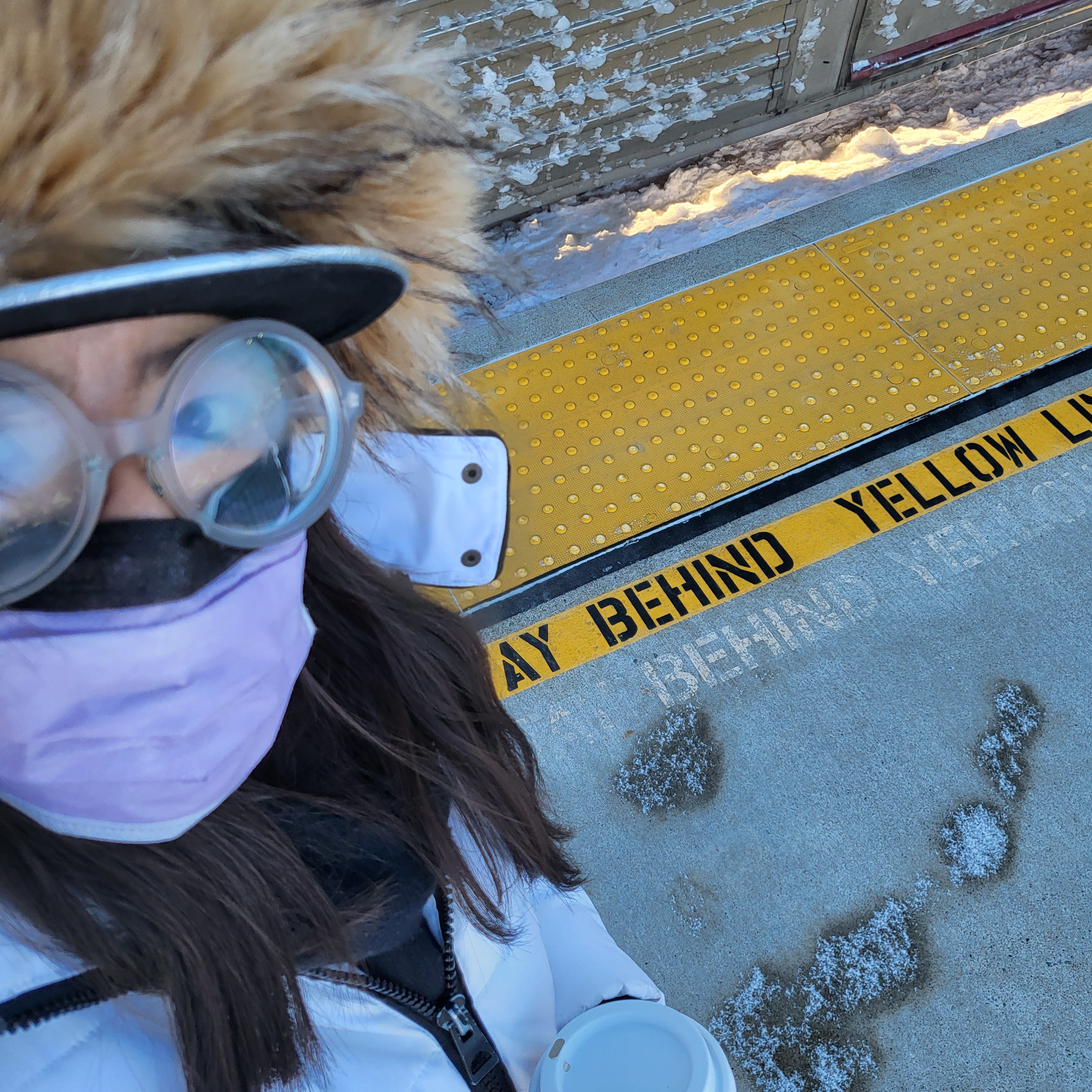
There are only 3 station stops in Nevada. One such is Winnemucca, which clocked in at a balmy 1 degree
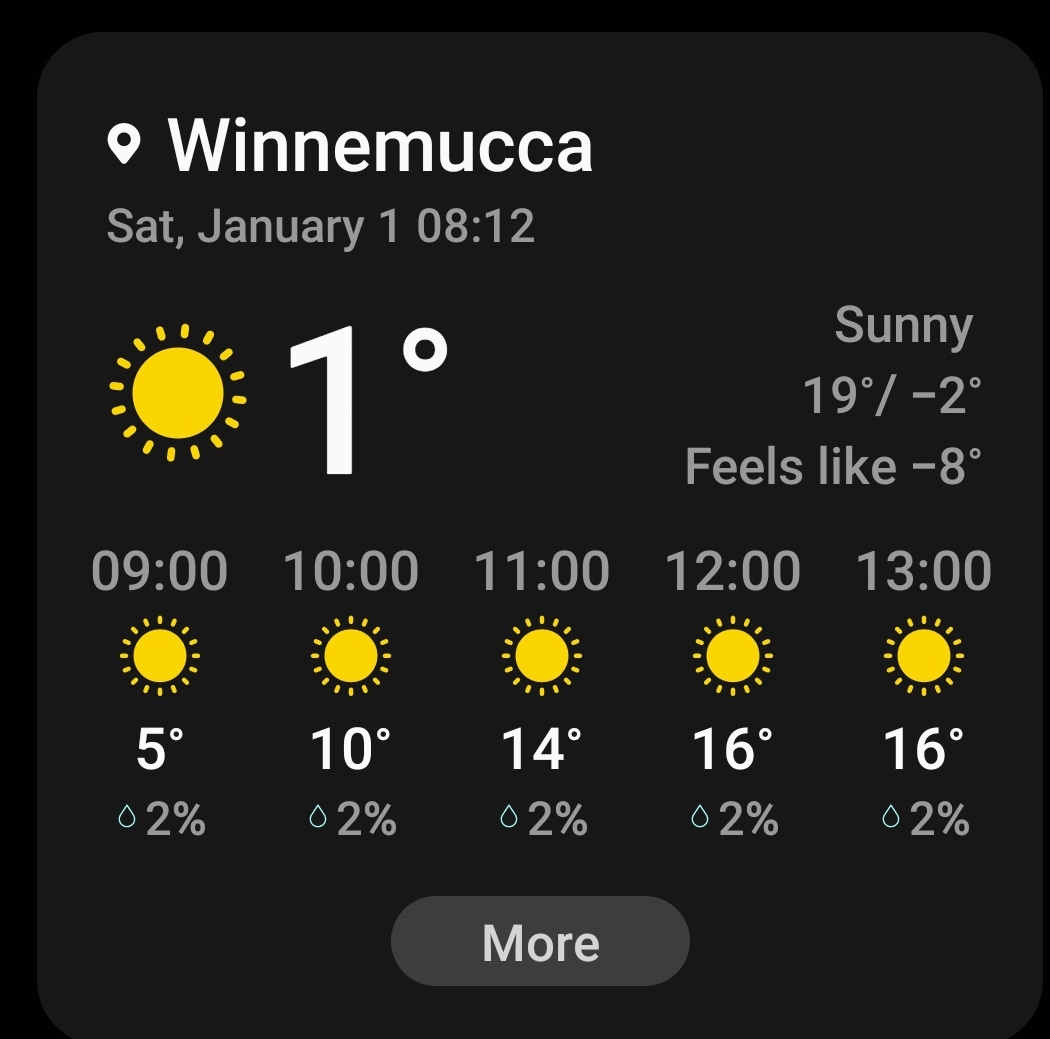
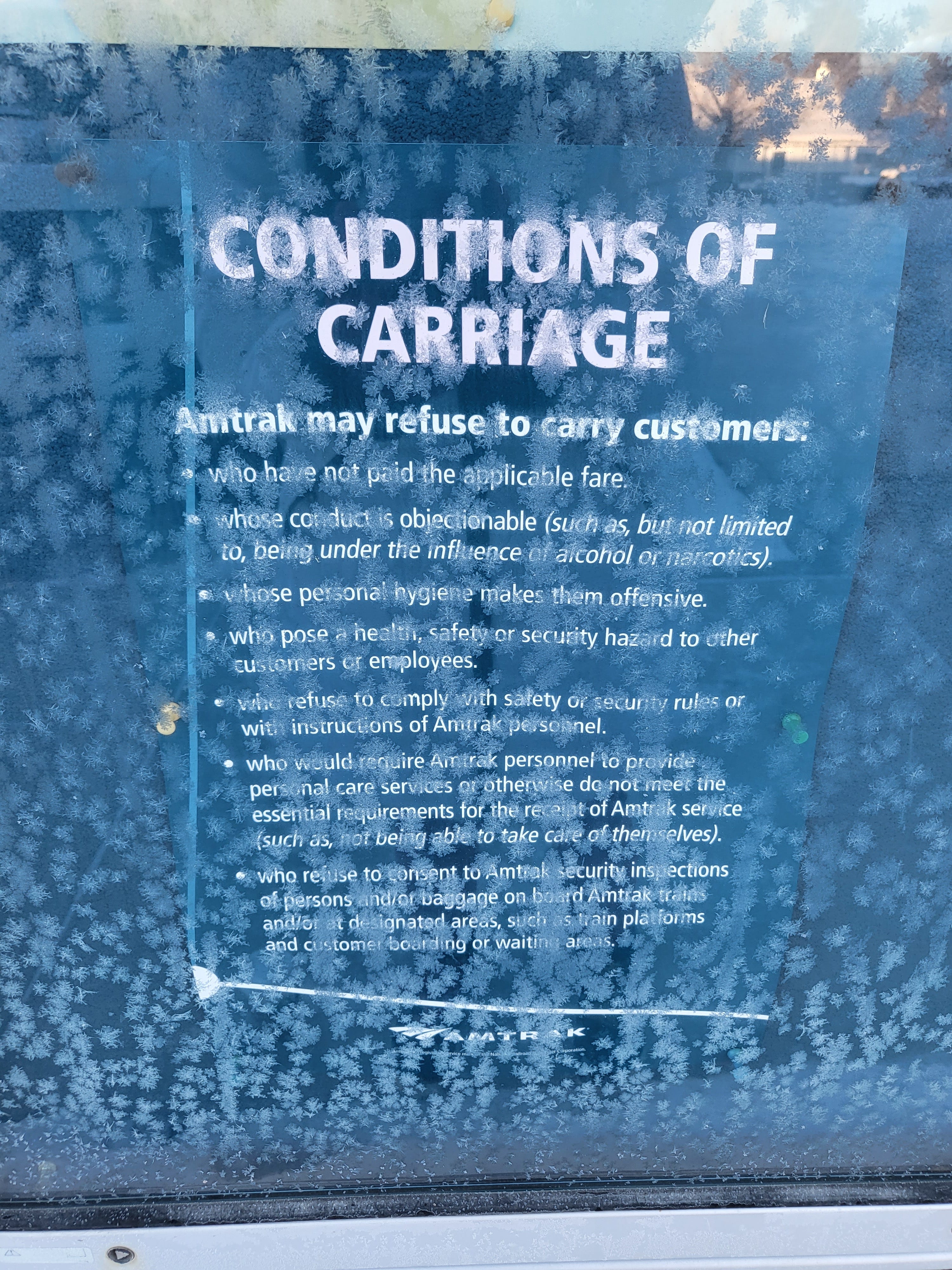
I found this posted notice particularly ominous due to the temperature.
Despite the chill, it was a bright, sunny day in a new part of the country I hadn’t seen! I kept thinking a trip to Vegas once, where we sprinted from the Luxor tram to the casino to avoid triple-digit weather.
The last stop before California is Reno, NV.
California
We entered California before I even knew it! The first California station stop is Truckee. I don’t know what I was expecting, some sort of welcome to California sign?
Pretty soon, I found my “welcome sign” in the form of the Sierra Nevada mountains, a sight I had never seen before despite living in California since 2018.
The Pere Marquette enters California through Tahoe National Forest. I’m not breaking boundaries here by calling Tahoe beautiful, but here we go anyways.
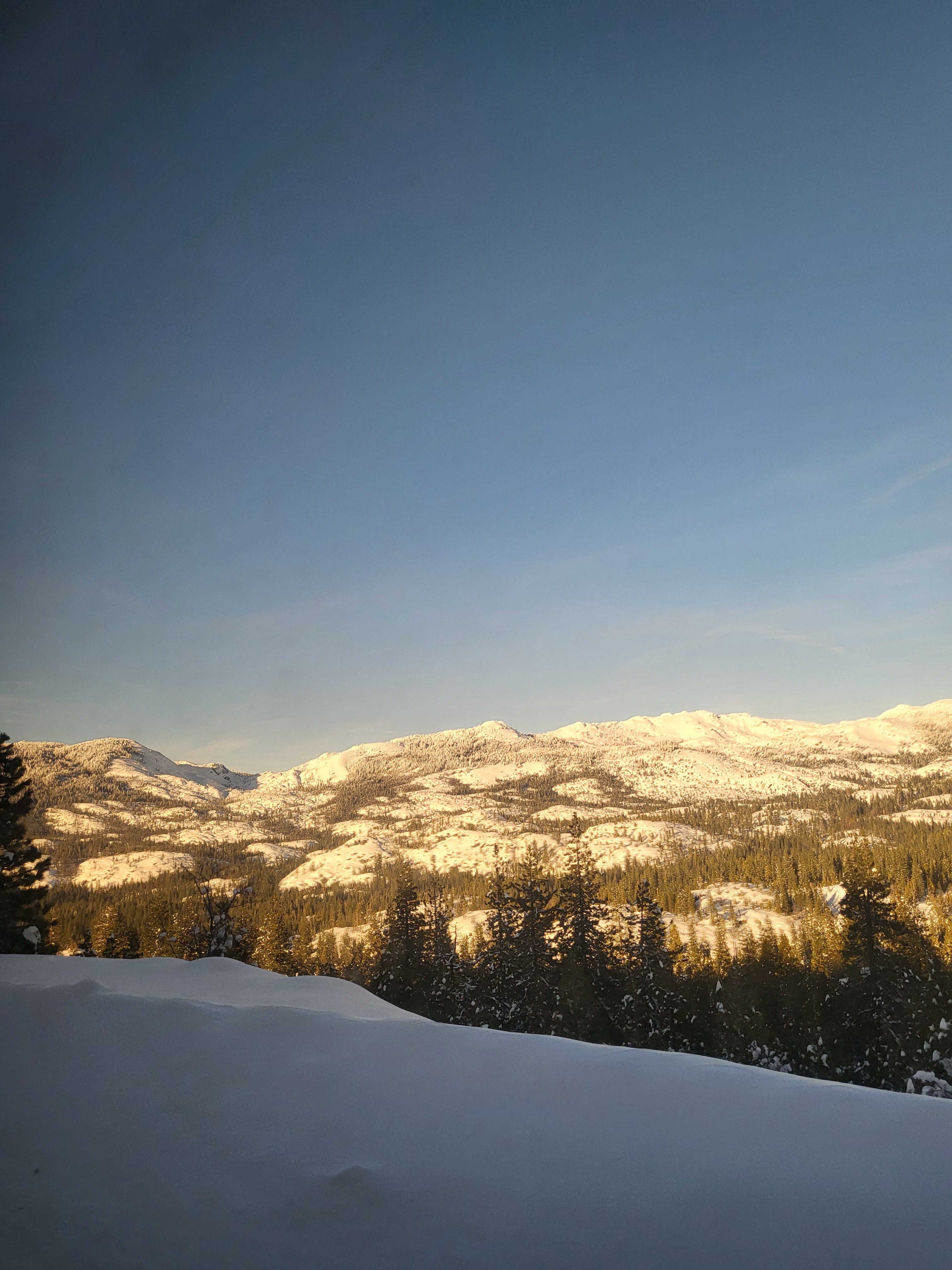
When I was visiting Michigan, I kept hearing about crazy, record-setting snowfall in this region, particularly along I-80. Chugging through it days later, I saw snowbanks over my head and several feet of snow on trees. I saw heavy machinery with snow treads scattered here and there, before tunnels, after tunnels. I see why they named a truck after this area.
These pine trees were taller, narrower and skinnier than pine trees I was used to anywhere else. And there were plenty to study. Tahoe national park goes on and on (and on and on). Having never been to Tahoe, I am glad the way I got to experience it first was high above the highway, curving through mountains.
I started to get service through these mountains, and so I found myself looking up where I was. I recognized Donner Lake and Donner Pass from the map.
Donner Pass, similar to Moffat Pass, is a feat of civil engineering through the mountains of America. The pass is over 7-thousand miles off the ground (gulp!), and named for those who lost their lives in the name of pursuing the American dream west.
Donner Pass could not have been completed without the labor and ingenuity of Chinese workers. That goes for many railroad civil engineering feats throughout the rest of this journey.
Growing up, whenever peers would talk eagerly about “where in history would you like to live?”, I would think excitedly of cowboys and outlaws in the wild west and then, rather glumly, what it was like to be Asian or a woman in those times. Through researching the Chinese workers responsible for the transcontinental railroad, I learned how many of them took on jobs and work that their white counterparts found too dangerous or strenuous.
All this came to a head near journey’s end, as I was startled to see some families sledding or gathering near train tracks. More than once, the train would round a corner and I would see someone standing on a hill, or bit of rock, in cold-weather gera and a long-lens camera. Trainspotters? I thought? Birdwatchers?
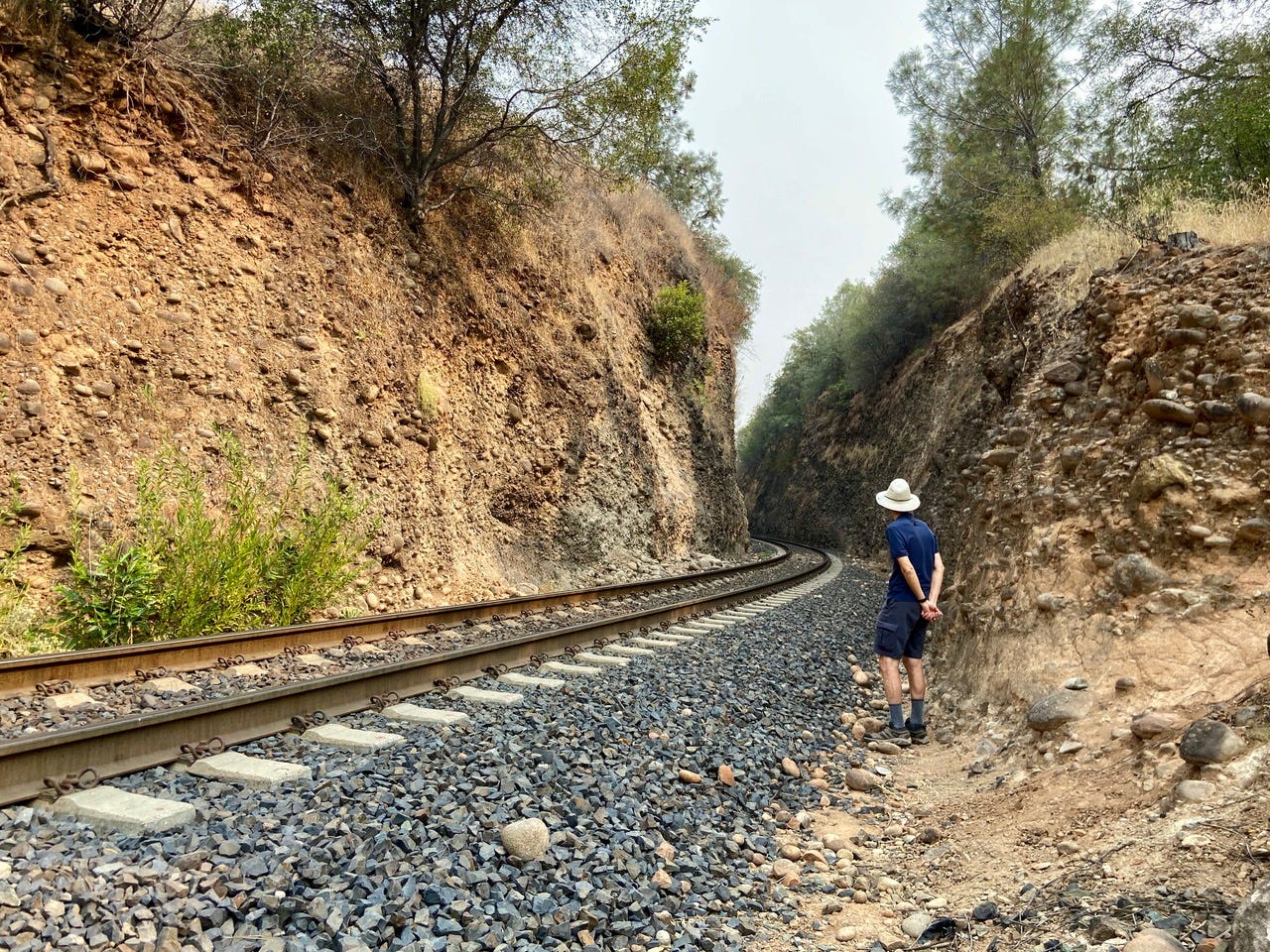
With later research, I would discover that one such area I saw a photographer was was Bloomer’s Cut— a famous and national landmark, one of the railway accomplishments that was only accomplished through the labor of Chinese workers.
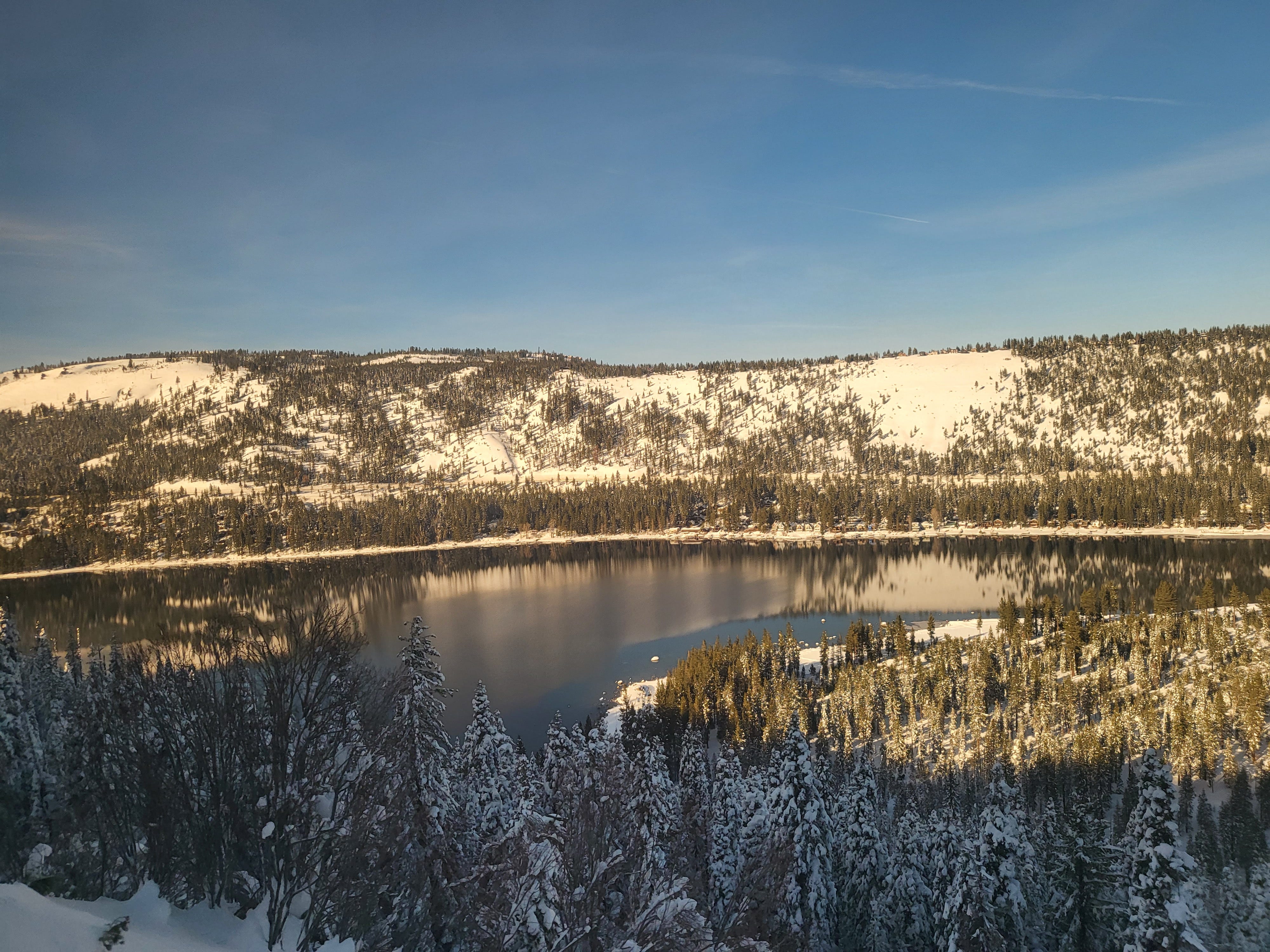
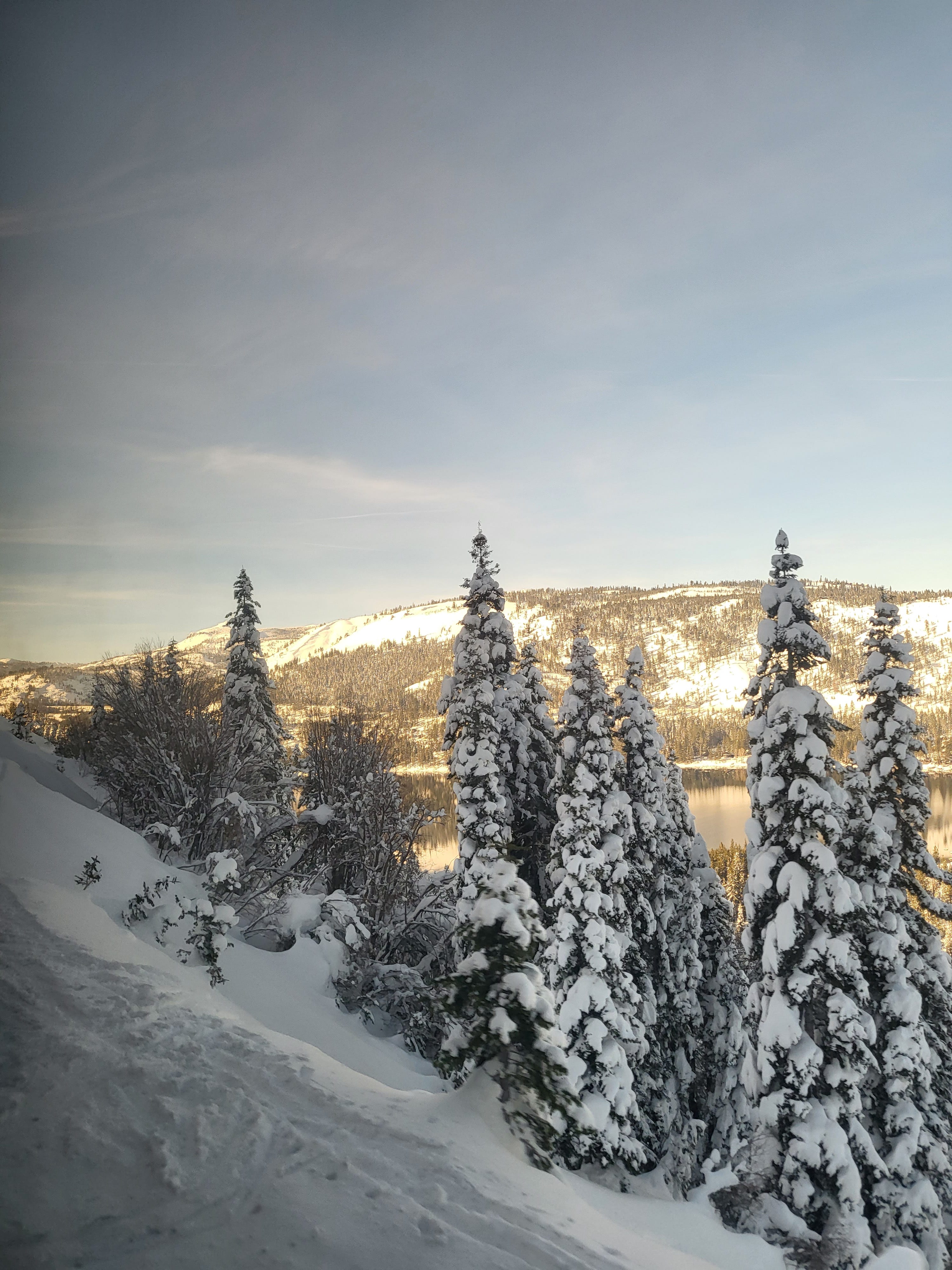
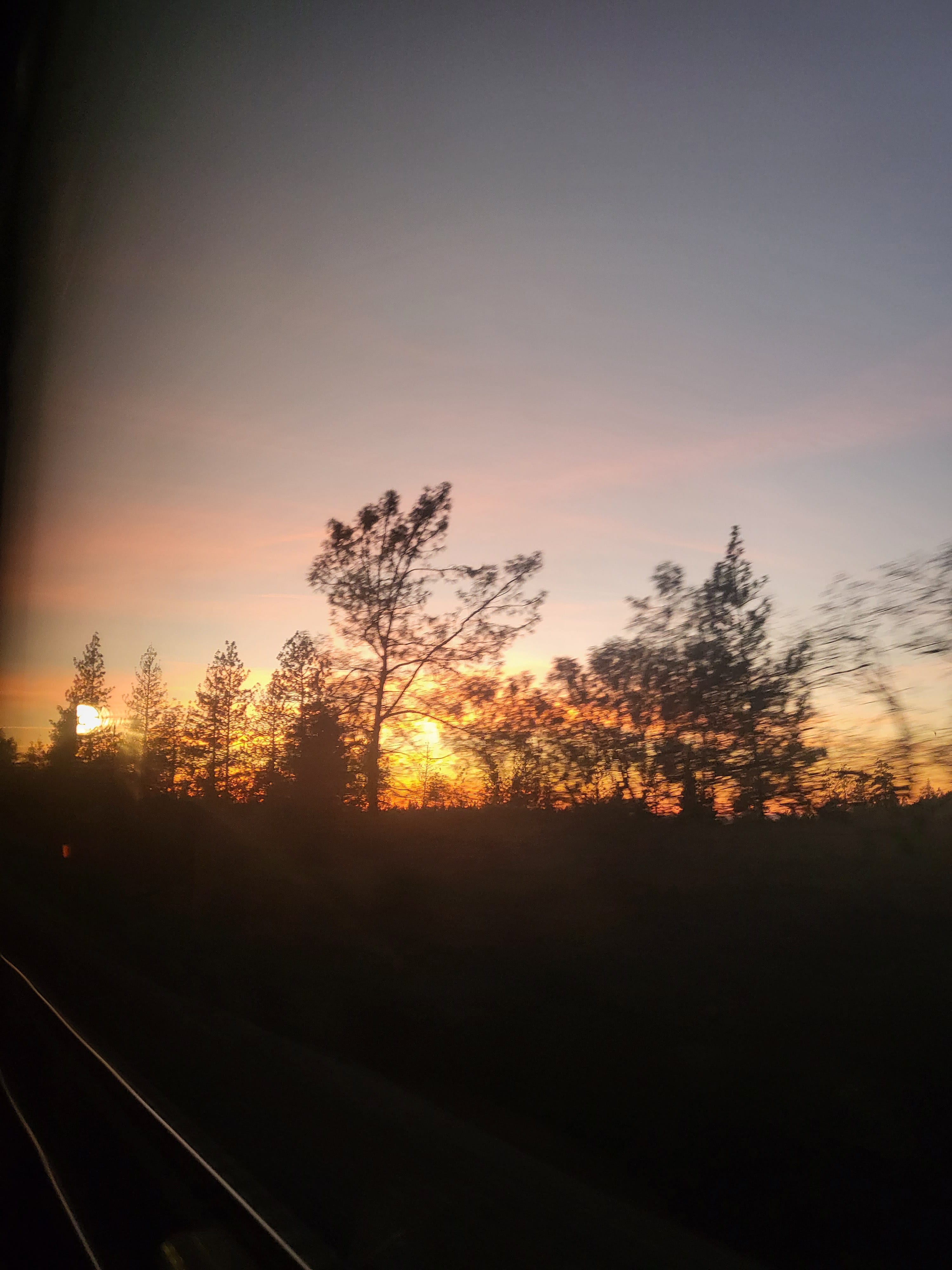
This sunset photo marks a pivotal moment in this journey. Until the sun started setting on the third day, I was in Wow, the Wonder of Trains mode. After this photo, and after the sun went down, I entered Get Me Off This Train mode.
My brain started turning to mush right around Sacramento, which is a 90 minute drive from San Francisco. Still, the California Zephyr had one more surprise for me, by taking us past 2 Bay Area bridges I hadn’t seen before. This area is known as the Carquinez Strait, which apparently is quite scenic and has good hiking.
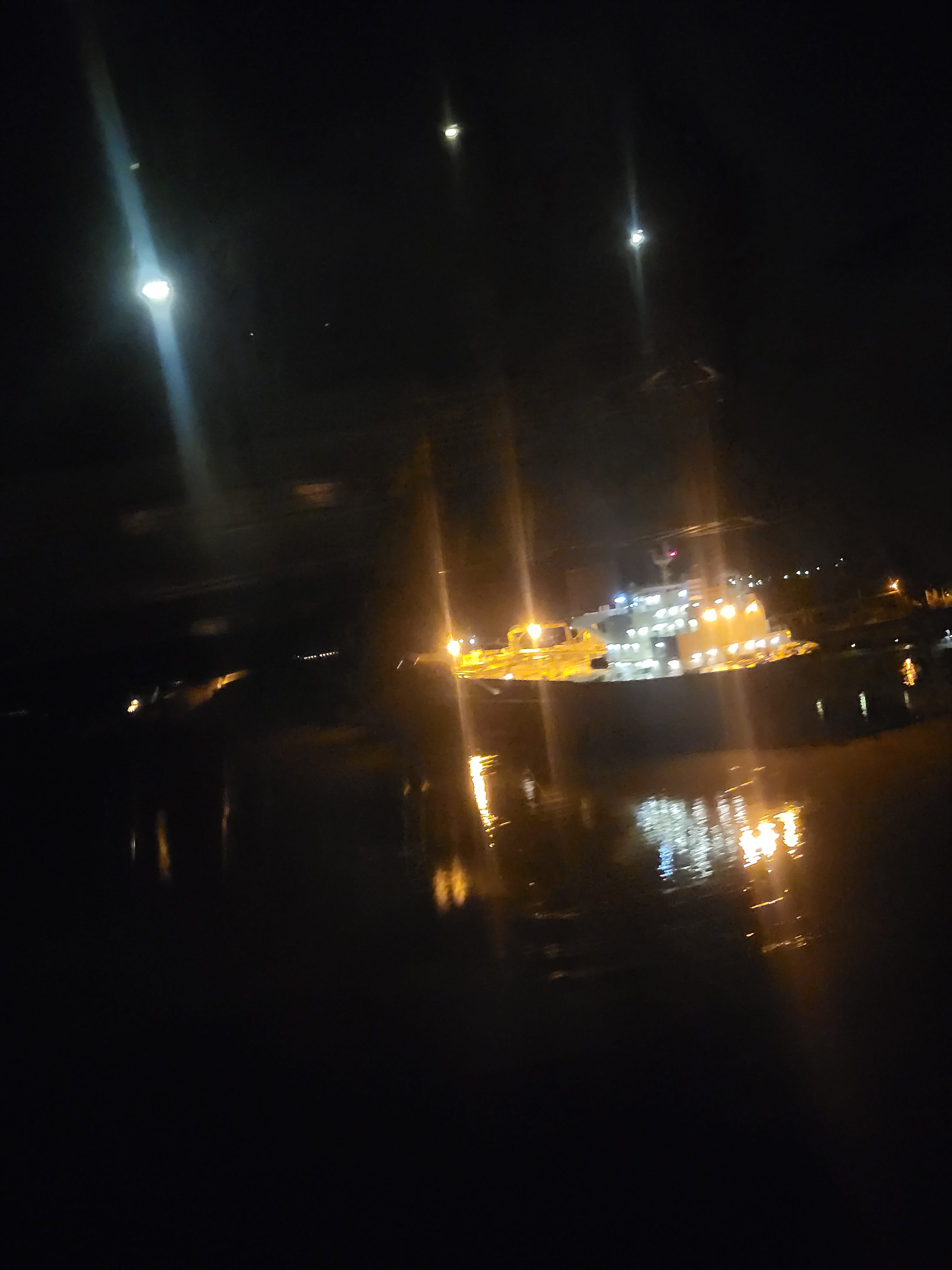
The industrial scenes around the Carquinez Strait, and closer to Oakland made a neatof bookend to how this journey began — flying along the Rust Belt in Northern Indiana and Chicagoland. Both are highly active ports, though one in fresh water and one on the Pacific Ocean.
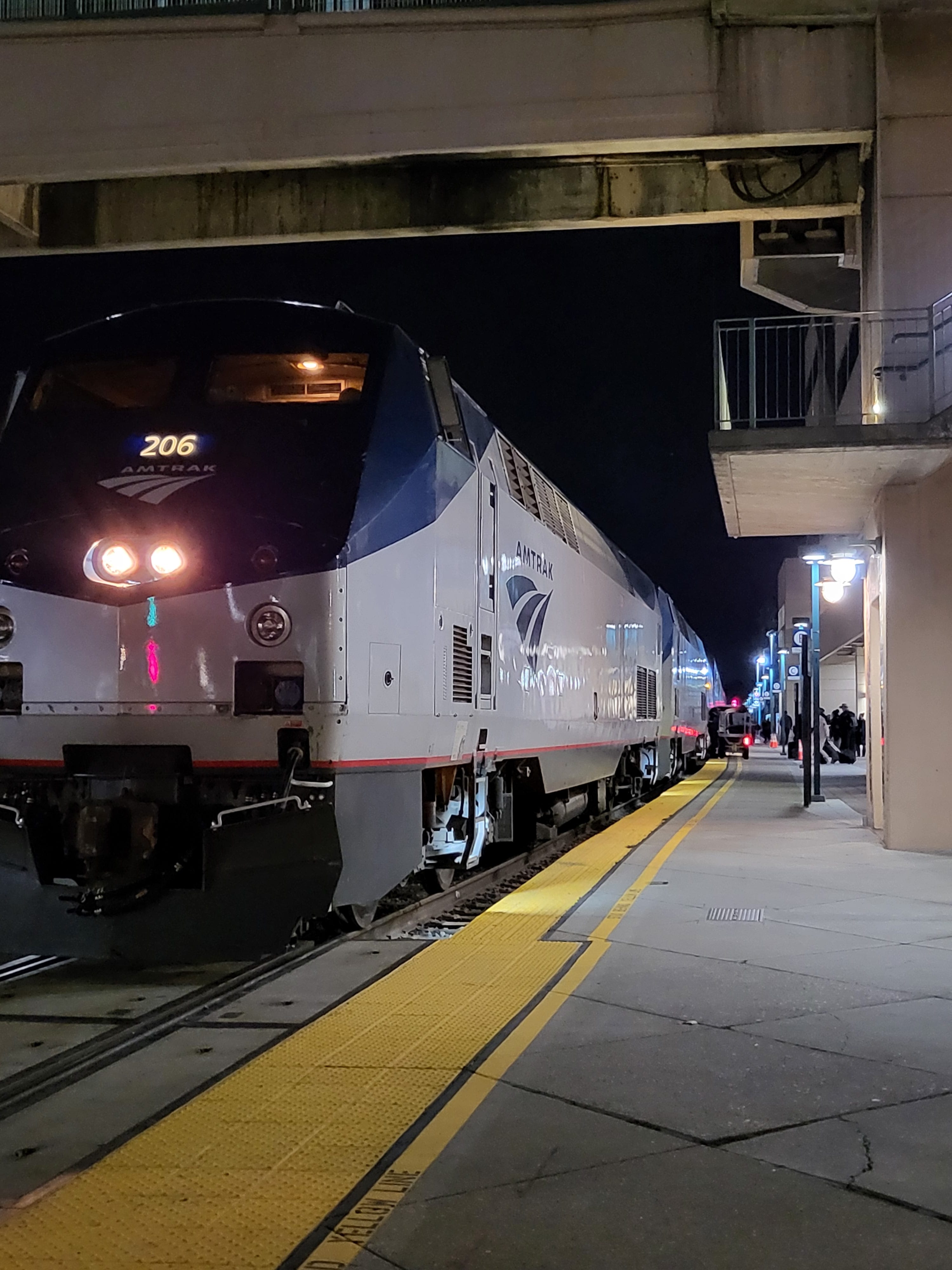
Finally (!!), I started to see platform lights for Emeryville, and we were called down to the lower cars to get our stuff. At journey’s end, I finally got up the nerve to go stand in front of the twin engines and take a photo of these puppies that carried me across America!
Godspeed to you, AMTK 206 PT42DC. May we meet again.
Resources: (I had fun researching this so maybe you will have fun reading)
Williamston Depot Museum - “Williamston Railroad History” https://www.williamstonmuseum.org/williamston-railroad-history.html
Peter Paccone, Medium - “The Chinese Railroad Workers and the Donner Pass Tunnels” https://ppaccone.medium.com/the-story-of-the-railroad-chinese-and-the-donner-pass-tunnels-45dc99b6a566
Grandvillian, Blog - “Introducing the Castle”
http://grandvillain.com/
Amtrak, Blog - "California Zephyr Snowscapes" https://history.amtrak.com/blogs/blog/california-zephyr-snowscapes
Denver Public Library - "The First Railroad From Denver to Salt Lake City" https://history.denverlibrary.org/news/first-railroad-denver-salt-lake-city
The Center For Land Use Interpretation, Land Use Database - "Big Ten Curve, Colorado" https://clui.org/ludb/site/big-ten-curve
Lawrence Lewis - "A Feat In Railroad Building" https://books.google.com/books?id=bn8chfRnjScC&pg=PA6859#v=onepage&q&f=false
Amtrak, News - "Why are Amtrak trains delayed by freight trains?" http://blog.amtrak.com/2019/05/why-are-amtrak-trains-delayed-by-freight-trains/
Beyondboulder.com, blog - "Denying the Divide, The Moffat Tunnel" http://www.beyondboulder.com/blog-beyond/2019/10/30/denying-the-divide-the-moffat-tunnel
Phil Sexton, Blog - "Honoring 'The Work of Giants' at Donner Pass" https://www.moonshineink.com/tahoe-news/honoring-the-work-of-giants-at-donner-pass/
History Channel - "Building the Transcontinental Railroad: How 20,000 Chinese Immigrants Made It Happen" https://www.history.com/news/transcontinental-railroad-chinese-immigrants
Sacramentovalley.org, blog, Keli Gwyn - "Bloomers Cut in Auburn: A Hidden Historic Gem" http://sacramentovalley.org/stories/bloomers-cut-in-auburn-a-hidden-historic-gem/